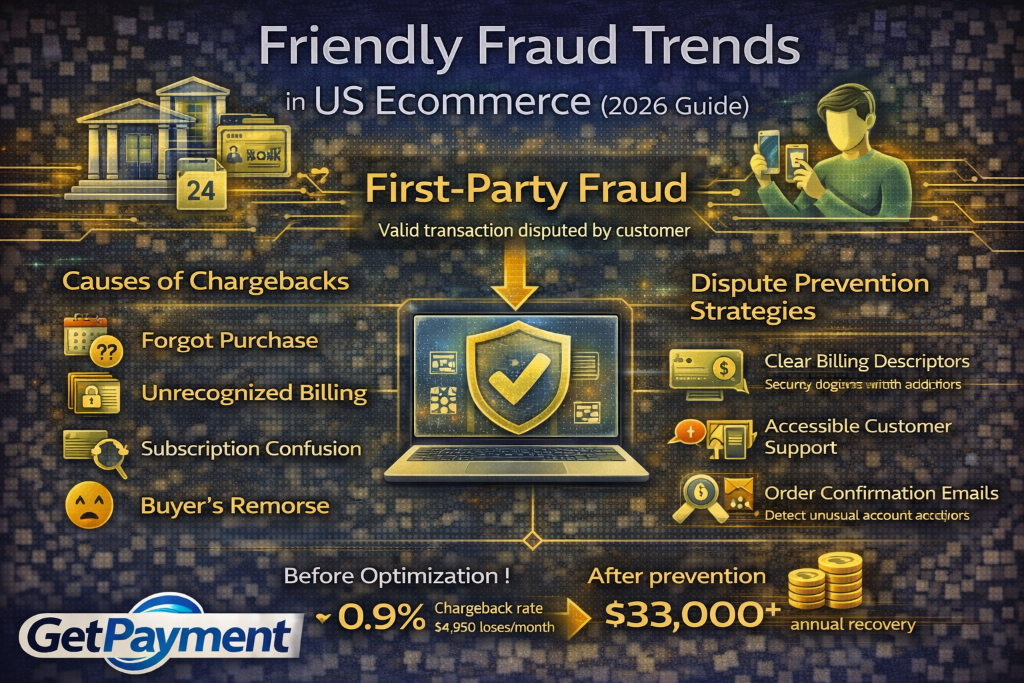
 Discover the latest friendly fraud trends in US ecommerce and learn how to prevent chargebacks, protect revenue, and improve payment performance.
Need Payment Processing?
✓ Stripe shutdown?
✓ High-risk industry?
✓ Declined payments?
Get approved today.
Apply NowKey Takeaways
When most ecommerce businesses think about fraud, they picture stolen cards and criminal activity.
But one of the biggest threats to your revenue looks very different.
- ✓The customer does not recognize the charge
- ✓They forget they made the purchase
- ✓They are dissatisfied but choose to dispute instead of requesting a refund
- ✓They intentionally abuse the chargeback system
- ✓Lost product or service value
Introduction: The Fraud You Don't See Coming
When most ecommerce businesses think about fraud, they picture stolen cards and criminal activity.
But one of the biggest threats to your revenue looks very different.
It comes from your own customers.
This is known as friendly fraud.
And in US ecommerce, it is growing rapidly.
Unlike traditional fraud, friendly fraud is harder to detect, harder to prevent, and often misunderstood.
It happens when a legitimate customer disputes a charge—intentionally or unintentionally—resulting in a chargeback.
For high-volume merchants, friendly fraud can quietly become one of the largest sources of revenue loss.
Understanding friendly fraud trends in US ecommerce is essential if you want to protect your margins and scale safely.
What Is Friendly Fraud?
Friendly fraud occurs when a customer makes a legitimate purchase but later disputes the transaction with their bank.
This can happen for several reasons:
- The customer does not recognize the charge
- They forget they made the purchase
- They are dissatisfied but choose to dispute instead of requesting a refund
- They intentionally abuse the chargeback system
Regardless of intent, the outcome is the same.
You lose the revenue, pay a fee, and risk higher processing costs.
Why Friendly Fraud Is Increasing in the US
Friendly fraud has grown significantly in recent years.
Several factors are driving this trend.
First, ecommerce has expanded rapidly, increasing transaction volume.
Second, consumers are more aware of chargebacks and how to use them.
Third, digital products and subscription models have become more common, creating more opportunities for disputes.
Finally, banks often favor the customer in disputes, making it easier for chargebacks to succeed.
Together, these factors have created a perfect environment for friendly fraud to rise.
The Different Types of Friendly Fraud
Not all friendly fraud is the same.
Understanding the different types helps you respond effectively.
Accidental friendly fraud occurs when a customer genuinely does not recognize a transaction.
This is often caused by unclear billing descriptors or forgotten purchases.
Intentional friendly fraud happens when a customer knowingly disputes a legitimate charge to get their money back.
This is sometimes referred to as "chargeback abuse."
There is also subscription-related fraud, where customers forget about recurring billing and dispute charges.
Each type requires a different prevention strategy.
The Real Cost of Friendly Fraud
Most merchants think of chargebacks as lost revenue.
But the true cost is much higher.
Friendly fraud leads to:
- Lost product or service value
- Chargeback fees
- Increased processing costs
- Higher fraud ratios
- Risk of account termination
At scale, these costs can significantly impact profitability.
How Friendly Fraud Impacts Payment Performance
Friendly fraud does not just affect your revenue.
It also impacts your relationship with payment providers.
High chargeback rates can lead to:
- Increased scrutiny from acquirers
- Higher processing fees
- Placement in monitoring programs
- Potential account shutdowns
This makes it harder to scale your business.
The Role of Subscription Ecommerce in Friendly Fraud
Subscription models are a major contributor to friendly fraud.
Customers often:
- Forget about recurring charges
- Fail to cancel subscriptions properly
- Dispute charges instead of requesting refunds
This leads to higher chargeback rates.
For subscription businesses, managing friendly fraud is critical.
Digital Products and Friendly Fraud Risk
Digital goods are another high-risk area.
Because there is no physical product, disputes are harder to defend.
Customers may:
- Claim they never received the product
- Dispute after accessing content
- Abuse refund policies
This makes prevention even more important.
How Billing Descriptors Impact Friendly Fraud
One of the most overlooked factors is the billing descriptor.
If your charge appears unclear on a customer's statement, they may not recognize it.
This leads to accidental disputes.
Optimizing your descriptor can:
- Reduce confusion
- Lower dispute rates
- Improve customer trust
Small changes can have a big impact.
The Importance of Clear Communication
Many chargebacks happen because customers do not understand what they are being charged for.
Improving communication can reduce disputes.
You should:
- Send clear order confirmations
- Provide detailed receipts
- Notify customers before recurring charges
- Make support easy to access
Good communication prevents unnecessary disputes.
Refund Policies and Their Impact
Your refund policy plays a major role in friendly fraud.
If customers feel they cannot get a refund easily, they are more likely to file a chargeback.
A clear and fair refund policy can:
- Reduce disputes
- Improve customer satisfaction
- Protect your business
Making refunds easier can actually save money in the long run.
Using Data to Identify Friendly Fraud Patterns
Data analysis is essential.
You should track:
- Chargeback reasons
- Customer behavior patterns
- Product categories with higher disputes
- Geographic trends
This helps you identify where friendly fraud is occurring and why.
Fraud Prevention vs Friendly Fraud Prevention
Traditional fraud tools are designed to stop stolen cards.
They are not always effective against friendly fraud.
Friendly fraud requires a different approach focused on:
- Customer behavior
- Communication
- Post-purchase experience
This is why many businesses struggle to address it.
The Role of 3D Secure in Friendly Fraud
3D Secure 2.0 can help reduce friendly fraud.
By authenticating the customer during checkout, it provides:
- Proof of authorization
- Reduced liability
- Stronger defense in disputes
However, it must be used strategically to avoid hurting conversion rates.
Chargeback Representment and Recovery
Not all chargebacks are final.
You can dispute them through a process called representment.
This involves providing evidence that the transaction was legitimate.
Successful representment can:
- Recover lost revenue
- Reduce chargeback ratios
However, it requires strong documentation and processes.
Building a Friendly Fraud Prevention Strategy
An effective strategy includes multiple elements.
You should focus on:
- Clear communication
- Optimized billing descriptors
- Strong customer support
- Data analysis
- Strategic use of authentication
This creates a comprehensive approach.
Common Mistakes Merchants Make
Many businesses fail to manage friendly fraud effectively.
Common mistakes include:
- Ignoring chargeback data
- Using only traditional fraud tools
- Making refunds difficult
- Failing to communicate with customers
- Not optimizing descriptors
Avoiding these mistakes can significantly reduce disputes.
The Financial Impact of Reducing Friendly Fraud
Reducing friendly fraud can lead to:
- Lower chargeback fees
- Higher retained revenue
- Improved processor relationships
- Better scalability
Even small reductions can have a large impact at scale.
How GetPayment Helps You Combat Friendly Fraud
At GetPayment, we help ecommerce businesses reduce chargebacks and optimize payment performance.
We help you:
- Identify friendly fraud patterns
- Improve payment and billing setup
- Implement effective prevention strategies
- Optimize approval rates
- Build scalable payment systems
Our goal is to help you protect your revenue and grow confidently.
Final Thoughts: Friendly Fraud Is a Growth Challenge
Friendly fraud is not just a risk issue.
It is a growth issue.
If left unchecked, it can limit your ability to scale.
But with the right strategy, you can:
- Reduce disputes
- Improve customer experience
- Increase profitability
The businesses that win are the ones that understand and manage it effectively.
Ready to Tackle Friendly Fraud at Scale?
If you want to reduce chargebacks, improve payment performance, and protect your revenue, GetPayment can help.
Apply today to build a payment system designed to handle friendly fraud at scale.
FAQ: Friendly Fraud in US Ecommerce
What is friendly fraud?
Friendly fraud occurs when a legitimate customer disputes a valid transaction, resulting in a chargeback.
Why is friendly fraud increasing?
Growth in ecommerce, subscription models, and customer awareness of chargebacks has contributed to the rise.
How can I reduce friendly fraud?
By improving communication, optimizing billing descriptors, offering easy refunds, and analyzing customer behavior.
Is friendly fraud intentional?
It can be both intentional and accidental, depending on the situation.
Does 3D Secure help prevent friendly fraud?
Yes. It provides authentication and can reduce disputes by proving the transaction was authorized.
What is the biggest cause of friendly fraud?
Lack of customer recognition of charges and poor communication are major factors.
Can I recover money from chargebacks?
Yes. Through representment, you can dispute chargebacks and potentially recover lost funds.
Tags

Jane Harold
Head of Payment Strategy
GetPayment Inc
Jane Harold is a payment strategy expert with 12+ years of experience in high-volume ecommerce payments, merchant account management, and checkout optimization. She has helped hundreds of US ecommerce brands improve authorization rates, reduce processing costs, and scale payment infrastructure.
Areas of Expertise
Payment Strategy Expert
12+ years in industry
Certified Payment Specialist
PCI DSS Level 1 compliance
Merchant Account Advisor
500+ merchants advised
Industry Speaker
Ecommerce & payment conferences
Get Expert Advice
Have questions about payment processing? Reach out to Jane directly.
Years Experience
Merchants Helped
Bank Partners
Satisfaction Rate
Recover Revenue From Payment Declines
GetPayment helps ecommerce merchants increase approval rates with smart routing and high-risk-friendly processors.
High-risk friendly
Multiple processors
Global coverage
Get Your Free Payment Fee Audit
See exactly how much you're overpaying in processing fees. Our experts analyze your statement and show you potential savings.
Request Free AuditLearn more in our Fraud & Chargeback Prevention Guide
Explore the complete guide for this topic with deeper insights and strategies.
View Guide →Related Articles
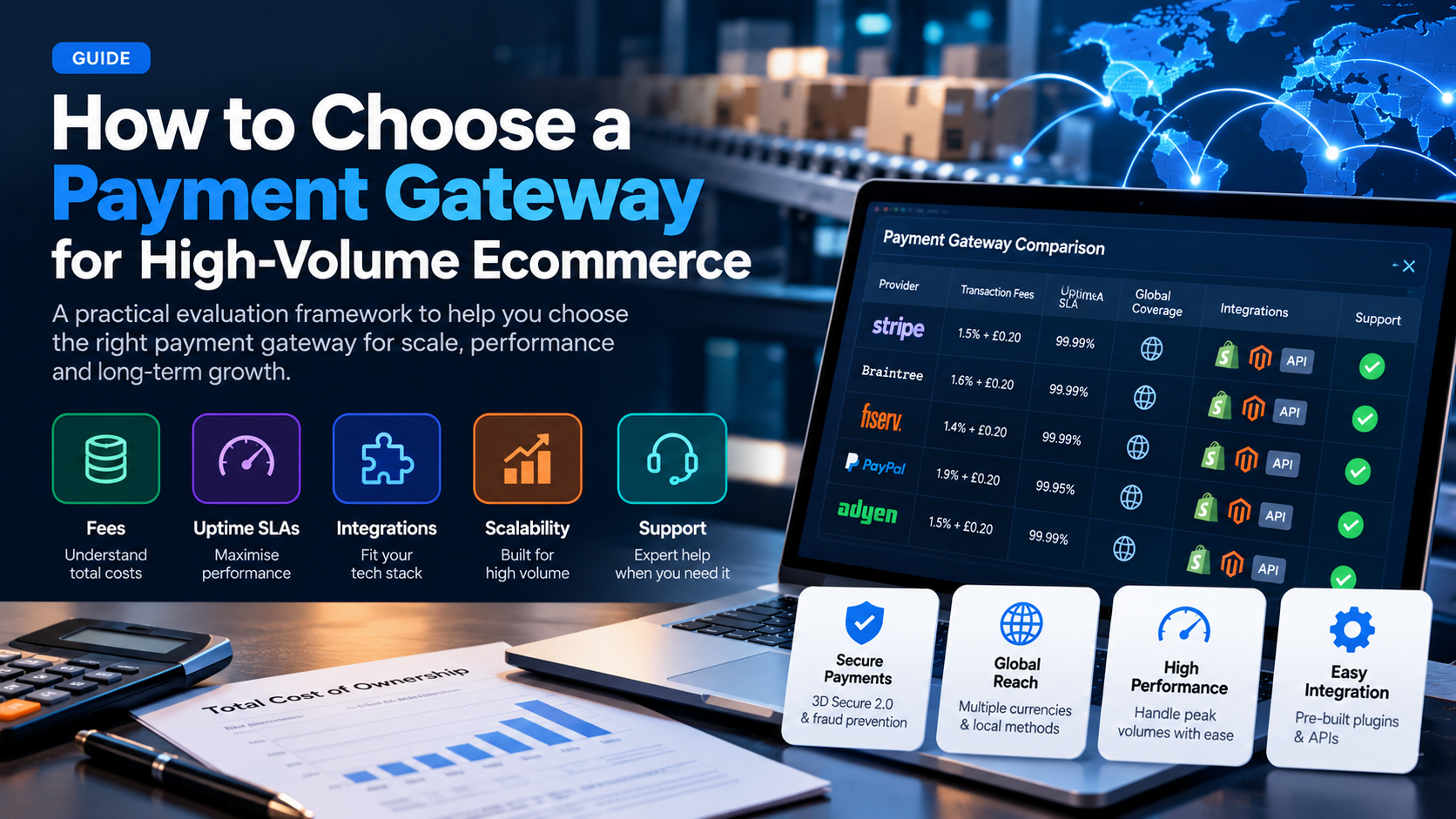
How to Choose a Payment Gateway for High-Volume Ecommerce (2026 Guide)
A practical framework for evaluating payment gateways when you process $50k+ per month: fees, uptime, integrations, scalability, and support.
Read More →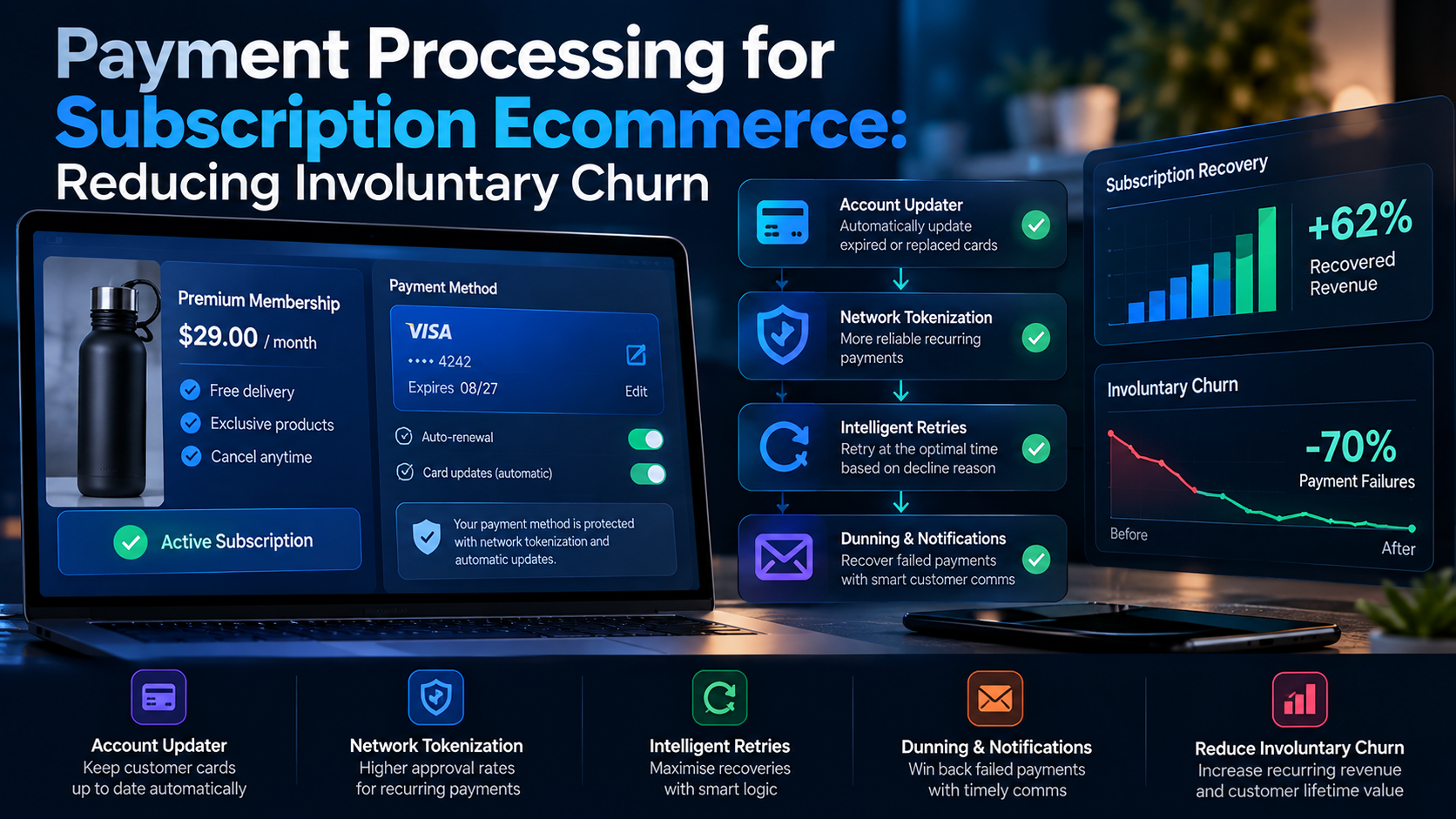
Payment Processing for Subscription Ecommerce: Reducing Involuntary Churn (2026 Guide)
Involuntary churn from failed payments costs subscription businesses 20-40% of revenue. Here is how to fix declined cards, update expired cards, and retain subscribers.
Read More →