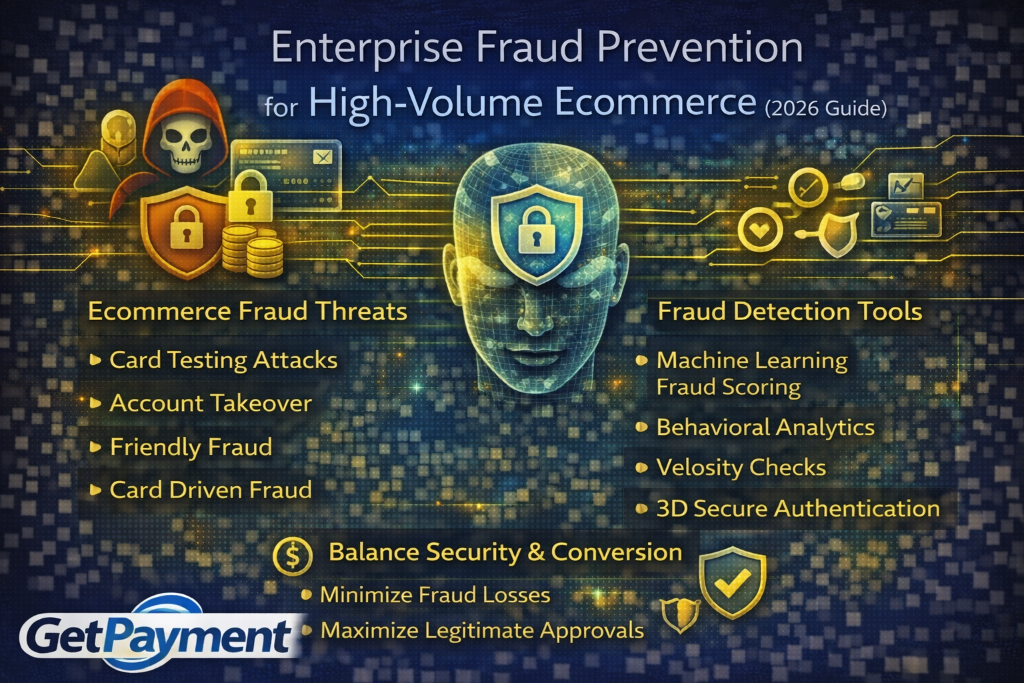
 Learn how to implement enterprise fraud prevention for high-volume ecommerce while maintaining approval rates and maximizing revenue.
Need Payment Processing?
✓ Stripe shutdown?
✓ High-risk industry?
✓ Declined payments?
Get approved today.
Apply NowKey Takeaways
As your ecommerce business scales, fraud becomes unavoidable.
Higher volume brings more transactions, more exposure, and more risk.
- ✓Lower approval rates
- ✓Poor customer experience
- ✓Card testing attacks
- ✓Account takeovers
- ✓Friendly fraud and chargebacks
Introduction: The Double-Edged Sword of Fraud Prevention
As your ecommerce business scales, fraud becomes unavoidable.
Higher volume brings more transactions, more exposure, and more risk.
But here is the real challenge.
Most businesses respond to fraud by tightening controls.
And in doing so, they create a new problem.
They start blocking legitimate customers.
This leads to:
- Lost revenue
- Lower approval rates
- Poor customer experience
This is why enterprise fraud prevention for high-volume ecommerce is not just about stopping fraud.
It is about finding the balance between risk control and revenue optimization.
Why Fraud Increases at Scale
Fraudsters target success.
The more volume your business processes, the more attractive it becomes.
High-volume ecommerce businesses often face:
- Card testing attacks
- Account takeovers
- Refund abuse
- Friendly fraud and chargebacks
At scale, even a small percentage of fraud can result in significant financial loss.
The Real Cost of Fraud Beyond Chargebacks
Most merchants think fraud cost equals chargebacks.
But the real impact is much larger.
Fraud can lead to:
- Lost products and fulfillment costs
- Chargeback fees
- Higher processing fees
- Increased scrutiny from processors
- Potential account termination
And most importantly, it can damage your payment performance.
Understanding False Declines: The Hidden Revenue Killer
While fraud is a problem, false declines are often a bigger one.
A false decline happens when a legitimate customer is blocked.
This can occur due to:
- Overly strict fraud rules
- High-risk scoring thresholds
- Unusual customer behavior
- Cross-border transactions
At scale, false declines can cost more than fraud itself.
Enterprise Fraud Prevention Is About Balance
The goal is not to eliminate all fraud.
That is impossible.
The goal is to:
- Reduce fraud to an acceptable level
- Maximize legitimate approvals
- Maintain a smooth customer experience
This requires a more sophisticated approach than basic fraud filters.
Layered Fraud Prevention Strategy
Enterprise ecommerce businesses use layered fraud systems.
Instead of relying on a single rule or tool, they combine multiple signals.
This can include:
- Behavioral analysis
- Device fingerprinting
- Transaction pattern monitoring
- Risk scoring systems
A layered approach improves accuracy and reduces false positives.
Velocity Checks and Behavioral Analysis
Velocity checks monitor how quickly transactions occur.
They help detect:
- Card testing
- Rapid purchase attempts
- Suspicious activity spikes
However, they must be balanced carefully.
Behavioral analysis adds another layer by understanding how real users behave.
Combining both improves fraud detection without blocking legitimate activity.
Machine Learning and Adaptive Fraud Systems
Enterprise fraud systems often use machine learning.
These systems:
- Learn from transaction data
- Adapt to new fraud patterns
- Improve accuracy over time
This allows businesses to move away from rigid rules and toward dynamic decision-making.
The Role of Payment Data in Fraud Prevention
Data is the foundation of effective fraud prevention.
Better data leads to better decisions.
You should analyze:
- Transaction history
- Customer behavior
- Device data
- Geographic patterns
The more context you have, the more accurately you can assess risk.
Smart Payment Routing as a Fraud Tool
Smart routing is not just for approvals.
It can also be used to manage fraud risk.
You can:
- Route higher-risk transactions through more tolerant acquirers
- Balance risk across multiple processors
- Optimize approval rates without increasing exposure
This adds flexibility to your fraud strategy.
Multi-Acquirer Setups Reduce Risk Exposure
Relying on a single processor increases your risk.
If fraud levels rise, your account may be restricted or shut down.
A multi-acquirer setup allows you to:
- Distribute risk
- Maintain processing continuity
- Reduce dependency on one provider
This is essential for enterprise businesses.
Network Tokenisation and Fraud Reduction
Network tokenisation improves security by replacing card data with tokens.
This reduces:
- Data exposure
- Fraud risk
- Unauthorized usage
Tokenised transactions are also more trusted by issuing banks, improving approval rates.
Optimizing Fraud Rules for Peak Traffic Events
During high-traffic events, fraud patterns change.
Transaction volume increases, and normal behavior may look suspicious.
If fraud rules are not adjusted, you may:
- Block legitimate customers
- Increase false declines
- Lose revenue during critical periods
Enterprise businesses adapt their fraud strategy dynamically during these events.
Geographic Risk and International Transactions
Cross-border transactions often carry higher fraud risk.
But they are also critical for growth.
To manage this, you should:
- Adjust fraud rules by region
- Use local acquiring where possible
- Monitor international performance separately
This allows you to scale globally without excessive risk.
Fraud Prevention and Customer Experience
Fraud prevention should not create friction.
If your checkout feels difficult or restrictive, customers will abandon.
To maintain a good experience:
- Minimize unnecessary verification steps
- Use invisible fraud detection where possible
- Provide clear error messaging
The goal is to protect without disrupting.
Monitoring and Continuous Optimization
Fraud prevention is not static.
You should continuously monitor:
- Fraud rates
- Chargeback levels
- Approval rates
- False decline rates
This allows you to adjust your strategy and improve over time.
Common Mistakes in Enterprise Fraud Prevention
Many businesses struggle with fraud because of avoidable mistakes.
Common issues include:
- Overly strict rules
- Lack of data analysis
- Relying on a single fraud tool
- Not adjusting for scale
- Ignoring false declines
Fixing these can significantly improve performance.
The Financial Impact of Optimized Fraud Prevention
When done correctly, fraud optimization leads to:
- Lower chargeback costs
- Higher approval rates
- Increased revenue
- Better customer experience
It is one of the highest-impact areas for improvement.
How GetPayment Helps You Optimize Fraud Prevention
At GetPayment, we help high-volume ecommerce businesses build advanced fraud prevention systems.
We help you:
- Balance fraud and approval rates
- Reduce false declines
- Implement multi-layered fraud strategies
- Optimize routing and infrastructure
- Build scalable payment systems
Our focus is on protecting your business while maximizing revenue.
Final Thoughts: Control Risk Without Sacrificing Growth
Fraud is part of ecommerce.
But how you manage it determines your success.
The best enterprise businesses understand that:
- Fraud prevention is not just about blocking risk
- It is about enabling growth
- Balance is everything
With the right strategy, you can reduce fraud while increasing revenue.
Ready to Optimize Your Fraud Prevention Strategy?
If you want to reduce fraud, improve approval rates, and build a scalable payment system, GetPayment can help.
Apply today to optimize your fraud prevention strategy and protect your revenue.
FAQ: Enterprise Fraud Prevention
What is enterprise fraud prevention?
Enterprise fraud prevention involves advanced systems and strategies designed to detect and prevent fraudulent transactions at scale while maintaining high approval rates.
Why is fraud prevention harder at scale?
Higher transaction volume attracts more fraud and increases complexity, making it harder to balance risk and approvals.
What are false declines?
False declines occur when legitimate transactions are incorrectly blocked by fraud systems, leading to lost revenue.
How can I reduce false declines?
By optimizing fraud rules, using better data, implementing smart routing, and balancing risk thresholds.
Does fraud prevention affect approval rates?
Yes. Overly strict fraud controls can reduce approval rates by blocking legitimate transactions.
What is the best fraud prevention strategy?
A layered approach combining data analysis, machine learning, routing, and multi-acquirer setups.
Can fraud prevention improve revenue?
Yes. By reducing false declines and improving approvals, optimized fraud systems can significantly increase revenue.
Tags

Jane Harold
Head of Payment Strategy
GetPayment Inc
Jane Harold is a payment strategy expert with 12+ years of experience in high-volume ecommerce payments, merchant account management, and checkout optimization. She has helped hundreds of US ecommerce brands improve authorization rates, reduce processing costs, and scale payment infrastructure.
Areas of Expertise
Payment Strategy Expert
12+ years in industry
Certified Payment Specialist
PCI DSS Level 1 compliance
Merchant Account Advisor
500+ merchants advised
Industry Speaker
Ecommerce & payment conferences
Get Expert Advice
Have questions about payment processing? Reach out to Jane directly.
Years Experience
Merchants Helped
Bank Partners
Satisfaction Rate
Recover Revenue From Payment Declines
GetPayment helps ecommerce merchants increase approval rates with smart routing and high-risk-friendly processors.
High-risk friendly
Multiple processors
Global coverage
Get Your Free Payment Fee Audit
See exactly how much you're overpaying in processing fees. Our experts analyze your statement and show you potential savings.
Request Free AuditLearn more in our Fraud & Chargeback Prevention Guide
Explore the complete guide for this topic with deeper insights and strategies.
View Guide →Related Articles
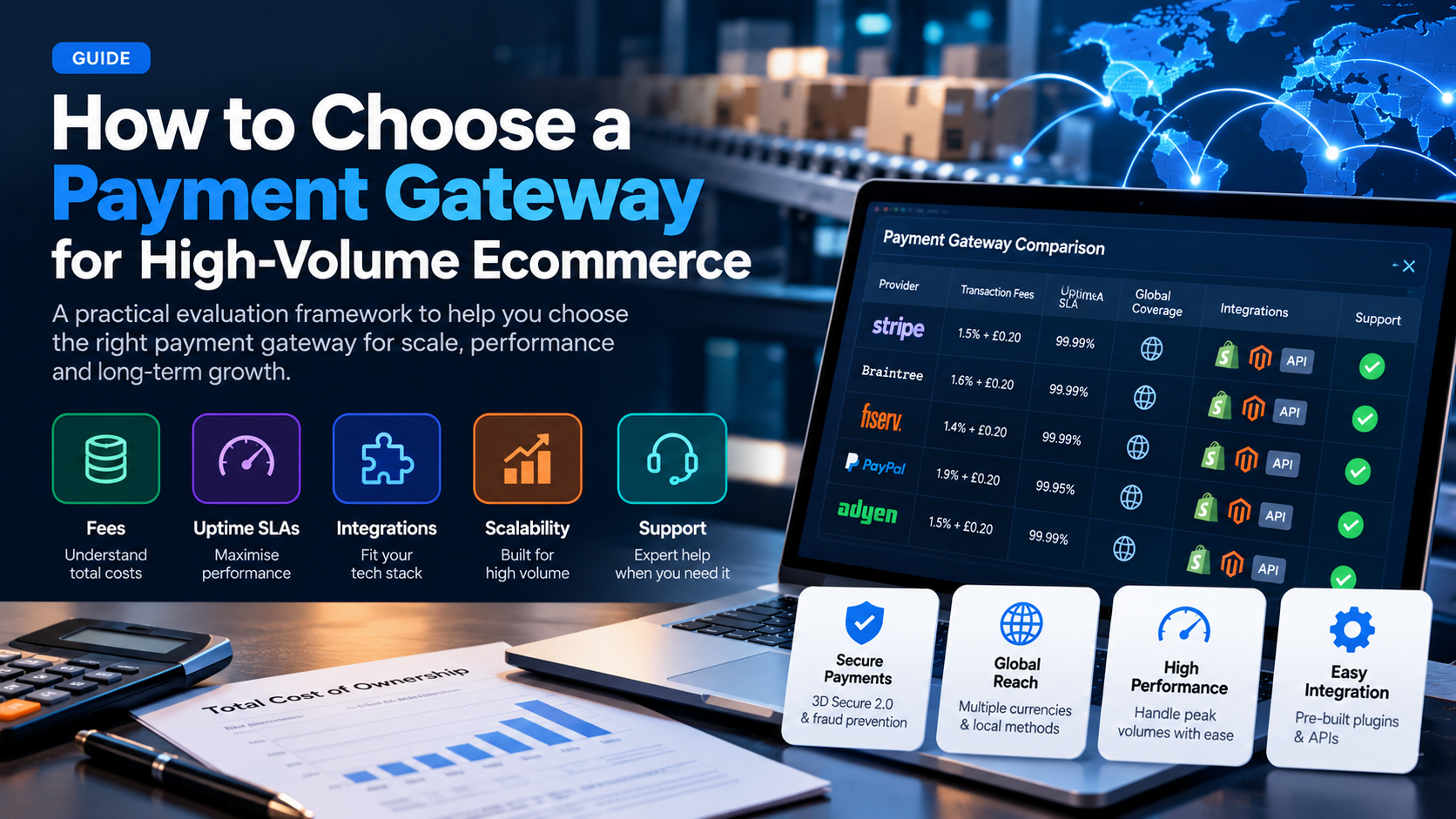
How to Choose a Payment Gateway for High-Volume Ecommerce (2026 Guide)
A practical framework for evaluating payment gateways when you process $50k+ per month: fees, uptime, integrations, scalability, and support.
Read More →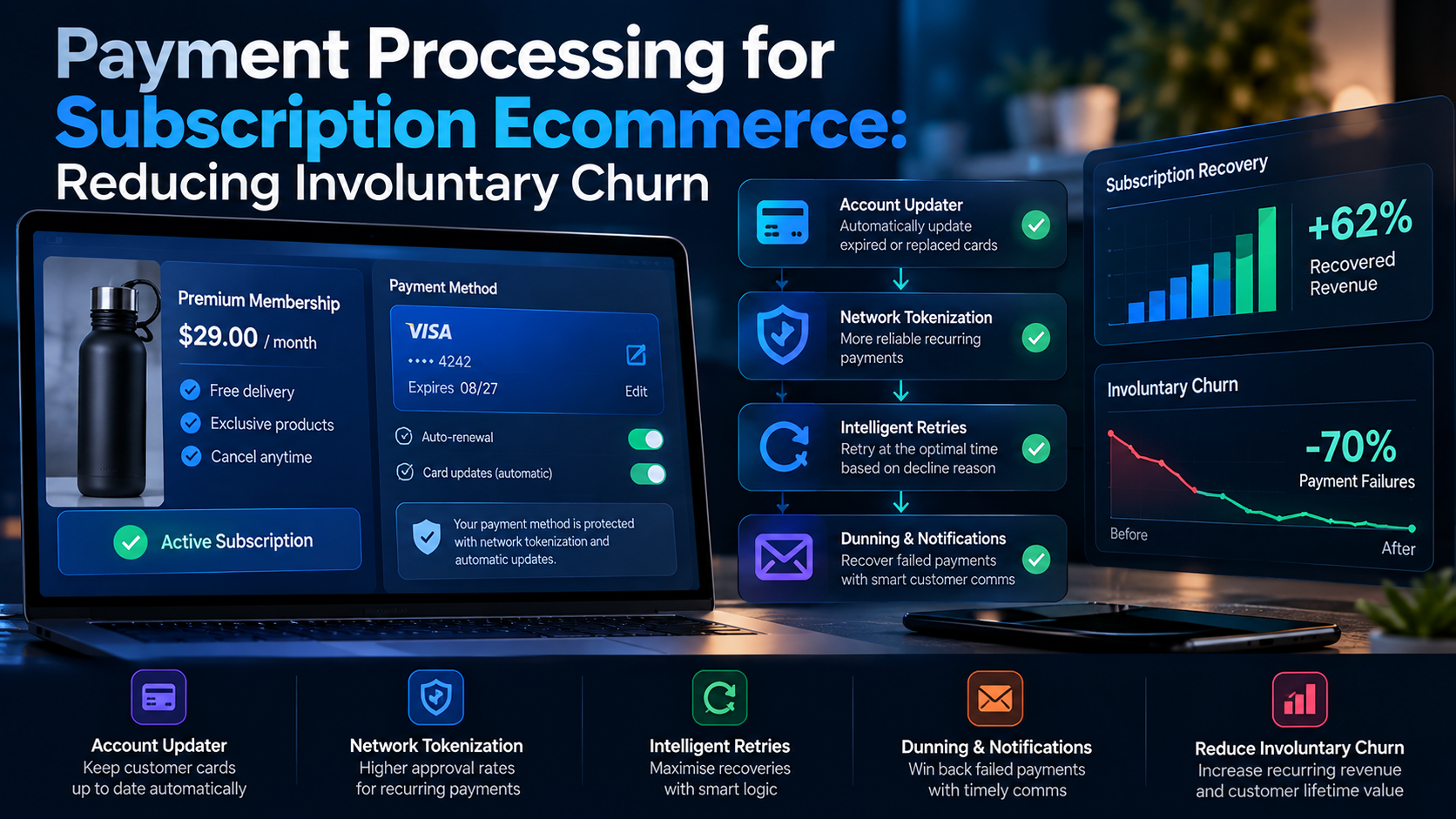
Payment Processing for Subscription Ecommerce: Reducing Involuntary Churn (2026 Guide)
Involuntary churn from failed payments costs subscription businesses 20-40% of revenue. Here is how to fix declined cards, update expired cards, and retain subscribers.
Read More →