Chargebacks are one of the most costly and complex problems facing ecommerce merchants today. When customers dispute transactions through their banks, merchants not only lose revenue but also incur chargeback fees, operational costs, and increased payment processing risk.
If chargeback ratios rise too high, merchants can be placed into card network monitoring programs or even lose their payment processing accounts.
For this reason, implementing strong chargeback prevention strategies for ecommerce is essential for maintaining long-term business stability.
In this guide, we'll cover the most effective ways ecommerce merchants can prevent chargebacks, reduce disputes, and protect their merchant accounts.
What Is a Chargeback?
A chargeback occurs when a customer disputes a payment with their issuing bank instead of requesting a refund directly from the merchant.
When the bank initiates the chargeback process, the transaction amount is immediately reversed while the dispute is investigated.
Common reasons for chargebacks include:
- unauthorized transactions
- product not received
- product not as described
- duplicate charges
- subscription billing disputes
For ecommerce businesses, many chargebacks are actually caused by friendly fraud, where legitimate customers dispute valid transactions.
Why Chargeback Prevention Matters for Ecommerce
High chargeback rates can have serious consequences for online merchants.
Payment networks such as Visa and Mastercard monitor merchant dispute ratios closely.
If a business exceeds acceptable thresholds, they may face:
- higher payment processing fees
- mandatory fraud monitoring programs
- penalties from card networks
- termination of their merchant account
For ecommerce brands that rely heavily on online payments, losing payment processing capabilities can severely disrupt operations.
Proactive chargeback prevention systems help merchants reduce this risk.
The Most Common Causes of Ecommerce Chargebacks
Understanding why chargebacks occur is the first step toward preventing them.
Several issues commonly lead to disputes in ecommerce transactions.
Friendly Fraud
Friendly fraud occurs when customers dispute legitimate purchases.
This may happen when customers:
- forget they made the purchase
- do not recognize the billing descriptor
- attempt to obtain refunds while keeping products
Friendly fraud now accounts for a majority of ecommerce chargebacks.
Fraudulent Transactions
Traditional fraud happens when stolen credit cards are used to place unauthorized orders.
If the legitimate cardholder disputes the transaction, the merchant receives a chargeback.
Fraud detection tools are essential for reducing these cases.
Shipping and Delivery Problems
Customers often file disputes when they believe their order was never delivered.
Common causes include:
- delayed shipments
- incorrect addresses
- package theft after delivery
Clear shipping tracking and delivery confirmation can significantly reduce these disputes.
Unclear Billing Descriptors
Customers frequently dispute transactions when they do not recognize the merchant name on their credit card statement.
If the billing descriptor is unclear or different from the brand name, customers may assume the transaction is fraudulent.
Effective Chargeback Prevention Strategies
Preventing chargebacks requires a combination of fraud prevention, operational improvements, and customer communication.
Below are the most effective strategies ecommerce merchants should implement.
Use Clear Billing Descriptors
Your billing descriptor should clearly display your business or website name on the customer's credit card statement.
A recognizable descriptor helps customers quickly identify legitimate purchases and reduces unnecessary disputes.
Many merchants also include a customer support phone number within their billing descriptor.
Improve Customer Support Access
Customers often file chargebacks because they cannot easily contact the merchant for help.
Providing accessible support options helps resolve issues before they escalate.
Recommended support channels include:
- email support
- live chat
- phone support
- self-service refund requests
Fast response times can significantly reduce dispute rates.
Fraud prevention systems help block suspicious transactions before they are processed.
Modern ecommerce fraud detection tools analyze multiple signals including:
- device fingerprinting
- IP address location
- behavioral patterns
- transaction velocity
These tools help merchants identify potentially fraudulent orders and reduce unauthorized transaction disputes.
Use 3D Secure Authentication
3D Secure authentication provides an additional security layer for online payments.
This technology verifies the cardholder through the issuing bank during the checkout process.
Modern implementations such as 3D Secure 2.0 reduce fraud while maintaining smooth checkout experiences.
In many cases, successful authentication can also shift liability away from merchants.
Provide Accurate Product Descriptions
Customers may dispute purchases when products do not match expectations.
Clear product descriptions, images, and sizing information reduce misunderstandings that lead to disputes.
Transparent product information improves customer satisfaction and lowers the risk of chargebacks.
Use Shipment Tracking and Delivery Confirmation
Shipping disputes are a major source of ecommerce chargebacks.
Merchants should always provide customers with shipment tracking numbers and delivery updates.
For higher-value orders, requiring signature confirmation can provide strong evidence in dispute cases.
Send Order Confirmation and Transaction Emails
Sending immediate order confirmations helps customers remember purchases.
Confirmation emails should include:
- order details
- billing information
- delivery expectations
- customer support contact information
These messages reduce confusion and improve customer trust.
Offer Simple Refund and Return Policies
Complicated return processes often push customers to dispute transactions instead.
Merchants should provide:
- clear refund policies
- easy return instructions
- fast refund processing
Customers are far less likely to file chargebacks when refunds are easy to obtain.
Chargeback Monitoring and Early Warning Systems
Some tools allow merchants to identify disputes before they become official chargebacks.
Examples include:
- chargeback alert networks
- dispute monitoring systems
- payment processor risk notifications
These services notify merchants when customers initiate disputes so refunds can be issued before the chargeback is finalized.
This helps reduce the merchant's overall chargeback ratio.
The Long-Term Impact of Chargeback Prevention
Merchants that actively manage disputes gain several advantages.
Effective chargeback prevention can lead to:
- lower payment processing costs
- improved authorization rates
- stronger relationships with payment processors
- reduced fraud losses
For high-volume ecommerce brands, these improvements can significantly increase long-term profitability.
Final Thoughts
Chargebacks are an unavoidable part of ecommerce, but they can be significantly reduced through proactive prevention strategies.
By improving customer communication, strengthening fraud detection systems, and optimizing payment processes, ecommerce merchants can minimize disputes and protect their payment infrastructure.
Businesses that invest in long-term chargeback prevention strategies will be better positioned to scale while maintaining stable payment processing relationships.
FAQ: Chargeback Prevention for Ecommerce
What is chargeback prevention?
Chargeback prevention refers to strategies and tools that help ecommerce merchants reduce payment disputes before customers file chargebacks with their banks.
What causes most ecommerce chargebacks?
The most common causes of ecommerce chargebacks include friendly fraud, unauthorized transactions, shipping issues, subscription billing disputes, and unclear billing descriptors.
How can merchants reduce friendly fraud chargebacks?
Merchants can reduce friendly fraud by using clear billing descriptors, sending purchase confirmation emails, providing easy customer support access, and implementing fraud detection systems.
Fraud detection tools help prevent unauthorized transactions, which can reduce chargebacks caused by stolen credit cards. However, they do not eliminate disputes caused by friendly fraud.
What chargeback rate is considered high?
Most payment networks expect merchants to maintain chargeback rates below one percent of total transactions. Exceeding this level may trigger monitoring programs or penalties.
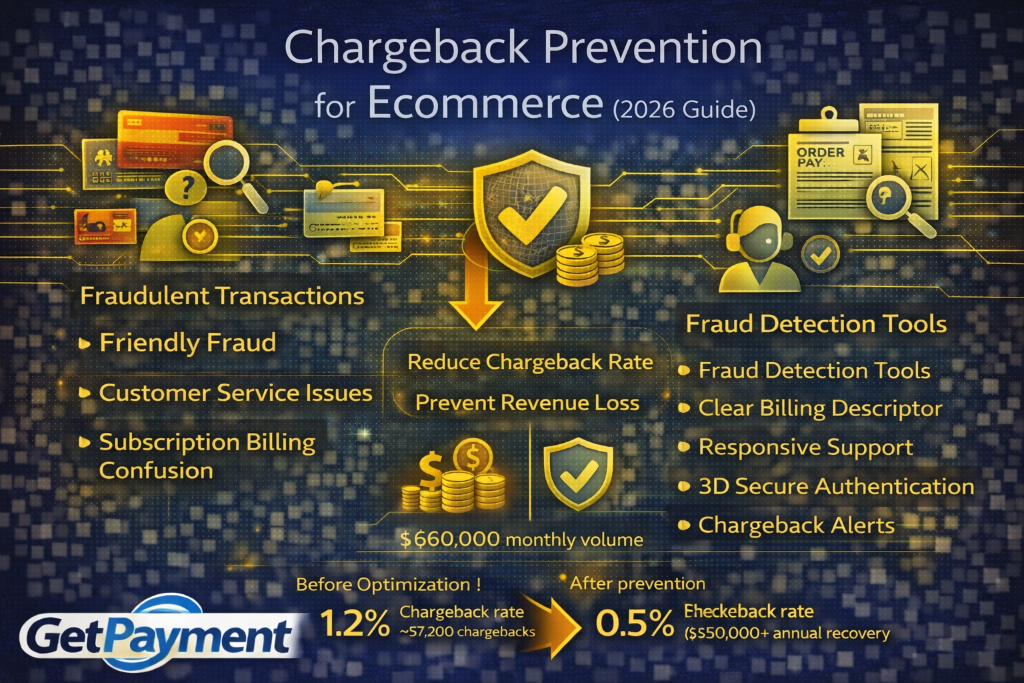 Learn the most effective chargeback prevention strategies for ecommerce merchants. Reduce disputes, protect your merchant account, and lower payment processing costs with proven fraud prevention tools.