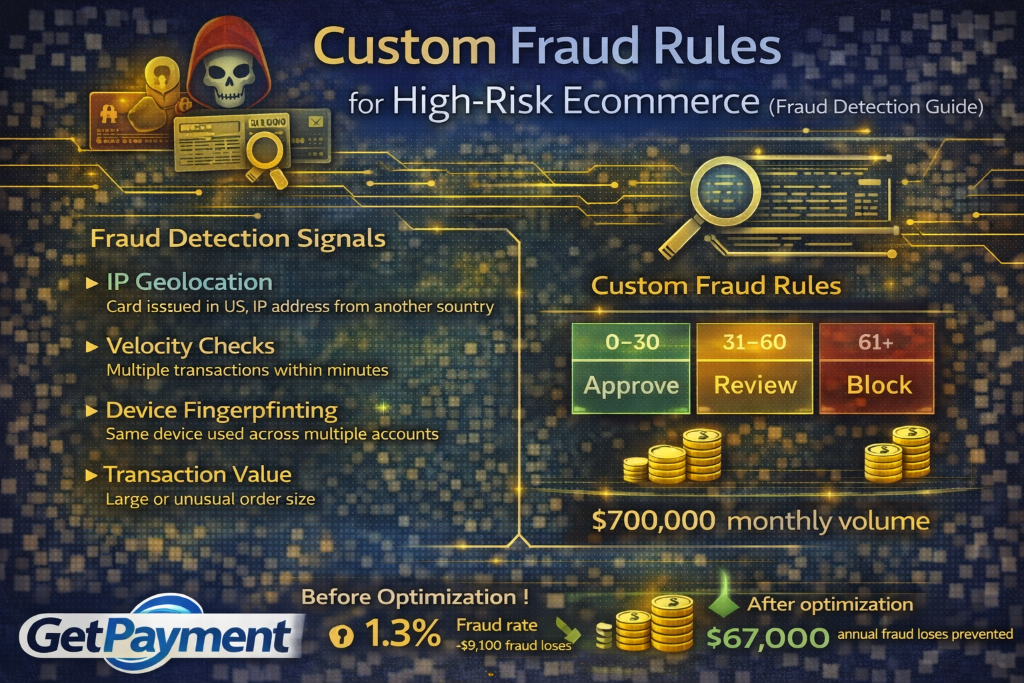
 Learn how to build custom fraud rules for high-risk ecommerce categories to reduce chargebacks, improve approvals, and scale safely.
Need Payment Processing?
✓ Stripe shutdown?
✓ High-risk industry?
✓ Declined payments?
Get approved today.
Apply NowKey Takeaways
If you operate in a high-risk category, you already know this.
Industries like supplements, digital products, subscription services, nutraceuticals, and certain global ecommerce models face:
- ✓Higher chargeback rates
- ✓Increased fraud attempts
- ✓Greater scrutiny from payment processors
- ✓Lower tolerance from acquiring banks
- ✓Let too much fraud through
Introduction: Why High-Risk Ecommerce Needs a Different Fraud Strategy
Not all ecommerce businesses are treated equally.
If you operate in a high-risk category, you already know this.
Industries like supplements, digital products, subscription services, nutraceuticals, and certain global ecommerce models face:
- Higher chargeback rates
- Increased fraud attempts
- Greater scrutiny from payment processors
- Lower tolerance from acquiring banks
Because of this, using standard fraud tools is not enough.
In fact, generic fraud rules often do more harm than good.
They either:
- Let too much fraud through
- Or block too many legitimate customers
This is why custom fraud rules for high-risk ecommerce categories are essential.
They allow you to tailor your fraud strategy to your specific risk profile—balancing protection with performance.
What Makes an Ecommerce Category "High Risk"?
High-risk categories are defined by how payment providers and banks perceive them.
Factors include:
- High chargeback rates
- Subscription billing models
- Aggressive marketing funnels
- Cross-border transaction volume
- Product types with refund or compliance concerns
These businesses are more likely to face:
- Payment declines
- Higher fees
- Account restrictions
Fraud prevention becomes critical not just for security, but for maintaining processing stability.
Why Generic Fraud Rules Fail High-Risk Merchants
Most fraud systems come with default rules.
These are designed for average-risk businesses.
For high-risk merchants, this creates problems.
Generic rules:
- Do not reflect your specific customer behavior
- May block legitimate transactions
- Fail to adapt to your traffic sources
- Do not account for your business model
This leads to poor performance and lost revenue.
The Goal of Custom Fraud Rules
The goal is not to eliminate fraud completely.
That is unrealistic.
The goal is to:
- Reduce fraud to acceptable levels
- Minimize chargebacks
- Maximize legitimate approvals
- Maintain a smooth checkout experience
Custom rules allow you to fine-tune your system to achieve this balance.
Understanding Your Risk Profile First
Before creating custom rules, you need to understand your risk profile.
This includes:
- Your average chargeback rate
- Fraud patterns specific to your business
- High-risk geographies
- Customer behavior patterns
Without this foundation, your rules will be ineffective.
Segmenting Transactions by Risk Level
One of the most important strategies is segmentation.
Not all transactions carry the same risk.
You should categorize transactions based on:
- Geography
- Order value
- Customer history
- Device and behavior signals
This allows you to apply different rules to different risk levels.
Geographic-Based Fraud Rules
Geography plays a major role in fraud risk.
Some regions have higher fraud rates than others.
Instead of blocking entire countries, you should:
- Apply stricter rules to high-risk regions
- Allow more flexibility in low-risk areas
- Monitor performance by region
This approach reduces unnecessary declines while controlling risk.
Velocity Rules for High-Risk Activity
Velocity checks are essential for detecting suspicious behavior.
They monitor how quickly transactions occur.
You can create rules to:
- Flag multiple transactions in a short time
- Detect repeated card attempts
- Identify unusual spikes in activity
However, these rules must be carefully tuned to avoid blocking legitimate customers during high traffic.
Device and Behavioral Analysis Rules
Fraudsters often behave differently from real customers.
Custom rules can analyze:
- Device fingerprints
- IP address patterns
- Session behavior
- Time spent on site
This helps identify suspicious activity without relying solely on rigid rules.
Customer History and Trust-Based Rules
Not all customers should be treated equally.
Returning customers with a good history are lower risk.
You can create rules to:
- Allow trusted customers to bypass certain checks
- Reduce friction for repeat buyers
- Increase scrutiny for new or unknown users
This improves conversion while maintaining security.
Order Value-Based Fraud Rules
Higher-value transactions often carry higher risk.
You can apply different rules based on order size.
For example:
- Require additional verification for high-value orders
- Apply stricter fraud scoring thresholds
- Use dynamic authentication like 3DS for larger transactions
This protects revenue without affecting smaller purchases.
Custom Rules for Subscription-Based Businesses
Subscription businesses face unique fraud challenges.
These include:
- Free trial abuse
- Stolen card usage
- Recurring billing fraud
Custom rules can help by:
- Monitoring unusual subscription patterns
- Flagging repeated sign-ups from the same user
- Verifying high-risk subscriptions
This reduces long-term fraud exposure.
Combining Fraud Rules with 3D Secure
3D Secure 2.0 can be used alongside custom fraud rules.
Instead of applying it to all transactions, you can:
- Trigger 3DS only for high-risk transactions
- Use it as an additional verification layer
- Balance security with conversion
This creates a more dynamic fraud strategy.
Multi-Acquirer Strategies and Fraud Control
High-risk merchants benefit from multiple acquiring partners.
This allows you to:
- Route transactions based on risk
- Reduce dependency on a single provider
- Maintain processing stability
Custom fraud rules can work alongside routing strategies to optimize outcomes.
Avoiding Overly Aggressive Rules
One of the biggest mistakes is being too strict.
Overly aggressive rules can:
- Block legitimate customers
- Reduce approval rates
- Hurt conversion
- Decrease revenue
Fraud prevention should be precise, not excessive.
Monitoring False Declines
False declines are often more costly than fraud itself.
You should track:
- Declined legitimate transactions
- Customer complaints
- Drop-off rates at checkout
This helps you adjust rules and improve performance.
Continuous Testing and Optimization
Fraud patterns change constantly.
Your rules must evolve.
You should:
- Test different rule configurations
- Monitor performance metrics
- Adjust thresholds regularly
This ensures your system remains effective over time.
Using Data to Improve Fraud Rules
Data is your most valuable asset.
You should analyze:
- Transaction outcomes
- Chargeback patterns
- Customer behavior
- Geographic trends
This allows you to refine your rules and improve accuracy.
Common Mistakes in High-Risk Fraud Strategies
Many merchants struggle due to avoidable mistakes.
Common issues include:
- Using default fraud settings
- Blocking entire regions unnecessarily
- Ignoring customer behavior data
- Not monitoring false declines
- Failing to adapt to changing patterns
Avoiding these mistakes can significantly improve results.
The Financial Impact of Custom Fraud Rules
When implemented correctly, custom fraud rules can:
- Reduce chargebacks
- Improve approval rates
- Increase revenue
- Enhance customer experience
At scale, these improvements have a major financial impact.
How GetPayment Helps High-Risk Merchants
At GetPayment, we specialize in helping high-risk ecommerce businesses optimize their payment systems.
We help you:
- Build custom fraud rule sets
- Balance fraud and conversion
- Reduce chargebacks
- Improve approval rates
- Implement multi-acquirer strategies
Our goal is to help you scale safely and profitably.
Final Thoughts: Precision Beats Restriction
Fraud prevention is not about blocking everything.
It is about making smarter decisions.
High-risk ecommerce businesses need:
- Custom strategies
- Data-driven rules
- Continuous optimization
When done correctly, fraud prevention becomes a growth enabler—not a limitation.
Ready to Build Custom Fraud Rules for Your Business?
If you want to reduce fraud, improve approvals, and build a scalable payment system for your high-risk ecommerce business, GetPayment can help.
Apply today to implement custom fraud rules designed for performance.
FAQ: Custom Fraud Rules for High-Risk Ecommerce
What are custom fraud rules?
Custom fraud rules are tailored settings designed to detect and prevent fraud based on your specific business model, customer behavior, and risk profile.
Why are custom rules important for high-risk businesses?
High-risk businesses face unique challenges that generic fraud systems cannot handle effectively, making customization essential.
Can fraud rules improve approval rates?
Yes. Properly optimized rules reduce false declines and allow more legitimate transactions to be approved.
What is the biggest mistake in fraud prevention?
Being too aggressive and blocking legitimate customers, which leads to lost revenue.
Should I block high-risk countries completely?
Not always. It is often better to apply stricter rules rather than blocking entire regions.
How often should fraud rules be updated?
Regularly. Fraud patterns change, so rules should be reviewed and optimized continuously.
Can fraud prevention increase revenue?
Yes. By reducing false declines and improving approvals, optimized fraud systems can significantly boost revenue.
Tags

Jane Harold
Head of Payment Strategy
GetPayment Inc
Jane Harold is a payment strategy expert with 12+ years of experience in high-volume ecommerce payments, merchant account management, and checkout optimization. She has helped hundreds of US ecommerce brands improve authorization rates, reduce processing costs, and scale payment infrastructure.
Areas of Expertise
Payment Strategy Expert
12+ years in industry
Certified Payment Specialist
PCI DSS Level 1 compliance
Merchant Account Advisor
500+ merchants advised
Industry Speaker
Ecommerce & payment conferences
Get Expert Advice
Have questions about payment processing? Reach out to Jane directly.
Years Experience
Merchants Helped
Bank Partners
Satisfaction Rate
Recover Revenue From Payment Declines
GetPayment helps ecommerce merchants increase approval rates with smart routing and high-risk-friendly processors.
High-risk friendly
Multiple processors
Global coverage
Get Your Free Payment Fee Audit
See exactly how much you're overpaying in processing fees. Our experts analyze your statement and show you potential savings.
Request Free AuditLearn more in our Fraud & Chargeback Prevention Guide
Explore the complete guide for this topic with deeper insights and strategies.
View Guide →Related Articles
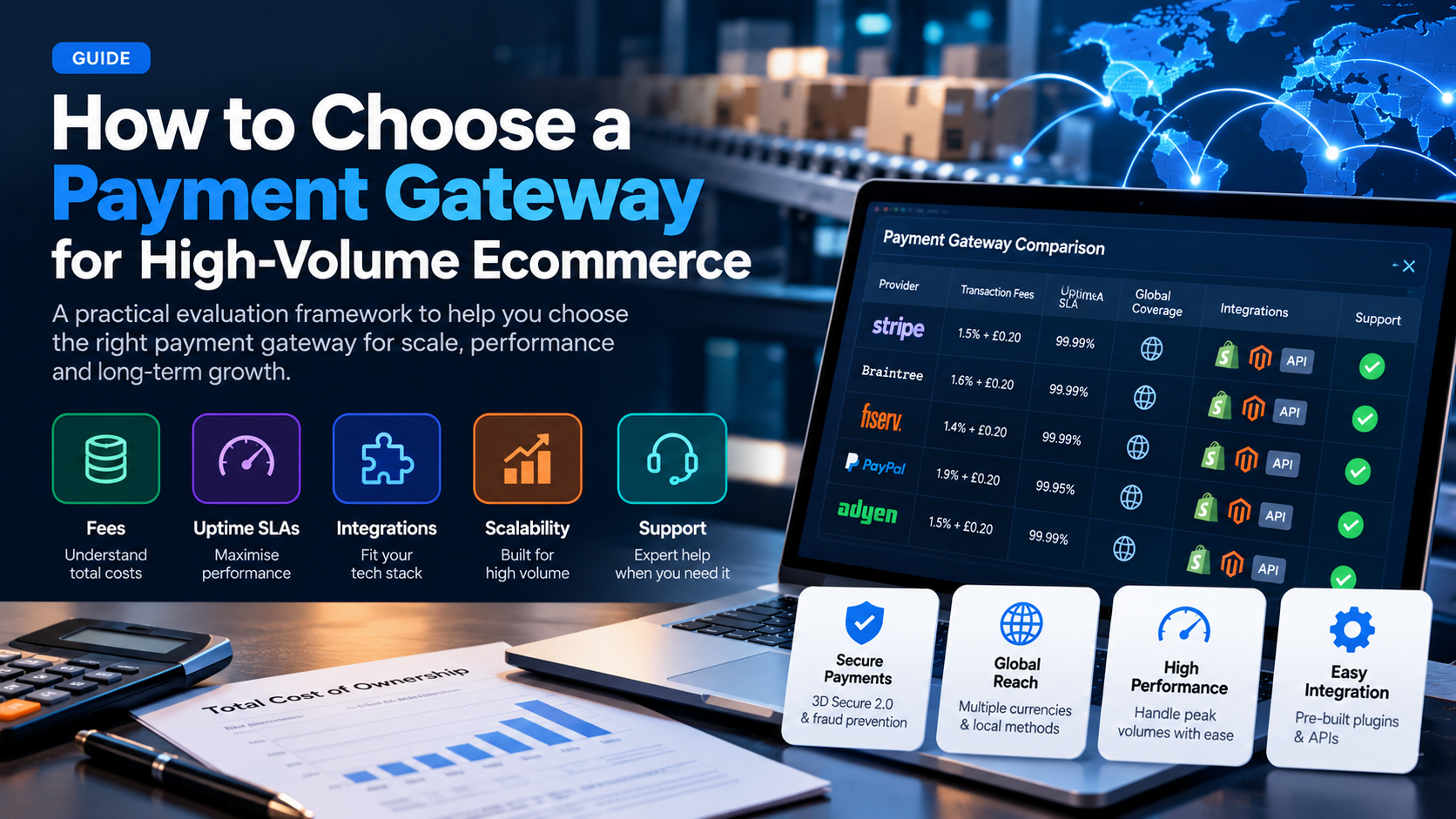
How to Choose a Payment Gateway for High-Volume Ecommerce (2026 Guide)
A practical framework for evaluating payment gateways when you process $50k+ per month: fees, uptime, integrations, scalability, and support.
Read More →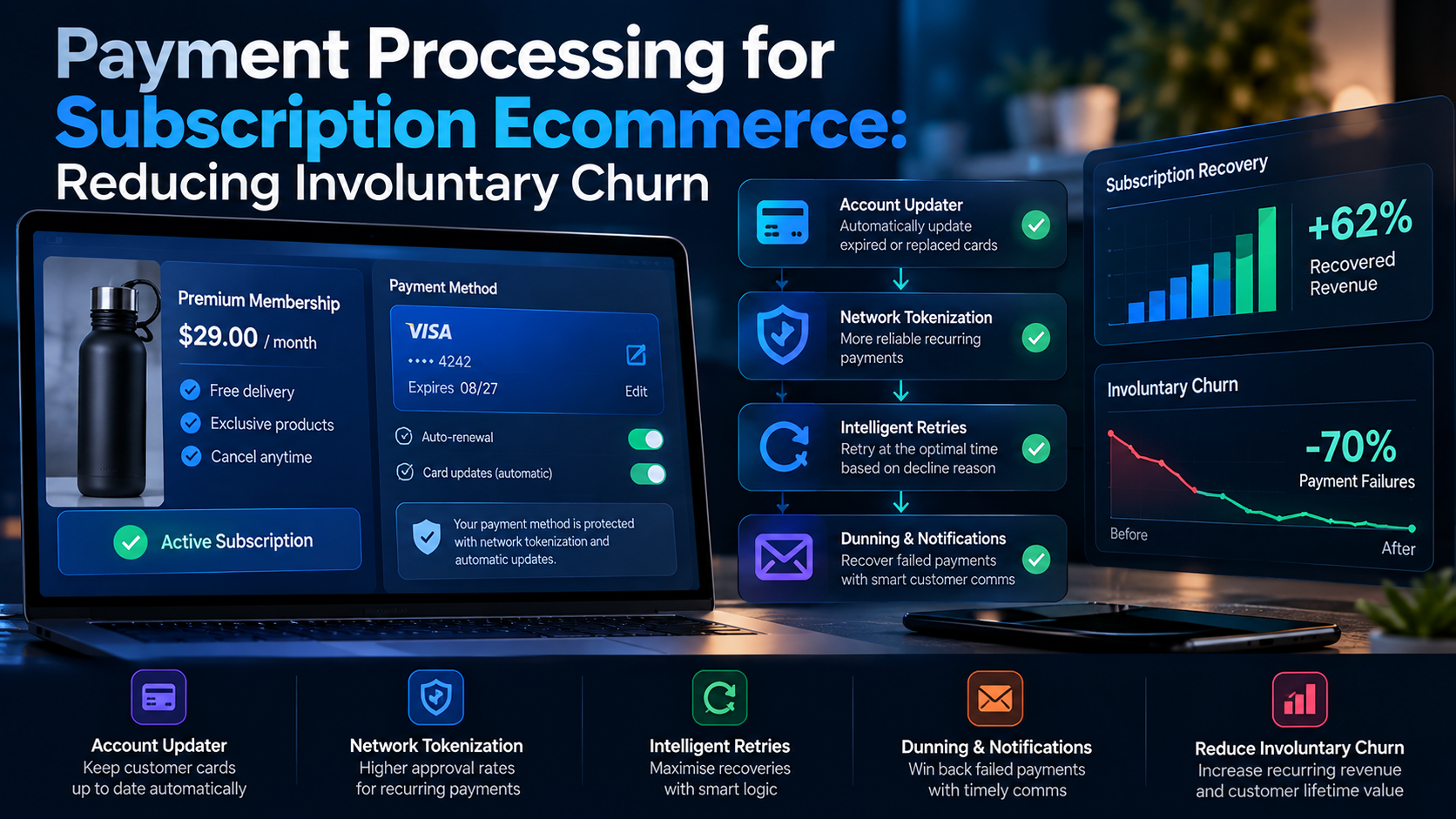
Payment Processing for Subscription Ecommerce: Reducing Involuntary Churn (2026 Guide)
Involuntary churn from failed payments costs subscription businesses 20-40% of revenue. Here is how to fix declined cards, update expired cards, and retain subscribers.
Read More →