Chargebacks remain one of the largest operational and financial risks for ecommerce merchants, especially for high-volume online businesses.
When a customer disputes a transaction through their bank, merchants not only lose revenue but also incur chargeback fees, fraud monitoring penalties, and rising payment processing costs.
To combat this, many merchants use chargeback alert services that notify businesses when a dispute is initiated so they can issue a refund before the chargeback is officially processed.
But are these tools actually worth the cost?
This guide provides a complete ROI analysis of chargeback alert services for ecommerce merchants in 2026, including how they work, their costs, and whether they improve chargeback prevention.
What Are Chargeback Alert Services?
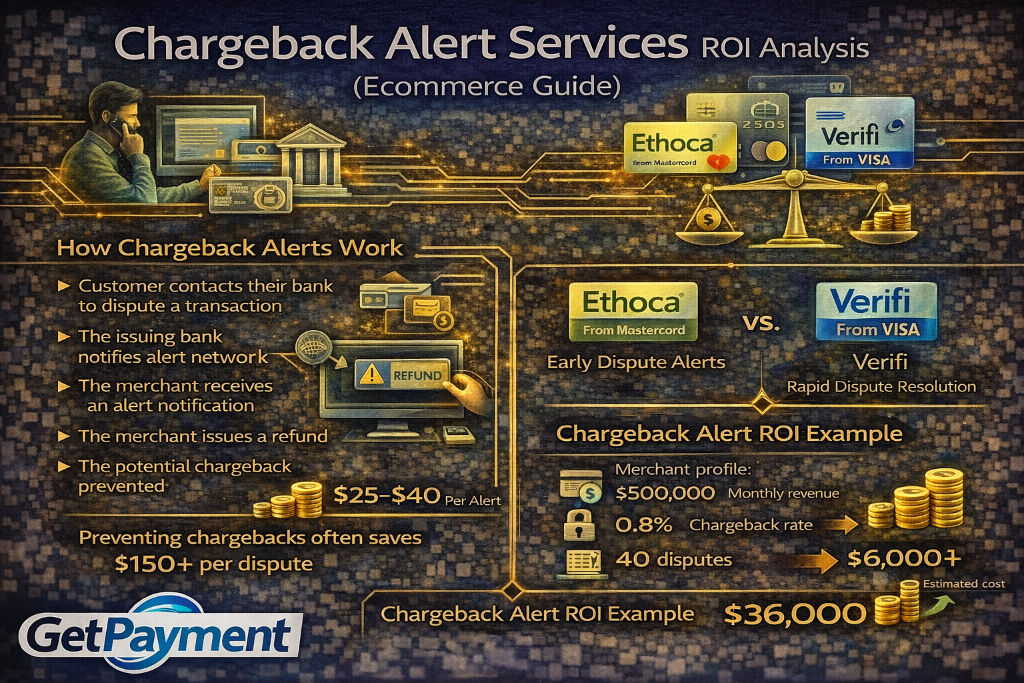
Chargeback alert services are real-time notification systems that alert merchants when a customer has initiated a dispute with their issuing bank.
These alerts give merchants the opportunity to refund the transaction before the chargeback officially hits the payment processor, preventing it from counting against the merchant's chargeback ratio.
Two of the most widely used chargeback alert networks include:
- Ethoca Alerts
- Verifi RDR (Rapid Dispute Resolution)
These systems connect directly to card networks and issuing banks, enabling merchants to receive early warnings about disputes.
Why Chargeback Alerts Matter for Ecommerce Merchants
Chargeback ratios are closely monitored by payment networks like Visa and Mastercard.
If merchants exceed certain thresholds, they may be placed into monitoring programs such as:
- Visa Fraud Monitoring Program (VFMP)
- Visa Chargeback Monitoring Program (VCMP)
- Mastercard Excessive Chargeback Program
High chargeback ratios can result in:
- Increased payment processing fees
- Additional monitoring penalties
- Payment processor termination
Chargeback alerts help merchants reduce their dispute ratios before these thresholds are triggered.
How Chargeback Alert Services Work
The process behind chargeback alerts is relatively simple.
A customer disputes a transaction through their issuing bank.
Step 2: Alert Is Triggered
The dispute is detected by the alert network before it becomes a formal chargeback.
Step 3: Merchant Receives Notification
The merchant receives a notification containing:
- transaction ID
- card information
- dispute reason
- purchase details
Step 4: Merchant Issues Refund
The merchant can issue a refund immediately to prevent the chargeback from being finalized.
If refunded quickly, the dispute never becomes a chargeback.
Cost of Chargeback Alert Services
Most chargeback alert services charge merchants per alert received.
Typical pricing structures include:
- $15–$45 per alert
- monthly platform subscription fees
- integration or onboarding costs
While this cost may appear high, it must be compared against the true cost of a chargeback.
The True Cost of a Chargeback
For ecommerce merchants, the financial impact of a chargeback extends beyond the original transaction amount.
Industry estimates show that merchants lose $3–$4 for every $1 in chargebacks.
This means preventing a single dispute can save significantly more than the alert cost.
ROI Analysis: Are Chargeback Alerts Worth It?
The ROI of chargeback alerts depends on the merchant's chargeback rate, average order value, and dispute frequency.
Let's look at an example.
Example Ecommerce Merchant
- Monthly transactions: 10,000
- Average order value: $80
- Chargeback rate: 0.9%
Monthly chargebacks: 90 disputes
Estimated cost per chargeback: $250 total impact
Total monthly loss: $22,500
If chargeback alerts prevent 50% of disputes, merchants could save: $11,250 monthly
Even if alerts cost: $25 × 45 alerts = $1,125
The merchant still saves over: $10,000 per month
This is why many high-volume ecommerce brands consider chargeback alerts essential.
When Chargeback Alerts Provide the Highest ROI
Chargeback alerts are especially valuable for merchants in the following categories.
Subscription Businesses
Subscription companies experience higher levels of:
- forgotten renewals
- friendly fraud
- recurring billing disputes
Alerts allow businesses to refund transactions quickly and avoid disputes.
High Average Order Value Stores
Businesses selling products above $100 per order benefit more from alerts because the chargeback impact is larger.
Fast-Growth Ecommerce Brands
Rapidly scaling brands often see temporary spikes in chargebacks.
Alert services help prevent these spikes from pushing merchants into monitoring programs.
Limitations of Chargeback Alert Services
While alerts provide strong benefits, they are not a perfect solution.
Merchants should understand several limitations.
Not All Banks Participate
Some issuing banks do not participate in alert networks.
Alerts Do Not Prevent Fraud
Alerts only notify merchants after the dispute process begins. They do not stop fraudulent transactions.
Refunds Are Required
To stop the chargeback, merchants typically must issue a refund, meaning revenue is still lost.
However, this is often cheaper than a full chargeback dispute.
Best Practices for Using Chargeback Alerts
Merchants get the best results when alerts are part of a broader chargeback prevention strategy.
Recommended best practices include:
Combine Alerts with Fraud Detection
Fraud prevention tools reduce the number of disputes that occur.
Improve Customer Support
Easy refund access reduces the likelihood of chargebacks.
Monitor Dispute Trends
Analyze disputes to identify patterns such as product issues, delivery problems, or confusing billing descriptors.
The Future of Chargeback Prevention
Chargeback prevention is evolving quickly with new technologies and payment network initiatives.
Key trends shaping dispute management include:
- automated dispute resolution
- AI-driven fraud detection
- network tokenization
- improved payment authentication systems
Merchants that implement multiple layers of chargeback prevention will see the best results.
Final Thoughts
Chargeback alert services are one of the most effective tools for reducing dispute ratios in ecommerce.
While alerts do not eliminate fraud, they provide merchants with an opportunity to resolve disputes before they become official chargebacks, protecting payment processing relationships and reducing operational costs.
For high-volume ecommerce businesses, chargeback alerts often deliver significant ROI by preventing expensive disputes and chargeback monitoring penalties.
FAQ: Chargeback Alert Services for Ecommerce
What are chargeback alert services?
Chargeback alert services notify merchants when a customer initiates a dispute with their bank. These alerts allow businesses to refund transactions before the dispute becomes an official chargeback.
How much do chargeback alert services cost?
Most services charge $15 to $45 per alert, depending on the provider and integration. Some platforms also charge monthly subscription or setup fees.
Do chargeback alerts stop disputes completely?
No. Chargeback alerts do not prevent disputes but allow merchants to resolve them early by issuing refunds before they are processed as chargebacks.
What is the difference between Ethoca and Verifi alerts?
Ethoca and Verifi are two major dispute alert networks. Ethoca connects merchants with participating issuing banks, while Verifi offers Visa-specific tools such as Rapid Dispute Resolution (RDR).
Are chargeback alerts worth it for small ecommerce stores?
Chargeback alerts provide the most value for high-volume merchants or stores with higher order values, where each prevented dispute saves significant money.
 Are chargeback alert services worth it? Learn the ROI of chargeback alerts for ecommerce merchants, including cost analysis, benefits, and how alerts reduce disputes and chargeback ratios.