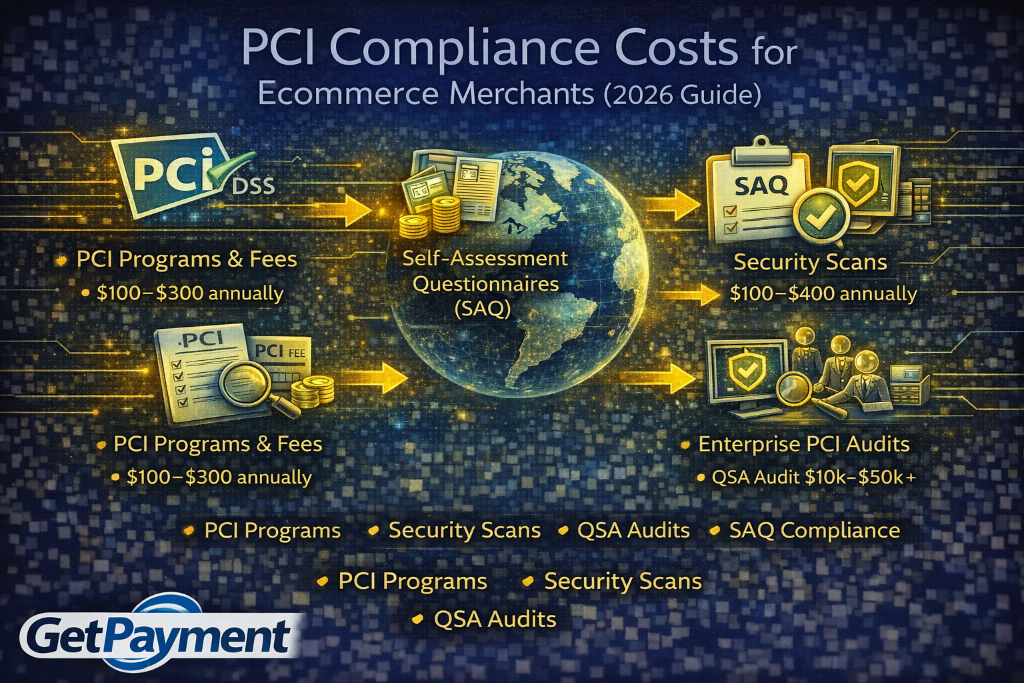
 Learn the true PCI compliance costs for high-volume ecommerce businesses and how to reduce expenses while maintaining security and compliance.
Need Payment Processing?
✓ Stripe shutdown?
✓ High-risk industry?
✓ Declined payments?
Get approved today.
Apply NowKey Takeaways
As your ecommerce business scales, security becomes non-negotiable.
Handling large volumes of card payments means you are responsible for protecting sensitive customer data.
- ✓Securing payment data
- ✓Protecting systems from breaches
- ✓Maintaining strict access controls
- ✓Monitoring and testing security systems
- ✓Multiple payment integrations
Introduction: The Cost of Compliance Most Merchants Underestimate
As your ecommerce business scales, security becomes non-negotiable.
Handling large volumes of card payments means you are responsible for protecting sensitive customer data.
This is where PCI compliance comes in.
But for many high-volume merchants, PCI compliance is misunderstood.
Some see it as just a checkbox. Others see it as an unnecessary expense.
In reality, PCI compliance costs for high-volume ecommerce can be significant—but also highly optimizable.
If managed correctly, compliance can protect your business, reduce risk, and even improve payment performance.
If handled poorly, it becomes an expensive and inefficient burden.
What Is PCI Compliance?
PCI DSS (Payment Card Industry Data Security Standard) is a set of security standards designed to protect cardholder data.
Any business that processes, stores, or transmits card information must comply.
PCI compliance involves:
- Securing payment data
- Protecting systems from breaches
- Maintaining strict access controls
- Monitoring and testing security systems
For ecommerce businesses, this is critical because transactions happen without physical card verification.
Why PCI Compliance Costs Increase at Scale
At low volume, PCI compliance can be relatively simple.
At high volume, complexity increases significantly.
You may have:
- Multiple payment integrations
- Larger customer databases
- Higher transaction throughput
- Increased fraud risk
- More complex infrastructure
This leads to higher compliance requirements and higher costs.
The Different Types of PCI Compliance Costs
PCI compliance costs are not always obvious.
They are spread across multiple areas of your business.
These include:
- Direct compliance fees
- Security infrastructure costs
- Operational and maintenance costs
- Potential penalties and fines
Understanding each category is key to optimizing your total cost.
PCI Compliance Fees Charged by Processors
Many payment processors charge PCI-related fees.
These can include:
- Monthly PCI compliance fees
- Annual certification fees
- Non-compliance penalties
These fees are often bundled into your payment processing costs and may go unnoticed.
Security Infrastructure Costs
PCI compliance requires secure systems.
This often involves investment in:
- Secure hosting environments
- Firewalls and network security
- Encryption systems
- Tokenisation solutions
For high-volume merchants, these costs can increase as infrastructure scales.
Cost of PCI Audits and Assessments
Depending on your volume and setup, you may need:
- Self-assessment questionnaires
- External security scans
- Full PCI audits
Larger businesses may require Qualified Security Assessors (QSAs), which can be expensive.
Operational Costs of Maintaining Compliance
PCI compliance is not a one-time task.
It requires ongoing maintenance.
This includes:
- Monitoring systems
- Updating security protocols
- Training staff
- Managing access controls
These operational costs are often overlooked but can be significant.
The Hidden Cost of Non-Compliance
Failing to meet PCI requirements can be extremely expensive.
Non-compliance can result in:
- Fines from card networks
- Higher processing fees
- Account restrictions or termination
- Increased liability in case of breaches
The cost of non-compliance often far exceeds the cost of compliance.
How PCI Scope Impacts Your Costs
One of the biggest drivers of PCI cost is your scope.
Scope refers to how much of your system handles card data.
The larger your scope:
- The more systems you must secure
- The more complex compliance becomes
- The higher your costs
Reducing scope is one of the most effective ways to lower costs.
Tokenisation and Scope Reduction
Tokenisation replaces sensitive card data with secure tokens.
This reduces your exposure to raw card information.
Benefits include:
- Lower PCI scope
- Reduced compliance requirements
- Improved security
For high-volume merchants, tokenisation is a key cost-saving strategy.
Hosted Payment Fields vs Direct Handling
How you collect payment data affects compliance costs.
If you handle card data directly, your PCI requirements increase.
Using hosted payment fields or external payment pages can:
- Reduce your compliance burden
- Lower infrastructure costs
- Simplify security requirements
This is one of the most effective ways to reduce costs.
The Role of Payment Gateways in PCI Costs
Your payment gateway plays a major role in compliance.
A well-structured gateway setup can:
- Reduce your PCI scope
- Improve security
- Lower compliance complexity
Choosing the right gateway is critical for cost optimization.
Multi-Acquirer Setups and Compliance Complexity
While multi-acquirer setups improve performance, they can increase complexity.
Each integration may:
- Expand your compliance scope
- Require additional security controls
However, with proper architecture, you can maintain optimization without increasing costs unnecessarily.
PCI Compliance and Fraud Prevention
Fraud prevention and PCI compliance are closely linked.
Strong fraud systems can:
- Reduce risk exposure
- Improve security posture
- Lower compliance pressure
Balancing fraud prevention with performance is essential.
How PCI Compliance Impacts Payment Performance
Many merchants view PCI compliance as purely a cost.
But it can also impact performance.
Strong compliance can lead to:
- Higher trust with processors
- Better approval rates
- Lower fraud-related declines
Security and performance often go hand in hand.
Common Mistakes That Increase PCI Costs
Many businesses spend more than necessary due to poor decisions.
Common mistakes include:
- Handling card data directly when unnecessary
- Not using tokenisation
- Overcomplicating infrastructure
- Ignoring scope reduction opportunities
- Failing to audit compliance costs
Avoiding these mistakes can significantly reduce expenses.
How to Reduce PCI Compliance Costs
There are several ways to optimize your costs.
You should:
- Reduce your PCI scope
- Use tokenisation wherever possible
- Implement hosted payment solutions
- Choose the right gateway and providers
- Regularly audit your compliance setup
Optimization is about working smarter, not cutting corners.
Why High-Volume Merchants Must Optimize Compliance
At scale, PCI costs can become substantial.
Without optimization, they can:
- Reduce margins
- Increase operational complexity
- Slow down growth
With the right strategy, you can maintain strong security while controlling costs.
The Financial Impact of Optimization
Optimizing PCI compliance can result in:
- Lower operational costs
- Reduced infrastructure expenses
- Improved payment performance
- Better scalability
Even small improvements can lead to significant savings.
How GetPayment Helps You Optimize PCI Costs
At GetPayment, we help high-volume merchants build secure and efficient payment systems.
We help you:
- Reduce PCI scope
- Implement tokenisation
- Optimize gateway and infrastructure
- Lower compliance costs
- Maintain high security standards
Our goal is to help you balance security, performance, and cost.
Final Thoughts: Compliance Should Not Kill Your Margins
PCI compliance is essential.
But it should not be unnecessarily expensive.
With the right approach, you can:
- Maintain strong security
- Reduce costs
- Improve performance
The key is understanding where your costs come from and how to optimize them.
Ready to Optimize Your PCI Compliance Costs?
If you want to reduce PCI compliance costs, improve your payment security, and optimize your infrastructure, GetPayment can help.
Apply today to build a secure and cost-efficient payment system for your business.
FAQ: PCI Compliance Costs
What is PCI compliance in ecommerce?
PCI compliance refers to following security standards designed to protect cardholder data in ecommerce transactions.
How much does PCI compliance cost?
Costs vary based on business size and complexity, but can include fees, infrastructure costs, audits, and operational expenses.
Can PCI compliance costs be reduced?
Yes. By reducing scope, using tokenisation, and optimizing infrastructure, businesses can significantly lower costs.
What happens if I am not PCI compliant?
You may face fines, higher fees, account restrictions, and increased liability in case of a data breach.
Does PCI compliance affect payment approval rates?
Indirectly, yes. Better security and lower fraud risk can improve trust and increase approval rates.
Is tokenisation required for PCI compliance?
It is not strictly required, but it is one of the most effective ways to reduce scope and simplify compliance.
Do all ecommerce businesses need PCI compliance?
Yes. Any business that processes card payments must comply with PCI standards.
Tags

Jane Harold
Head of Payment Strategy
GetPayment Inc
Jane Harold is a payment strategy expert with 12+ years of experience in high-volume ecommerce payments, merchant account management, and checkout optimization. She has helped hundreds of US ecommerce brands improve authorization rates, reduce processing costs, and scale payment infrastructure.
Areas of Expertise
Payment Strategy Expert
12+ years in industry
Certified Payment Specialist
PCI DSS Level 1 compliance
Merchant Account Advisor
500+ merchants advised
Industry Speaker
Ecommerce & payment conferences
Get Expert Advice
Have questions about payment processing? Reach out to Jane directly.
Years Experience
Merchants Helped
Bank Partners
Satisfaction Rate
Recover Revenue From Payment Declines
GetPayment helps ecommerce merchants increase approval rates with smart routing and high-risk-friendly processors.
High-risk friendly
Multiple processors
Global coverage
Get Your Free Payment Fee Audit
See exactly how much you're overpaying in processing fees. Our experts analyze your statement and show you potential savings.
Request Free AuditLearn more in our Reduce Payment Processing Fees Guide
Explore the complete guide for this topic with deeper insights and strategies.
View Guide →Related Articles
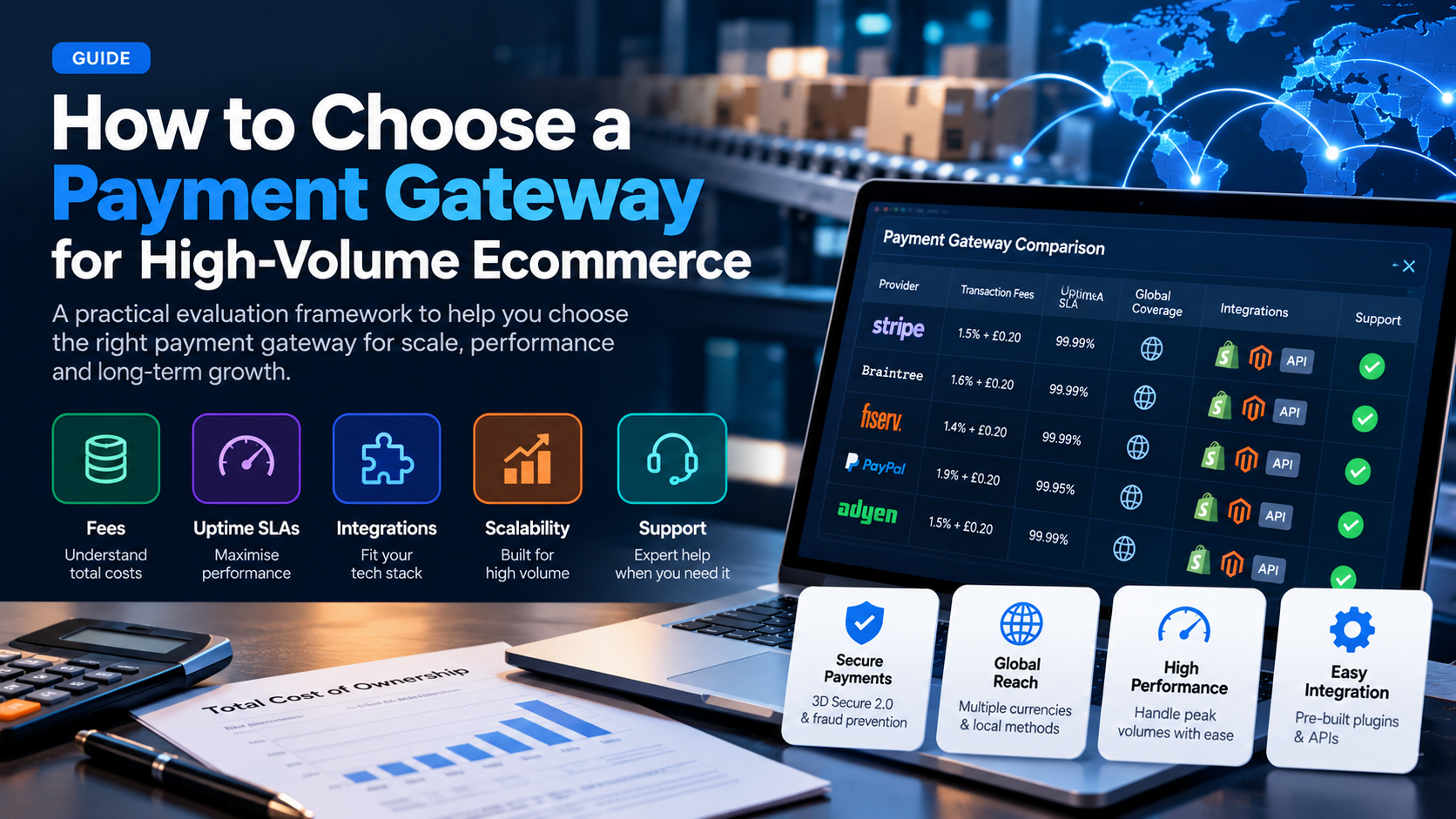
How to Choose a Payment Gateway for High-Volume Ecommerce (2026 Guide)
A practical framework for evaluating payment gateways when you process $50k+ per month: fees, uptime, integrations, scalability, and support.
Read More →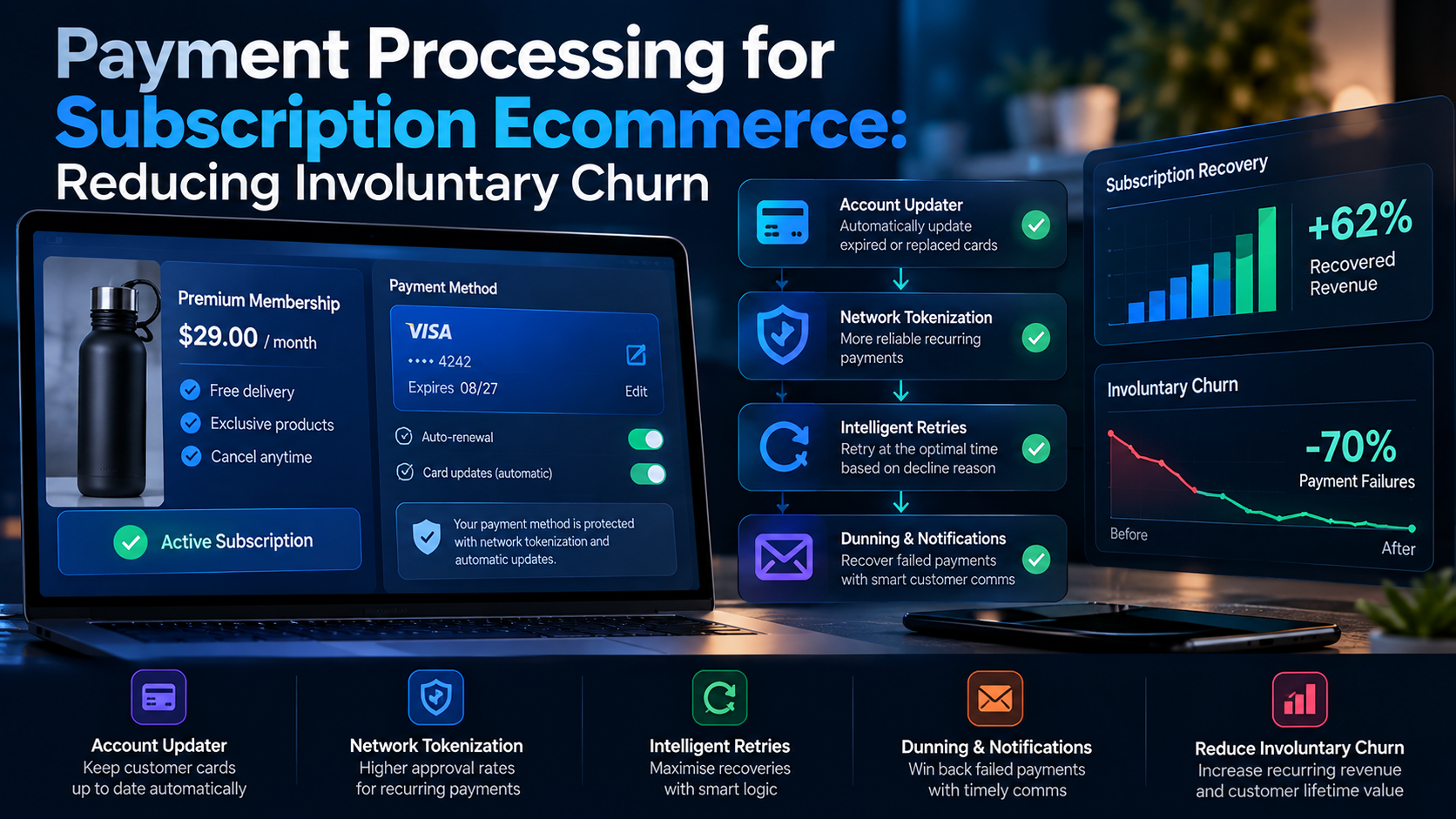
Payment Processing for Subscription Ecommerce: Reducing Involuntary Churn (2026 Guide)
Involuntary churn from failed payments costs subscription businesses 20-40% of revenue. Here is how to fix declined cards, update expired cards, and retain subscribers.
Read More →