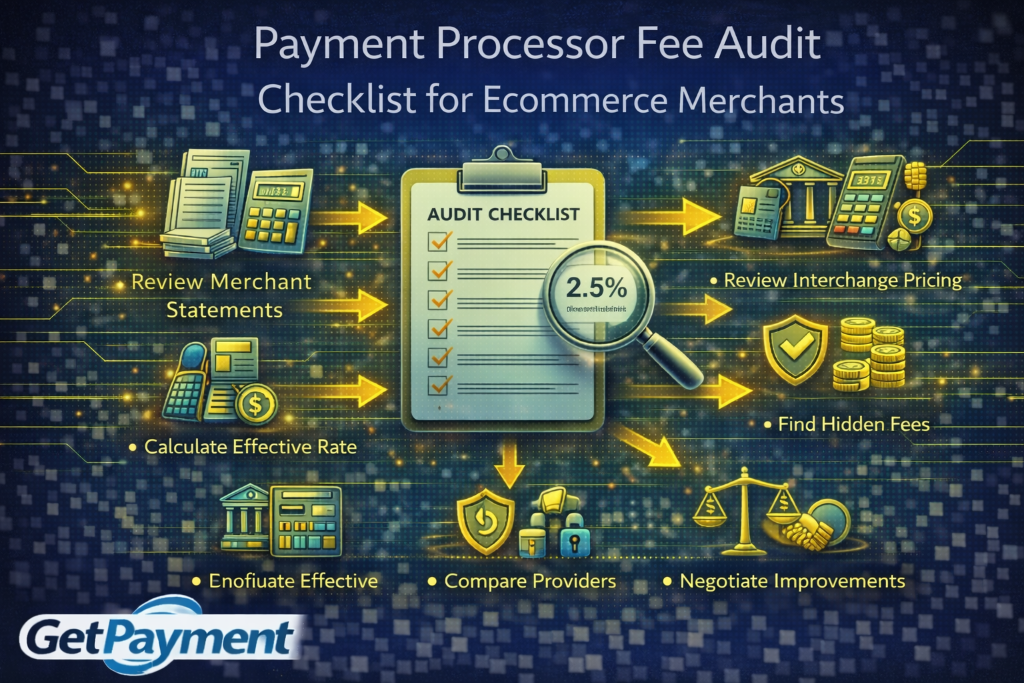
 Use this payment processor fee audit checklist to uncover hidden costs, reduce fees, and optimize your ecommerce payment setup for higher profitability.
Need Payment Processing?
✓ Stripe shutdown?
✓ High-risk industry?
✓ Declined payments?
Get approved today.
Apply NowKey Takeaways
As your business scales, payment processing fees quietly become one of your largest expenses. But unlike ad spend or inventory, these costs are rarely audited properly.
Between hidden markups, inefficient routing, downgrade penalties, and unnecessary charges, most businesses are overpaying significantly without realizing it.
- ✓Actual effective processing cost
- ✓Hidden and secondary fees
- ✓Interchange performance
- ✓Processor markups
- ✓Operational inefficiencies
Introduction: Why You Are Probably Overpaying for Payments
Most ecommerce businesses focus on growing revenue.
Very few focus on protecting it.
As your business scales, payment processing fees quietly become one of your largest expenses. But unlike ad spend or inventory, these costs are rarely audited properly.
Many merchants assume their fees are "standard."
They are not.
Between hidden markups, inefficient routing, downgrade penalties, and unnecessary charges, most businesses are overpaying significantly without realizing it.
This is why having a payment processor fee audit checklist is essential. It gives you a structured way to identify inefficiencies, reduce costs, and improve your margins.
What Is a Payment Processor Fee Audit?
A payment processor fee audit is a detailed review of your entire payment cost structure.
It goes beyond your headline rate and looks at:
- Actual effective processing cost
- Hidden and secondary fees
- Interchange performance
- Processor markups
- Operational inefficiencies
The goal is to understand exactly what you are paying — and why.
Only then can you optimize.
Why High-Volume Merchants Must Audit Fees Regularly
At low volume, inefficiencies may go unnoticed.
At scale, they become extremely expensive.
Even a small percentage of unnecessary fees can result in:
- Significant profit loss
- Reduced margins
- Slower growth
- Lower return on ad spend
Regular audits ensure that your payment system evolves with your business.
Step 1: Calculate Your True Effective Rate
The first step in any audit is understanding your true cost.
Most merchants look at their advertised rate.
Instead, you need to calculate your effective rate, which includes all fees.
This means dividing your total processing costs by your total processed volume.
This reveals what you are actually paying, not what you think you are paying.
Step 2: Identify All Fee Categories
Many fees are not immediately visible.
You need to break down your statement and identify all cost components.
These often include:
- Transaction fees
- Interchange costs
- Processor markups
- Gateway fees
- Authorization fees
- Decline fees
- Chargeback fees
- Monthly and operational fees
Understanding each category is critical.
Step 3: Analyze Interchange Performance
Interchange is the largest cost component.
You should evaluate:
- Which interchange categories your transactions fall into
- Whether you are experiencing downgrades
- How often higher-cost categories are applied
Poor interchange qualification is a major source of hidden costs.
Step 4: Look for Interchange Downgrades
Downgrades occur when transactions do not meet the criteria for lower-cost interchange categories.
This often happens due to:
- Missing transaction data
- Delayed batching
- Incorrect processing setup
Downgrades increase your costs significantly.
Identifying and fixing them is one of the fastest ways to save money.
Step 5: Evaluate Processor Markups
Your processor adds a markup on top of interchange.
This is one of the most negotiable parts of your pricing.
You should assess:
- Whether your markup is competitive
- How it compares to industry standards
- Whether it aligns with your volume
Many merchants are paying higher markups than necessary.
Step 6: Review Cross-Border Fees
If you sell internationally, cross-border fees can be substantial.
These include:
- International transaction surcharges
- Currency conversion fees
- Network fees
These costs are often hidden within blended pricing.
Optimizing your global payment setup can reduce them.
Step 7: Check Authorization and Decline Fees
Many processors charge for transaction attempts, even when they fail.
You should review:
- Authorization fees
- Decline fees
- Gateway request fees
If your approval rate is low, these fees can accumulate quickly.
Improving approvals reduces these costs.
Step 8: Audit Chargeback and Dispute Costs
Chargebacks come with multiple layers of cost.
You should analyze:
- Chargeback fees
- Retrieval request fees
- Monitoring program penalties
High chargeback rates not only increase fees but can also lead to higher processing costs overall.
Step 9: Review Monthly and Operational Fees
Beyond transaction costs, there are often additional operational fees.
These may include:
- Monthly account fees
- Gateway subscription fees
- Reporting and analytics fees
- PCI compliance fees
These costs should be reviewed and justified.
Step 10: Evaluate Rolling Reserves and Cash Flow Impact
Some processors hold a portion of your funds as a reserve.
While not always labeled as a fee, this affects your business.
It can:
- Reduce available cash flow
- Delay reinvestment
- Limit growth
You should assess whether reserve terms are reasonable and necessary.
Step 11: Assess Your Payment Infrastructure
Your payment setup directly impacts your costs.
You should evaluate:
- Whether you rely on a single processor
- If you are using multiple acquirers
- Whether routing is optimized
- If tokenisation is enabled
Poor infrastructure leads to higher costs.
Step 12: Analyze Approval Rates and Their Impact on Cost
Approval rates and costs are closely linked.
Low approval rates lead to:
- More decline fees
- Lost revenue
- Inefficient processing
Improving approval rates reduces both direct and indirect costs.
Step 13: Compare Providers and Create Leverage
You cannot negotiate effectively without alternatives.
You should:
- Compare multiple providers
- Request competitive quotes
- Use your volume as leverage
Competition drives better pricing.
Step 14: Negotiate Better Terms
Once you understand your costs, you can negotiate.
Focus on:
- Lower processor markups
- Reduced operational fees
- Better settlement terms
- Lower chargeback fees
Negotiation is one of the fastest ways to reduce costs.
Step 15: Implement Continuous Monitoring
An audit is not a one-time activity.
Your business evolves, and so do your payment costs.
You should:
- Monitor your effective rate regularly
- Track performance metrics
- Adjust your setup as needed
Continuous optimization leads to long-term savings.
Why Most Merchants Fail to Audit Properly
Many businesses attempt audits but miss key details.
Common mistakes include:
- Looking only at headline rates
- Ignoring interchange performance
- Not analyzing decline costs
- Failing to compare providers
- Treating audits as one-time events
A structured approach is essential.
The Financial Impact of a Proper Audit
A well-executed audit can result in:
- Lower processing costs
- Improved margins
- Better cash flow
- More efficient scaling
For high-volume merchants, the impact can be substantial.
How GetPayment Helps You Audit and Optimize Fees
At GetPayment, we help businesses uncover hidden costs and optimize their payment systems.
We help you:
- Perform detailed fee audits
- Identify inefficiencies
- Reduce unnecessary costs
- Improve approval rates
- Build optimized payment infrastructure
Our goal is to help you keep more of your revenue.
Final Thoughts: What You Do Not Audit Will Cost You
Payment processing fees are not fixed.
They are influenced by your setup, your performance, and your strategy.
Without auditing, you are operating blindly.
With the right audit process, you can:
- Uncover hidden costs
- Improve efficiency
- Increase profitability
The fastest way to increase profit is often to reduce what you are already spending.
Ready to Audit Your Payment Fees?
If you want to uncover hidden fees, reduce costs, and optimize your payment system, GetPayment can help.
Apply today to run a full payment processor audit and take control of your margins.
FAQ: Payment Processor Fee Audit
What is a payment processor fee audit?
A payment processor fee audit is a detailed review of all costs associated with your payment processing setup to identify inefficiencies and reduce expenses.
How often should I audit my payment fees?
High-volume merchants should audit their fees at least every 3 to 6 months to ensure they are not overpaying.
What is an effective processing rate?
The effective rate is your total processing cost divided by your total transaction volume. It reflects your true cost of payments.
Can I reduce payment processing fees through an audit?
Yes. Many fees, especially markups and operational costs, can be reduced through optimization and negotiation.
What are the most common hidden fees?
Common hidden fees include interchange downgrades, cross-border fees, authorization fees, and processor markups.
Do I need multiple processors to reduce costs?
Using multiple acquirers can improve routing, increase approval rates, and create leverage for better pricing.
What is the fastest way to lower payment costs?
The fastest way is to audit your current setup, improve approval rates, optimize routing, and negotiate better terms.
Tags

Jane Harold
Head of Payment Strategy
GetPayment Inc
Jane Harold is a payment strategy expert with 12+ years of experience in high-volume ecommerce payments, merchant account management, and checkout optimization. She has helped hundreds of US ecommerce brands improve authorization rates, reduce processing costs, and scale payment infrastructure.
Areas of Expertise
Payment Strategy Expert
12+ years in industry
Certified Payment Specialist
PCI DSS Level 1 compliance
Merchant Account Advisor
500+ merchants advised
Industry Speaker
Ecommerce & payment conferences
Get Expert Advice
Have questions about payment processing? Reach out to Jane directly.
Years Experience
Merchants Helped
Bank Partners
Satisfaction Rate
Recover Revenue From Payment Declines
GetPayment helps ecommerce merchants increase approval rates with smart routing and high-risk-friendly processors.
High-risk friendly
Multiple processors
Global coverage
Get Your Free Payment Fee Audit
See exactly how much you're overpaying in processing fees. Our experts analyze your statement and show you potential savings.
Request Free AuditLearn more in our Reduce Payment Processing Fees Guide
Explore the complete guide for this topic with deeper insights and strategies.
View Guide →Related Articles
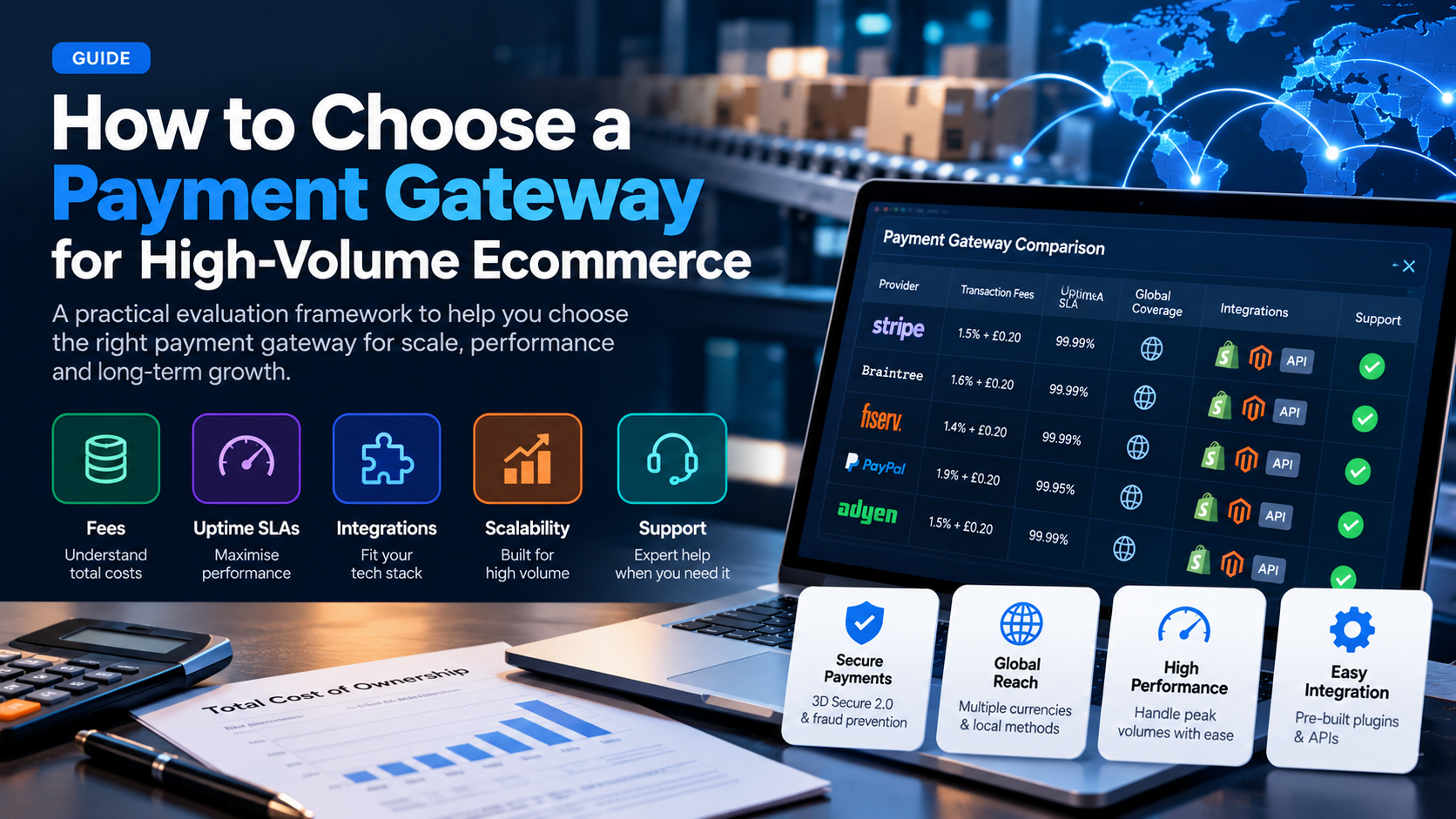
How to Choose a Payment Gateway for High-Volume Ecommerce (2026 Guide)
A practical framework for evaluating payment gateways when you process $50k+ per month: fees, uptime, integrations, scalability, and support.
Read More →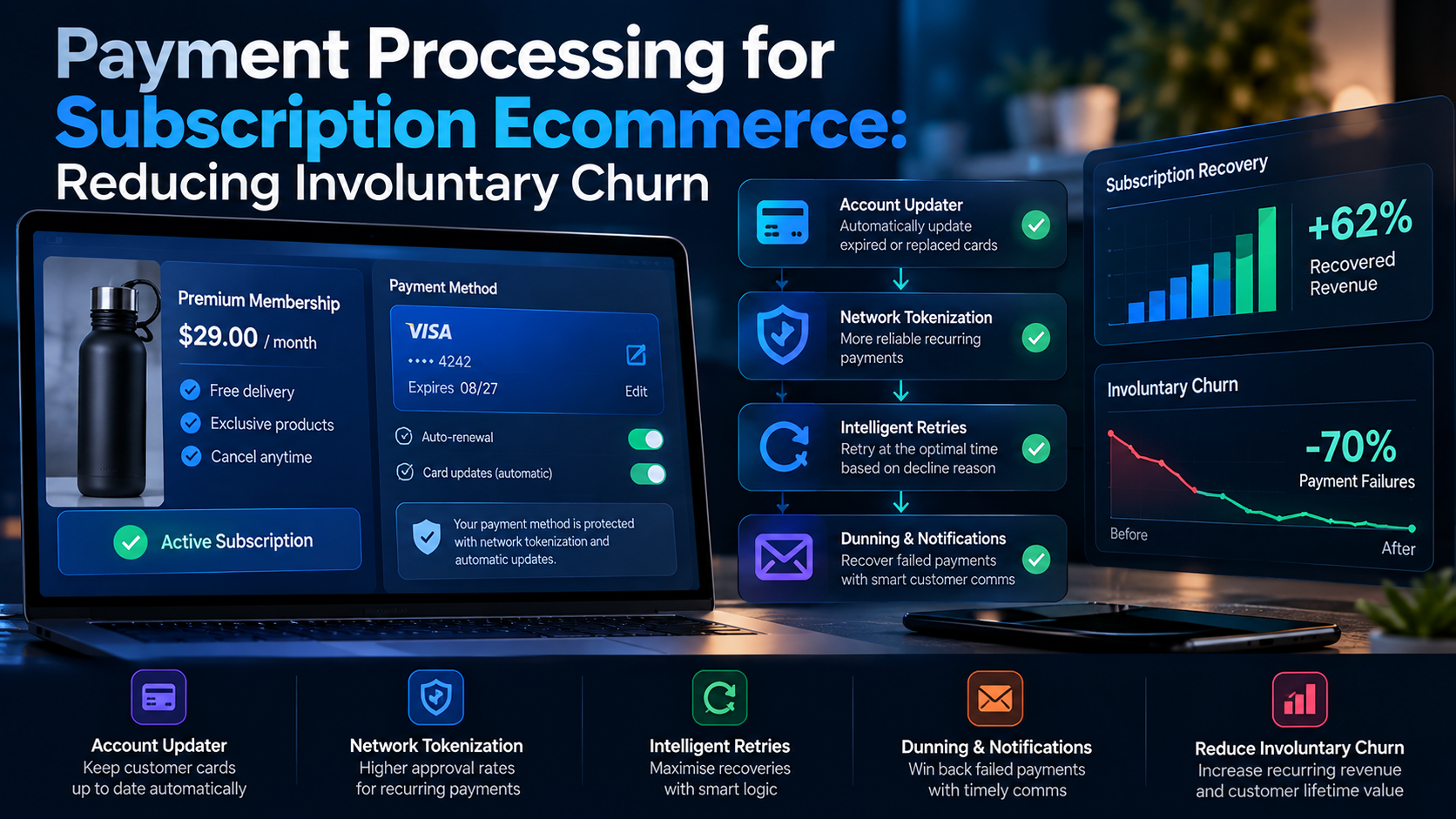
Payment Processing for Subscription Ecommerce: Reducing Involuntary Churn (2026 Guide)
Involuntary churn from failed payments costs subscription businesses 20-40% of revenue. Here is how to fix declined cards, update expired cards, and retain subscribers.
Read More →