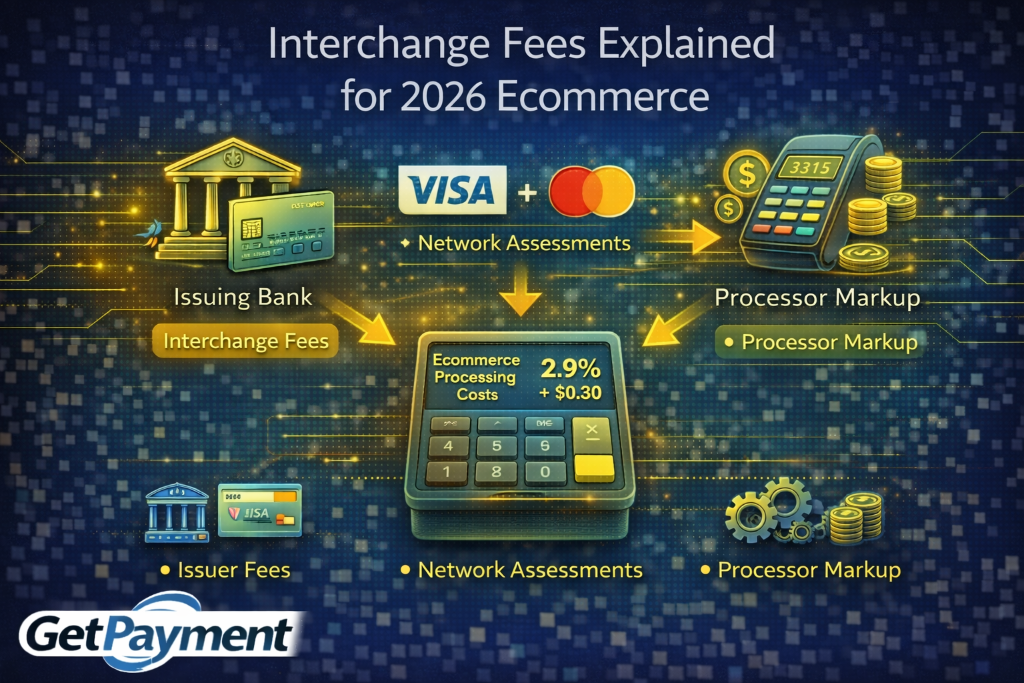
 Learn how interchange fees work in ecommerce, why they impact your margins, and how to reduce costs with the right payment strategy.
Need Payment Processing?
✓ Stripe shutdown?
✓ High-risk industry?
✓ Declined payments?
Get approved today.
Apply NowKey Takeaways
If you run an ecommerce business, you are paying interchange fees on every transaction.
But most merchants do not fully understand what they are, how they are calculated, or how much they are actually paying.
- ✓Funding transactions before repayment
- ✓Managing fraud risk
- ✓Handling disputes and chargebacks
- ✓Providing cardholder rewards and benefits
- ✓Reduce profit margins significantly
Introduction: The Fee Most Merchants Don't Fully Understand
If you run an ecommerce business, you are paying interchange fees on every transaction.
But most merchants do not fully understand what they are, how they are calculated, or how much they are actually paying.
Instead, they focus on the total processing rate and assume that is the full story.
It is not.
Interchange fees are the largest component of your payment processing costs, and they are also one of the most misunderstood.
For high-volume ecommerce businesses, even small inefficiencies in how interchange is applied can result in significant profit loss.
Understanding interchange fees for ecommerce is not just about knowledge. It is about control, optimization, and profitability.
What Are Interchange Fees?
Interchange fees are charges set by card networks like Visa and Mastercard and paid to the issuing bank every time a card transaction is processed.
When a customer makes a payment, the issuing bank (the bank that issued the card) takes a portion of that transaction.
This is the interchange fee.
It is built into every card payment and is non-negotiable in its base form because it is set by the card networks.
However, how those fees are applied — and how often you fall into higher-cost categories — is something you can influence.
Why Interchange Fees Exist
Interchange fees exist to compensate issuing banks for the risk and cost of providing card services.
When a bank issues a credit or debit card, it takes on several responsibilities:
- Funding transactions before repayment
- Managing fraud risk
- Handling disputes and chargebacks
- Providing cardholder rewards and benefits
Interchange fees help cover these costs.
For ecommerce merchants, this means that every transaction involves not just your processor, but also the issuing bank and the card network.
Why Interchange Fees Matter More at Scale
At small volumes, interchange fees may feel like a standard cost of doing business.
At scale, they become one of your biggest expenses.
If you are processing hundreds of thousands or millions per month, even a small increase in effective interchange can:
- Reduce profit margins significantly
- Increase customer acquisition costs indirectly
- Limit your ability to scale profitably
The key is not just accepting interchange as a fixed cost, but understanding how to optimize around it.
How Interchange Fees Are Determined
Interchange fees are not a single flat rate.
They vary based on multiple factors tied to the transaction.
These include:
- Card type (credit, debit, rewards, corporate)
- Transaction method (online, in-person, recurring)
- Merchant category and industry
- Geographic location of the transaction
- Risk level associated with the payment
Because ecommerce transactions are typically considered "card-not-present," they often carry higher interchange fees than in-person payments.
The Difference Between Debit and Credit Interchange
Not all cards are equal when it comes to interchange.
Debit cards generally have lower interchange fees because they carry less risk for issuing banks.
Credit cards, especially premium or rewards cards, tend to have higher interchange fees.
This is because:
- Credit involves lending risk
- Rewards programs are funded through interchange
- Premium cards offer additional benefits
For ecommerce businesses, the mix of card types your customers use can significantly impact your overall cost.
Why Ecommerce Pays Higher Interchange Fees
Ecommerce transactions are inherently riskier than in-person payments.
There is no physical card present, no chip verification, and fewer security layers compared to point-of-sale transactions.
Because of this, issuing banks apply higher interchange rates to account for:
- Increased fraud risk
- Higher chargeback rates
- Lack of physical verification
This is why optimizing your ecommerce payment setup is critical.
The Hidden Cost of Poor Interchange Qualification
One of the biggest mistakes merchants make is assuming interchange fees are fixed.
In reality, transactions are categorized into different interchange tiers.
If your transaction does not meet certain criteria, it may be downgraded into a higher-cost category.
This can happen due to:
- Missing or incomplete transaction data
- Delayed batch submission
- Incorrect transaction classification
- Poor payment setup
These downgrades can significantly increase your effective processing cost.
How Transaction Data Impacts Interchange
The quality of your transaction data plays a major role in determining interchange fees.
Providing more complete and accurate data can help transactions qualify for lower-cost categories.
This includes:
- Accurate billing information
- Proper transaction descriptors
- Consistent processing patterns
- Correct categorization
Better data leads to better qualification, which leads to lower costs.
The Role of Payment Gateways in Interchange Optimization
Your payment gateway does more than process transactions.
It also affects how those transactions are packaged and sent to acquiring banks.
A well-optimized gateway setup can:
- Improve transaction data quality
- Reduce downgrade risk
- Support better interchange qualification
Choosing the right gateway and configuring it properly is a key part of cost optimization.
Multi-Acquirer Strategies and Interchange Efficiency
Using multiple acquirers does not just improve approval rates.
It can also impact interchange performance.
Different acquirers may:
- Perform better in certain regions
- Handle transaction data differently
- Optimize routing for better qualification
By distributing transactions intelligently, you can improve both approvals and cost efficiency.
Network Tokenisation and Interchange Benefits
Network tokenisation is often discussed in the context of security and approvals.
But it also impacts interchange.
Tokenised transactions:
- Carry stronger trust signals
- Reduce fraud risk
- Improve transaction consistency
This can lead to better interchange qualification and fewer downgrades.
How Cross-Border Transactions Affect Interchange
If you sell internationally, your interchange costs can increase.
Cross-border transactions often involve:
- Higher interchange rates
- Additional network fees
- Currency conversion costs
To optimize this, businesses often:
- Use local acquiring banks
- Align transactions with customer geography
- Reduce cross-border friction
These strategies can significantly improve cost efficiency.
The Relationship Between Fraud and Interchange
Fraud risk directly impacts how transactions are evaluated.
Higher fraud risk can lead to:
- Higher interchange categories
- Increased declines
- More chargebacks
By improving fraud prevention and reducing risk signals, you can indirectly improve your interchange outcomes.
Why Blended Pricing Hides Interchange Costs
Many merchants use processors that offer blended pricing.
This combines interchange, processor markup, and other fees into one rate.
While simple, this hides the true cost of interchange.
Without visibility, you cannot:
- Identify inefficiencies
- Optimize your payment setup
- Negotiate effectively
Understanding interchange requires transparency.
How to Reduce Interchange Costs
While you cannot eliminate interchange fees, you can reduce how much you pay.
Key strategies include:
- Improving transaction data quality
- Using network tokenisation
- Implementing smart routing
- Reducing fraud and chargebacks
- Aligning with the right acquiring banks
- Avoiding downgrade scenarios
These optimizations can significantly lower your effective rate.
Why High-Volume Merchants Must Optimize Interchange
At scale, small improvements create large financial impact.
A reduction of even a fraction of a percent can result in:
- Significant cost savings
- Higher profit margins
- More efficient scaling
- Better overall performance
Ignoring interchange optimization is one of the most expensive mistakes a growing business can make.
How GetPayment Helps You Optimize Interchange
At GetPayment, we help merchants understand and optimize their payment costs at a deeper level.
We help you:
- Analyze your interchange performance
- Improve transaction qualification
- Optimize routing and infrastructure
- Reduce unnecessary costs
- Build a payment system designed for efficiency
Our goal is to help you keep more of every transaction.
Final Thoughts: Interchange Is Not Fixed — It Is Optimizable
Most merchants treat interchange as a fixed cost.
But in reality, how much you pay depends on how your payment system is structured.
By understanding and optimizing interchange, you can:
- Reduce costs
- Improve margins
- Scale more efficiently
The businesses that win at scale are the ones that control their payment infrastructure.
Ready to Optimize Your Interchange Costs?
If you want to reduce your payment costs, improve your margins, and optimize your ecommerce payment system, GetPayment can help.
Apply today to take control of your interchange and build a more profitable payment setup.
FAQ: Interchange Fees for Ecommerce
What are interchange fees in ecommerce?
Interchange fees are charges set by card networks and paid to issuing banks for processing card transactions. They make up the largest portion of payment processing costs.
Can interchange fees be negotiated?
The base interchange rates are set by card networks and cannot be negotiated. However, you can reduce your effective costs by improving how transactions are processed and qualified.
Why are interchange fees higher for ecommerce?
Ecommerce transactions are considered higher risk because the card is not physically present. This leads to higher interchange rates compared to in-person transactions.
How can I lower my interchange costs?
You can lower costs by improving transaction data, using network tokenisation, optimizing routing, reducing fraud, and working with the right acquiring partners.
What is interchange downgrade?
An interchange downgrade happens when a transaction does not meet the criteria for a lower-cost category and is charged a higher fee instead.
Does payment routing affect interchange?
Yes. Smart routing can improve transaction performance, reduce downgrades, and help optimize overall interchange costs.
Is interchange included in processing fees?
Yes. Interchange is typically included within your total processing rate, especially in blended pricing models.
Tags

Jane Harold
Head of Payment Strategy
GetPayment Inc
Jane Harold is a payment strategy expert with 12+ years of experience in high-volume ecommerce payments, merchant account management, and checkout optimization. She has helped hundreds of US ecommerce brands improve authorization rates, reduce processing costs, and scale payment infrastructure.
Areas of Expertise
Payment Strategy Expert
12+ years in industry
Certified Payment Specialist
PCI DSS Level 1 compliance
Merchant Account Advisor
500+ merchants advised
Industry Speaker
Ecommerce & payment conferences
Get Expert Advice
Have questions about payment processing? Reach out to Jane directly.
Years Experience
Merchants Helped
Bank Partners
Satisfaction Rate
Recover Revenue From Payment Declines
GetPayment helps ecommerce merchants increase approval rates with smart routing and high-risk-friendly processors.
High-risk friendly
Multiple processors
Global coverage
Get Your Free Payment Fee Audit
See exactly how much you're overpaying in processing fees. Our experts analyze your statement and show you potential savings.
Request Free AuditLearn more in our Reduce Payment Processing Fees Guide
Explore the complete guide for this topic with deeper insights and strategies.
View Guide →Related Articles
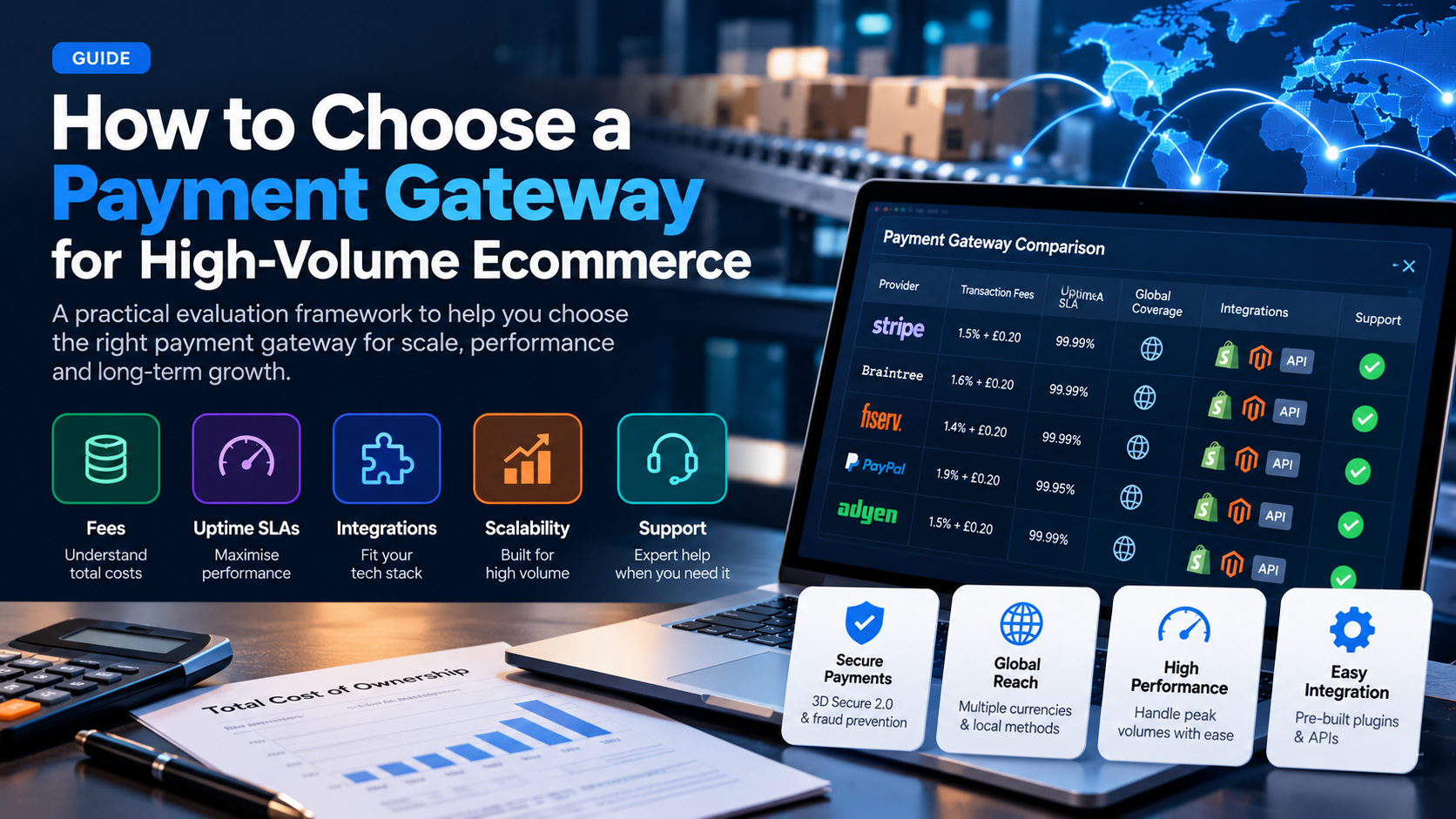
How to Choose a Payment Gateway for High-Volume Ecommerce (2026 Guide)
A practical framework for evaluating payment gateways when you process $50k+ per month: fees, uptime, integrations, scalability, and support.
Read More →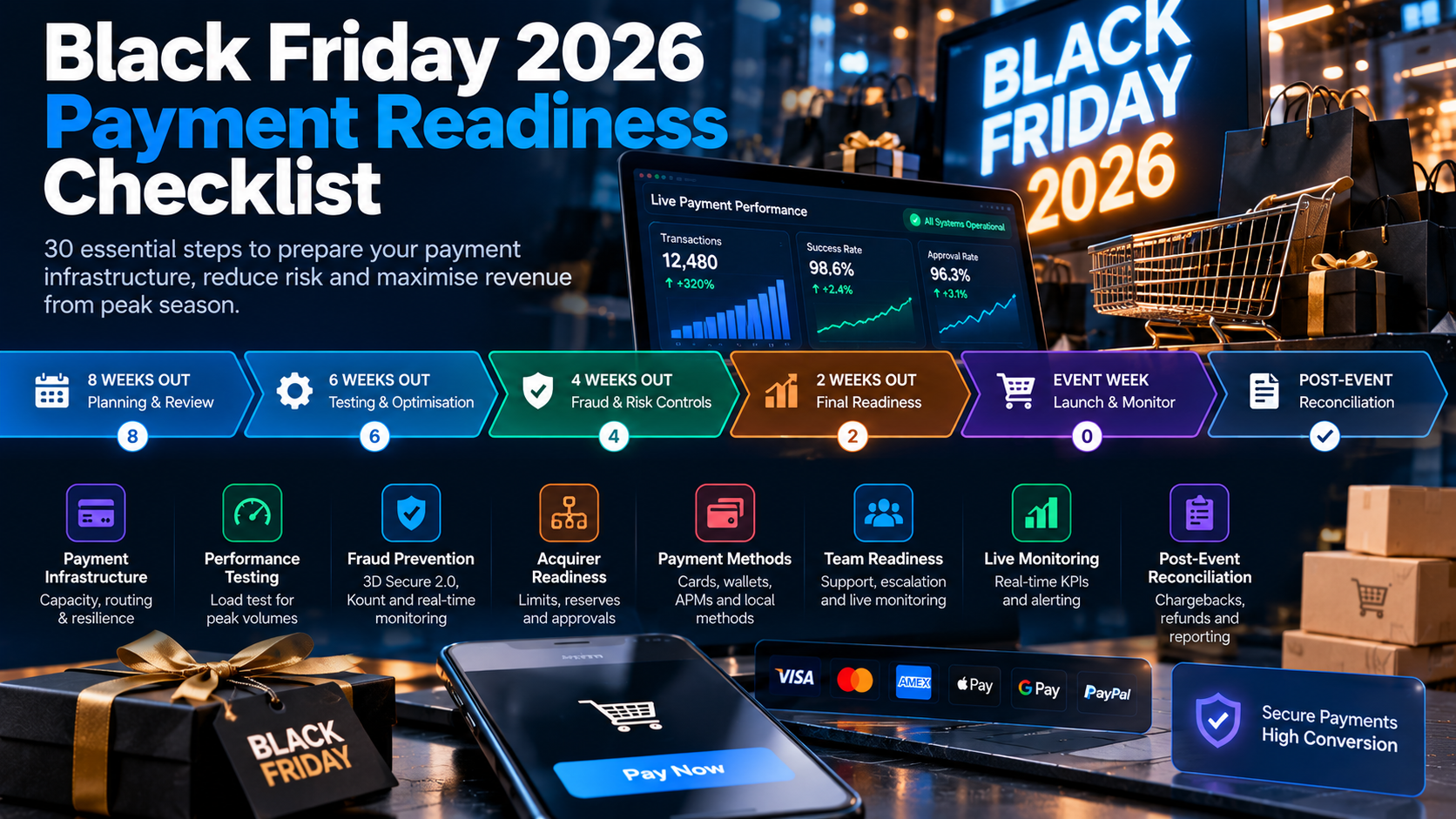
Black Friday 2026 Payment Readiness Checklist: 30 Steps to Prepare Your Checkout for Peak Traffic
Black Friday is the highest-traffic, highest-revenue day of the year. A single checkout failure costs thousands per minute. This 30-step checklist ensures your payments are ready.
Read More →