payment processing
multi-acquirer strategy ecommercemulti acquirer paymentsscale payments safelyhigh volume ecommerce payment strategypayment redundancy ecommerceincrease payment approval ratesecommerce payment infrastructuremulti acquirer routing
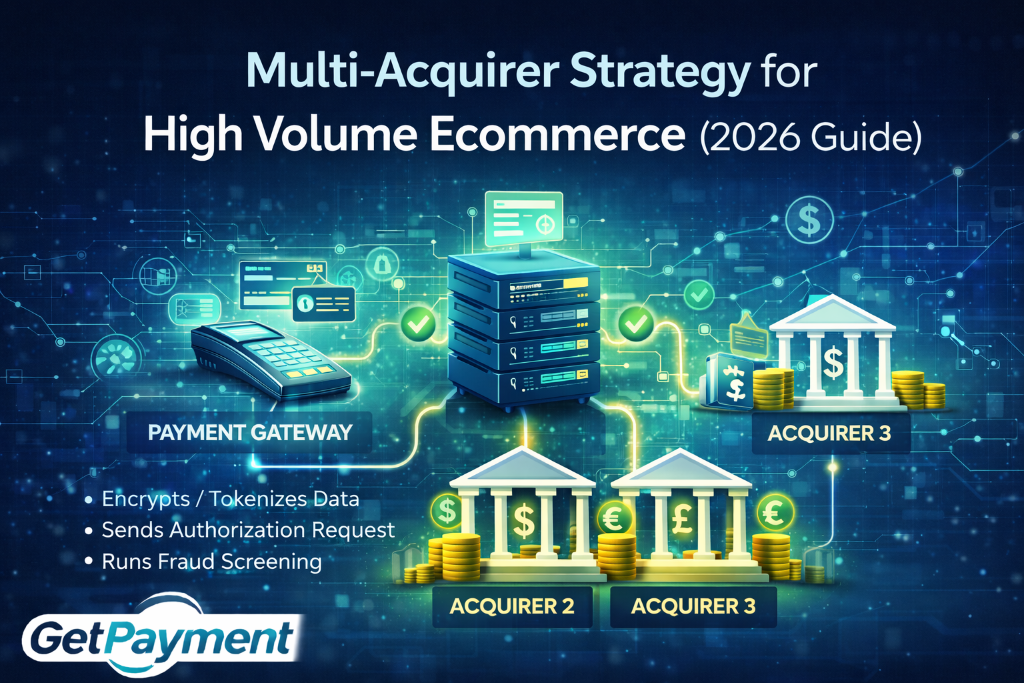 Learn how a multi-acquirer strategy helps high-volume ecommerce businesses reduce risk, increase approvals, and avoid payment shutdowns while scaling.
✓ Stripe shutdown?
✓ High-risk industry?
✓ Declined payments?
Get approved today.
Apply NowMost ecommerce businesses don't fail because of bad products or poor marketing.
They fail because their payment infrastructure cannot support their growth.
Most ecommerce businesses don't fail because of bad products or poor marketing.
They fail because their payment infrastructure cannot support their growth.
At low volume, using a single payment processor might work. But once your business begins scaling aggressively, relying on one acquirer becomes a serious liability.
This is where a multi-acquirer strategy for high volume ecommerce becomes essential. It allows you to distribute risk, improve transaction success rates, and protect your revenue from unexpected disruptions.
A multi-acquirer strategy means working with multiple acquiring banks or payment processors simultaneously instead of relying on just one.
Instead of routing all transactions through a single provider, your payments are distributed across multiple channels.
This setup allows your business to:
At scale, this is not optional. It is infrastructure.
Many ecommerce businesses start with one processor because it is simple.
But simplicity becomes a weakness as you grow.
When all your revenue flows through a single acquirer, you are exposed to:
If that one relationship fails, your entire revenue stream is at risk.
For high-volume ecommerce, this is one of the most dangerous positions you can be in.
One of the biggest advantages of using multiple acquirers is improved transaction performance.
Different banks and processors have different relationships with issuing banks, different fraud models, and different geographic strengths.
This means the same transaction might:
By intelligently routing transactions, you can significantly increase your overall approval rate.
Higher approval rates mean:
For scaling ecommerce brands, even a small increase in approvals can translate into massive revenue gains.
A multi-acquirer setup spreads your risk across multiple providers.
Instead of one point of failure, you create a system where your business can continue operating even if one acquirer has issues.
This protects you from:
If one channel goes down, your other channels continue processing.
This is what separates fragile businesses from resilient ones.
If you are selling internationally, a multi-acquirer strategy becomes even more powerful.
Different acquirers perform better in different regions. Local acquiring banks often have stronger relationships with local issuing banks, leading to higher approval rates.
By aligning acquirers with specific regions, you can:
This is critical for ecommerce brands scaling into new markets.
A multi-acquirer strategy becomes significantly more effective when combined with smart routing.
Smart routing means directing transactions based on specific criteria such as:
Instead of sending every transaction through the same path, your system dynamically chooses the best-performing route.
This leads to:
At scale, routing is where the real optimization happens.
Not every business needs this level of infrastructure immediately. But for high-volume ecommerce, it quickly becomes necessary.
You should strongly consider a multi-acquirer setup if:
These businesses benefit the most from distributed payment systems.
Many ecommerce businesses underestimate how much money they lose from failed payments.
A declined transaction is not just a missed sale. It can also mean:
When you scale, these losses compound quickly.
A multi-acquirer strategy directly addresses this by increasing the chances that each transaction is successfully processed.
While the strategy is powerful, it needs to be implemented correctly.
Common mistakes include:
A poorly implemented system can create confusion instead of stability.
The key is building a structured, intentional payment architecture.
At GetPayment, we help ecommerce businesses design and implement payment systems that are built for scale.
We work with high-volume merchants to:
Our focus is not just getting you approved. It is helping you build a system that supports long-term growth and stability.
As your ecommerce business grows, your payment setup must evolve with it.
Relying on a single acquirer may work early on, but it creates risk as you scale.
A multi-acquirer strategy gives you:
The fastest-growing ecommerce brands are not just optimizing ads and funnels. They are optimizing their payment infrastructure as well.
If you are processing high volume and want to increase approvals, reduce risk, and scale without payment disruptions, GetPayment can help.
Apply today to build a multi-acquirer strategy tailored to your business and start processing with more stability and control.
Tags

Head of Payment Strategy
GetPayment Inc
Jane Harold is a payment strategy expert with 12+ years of experience in high-volume ecommerce payments, merchant account management, and checkout optimization. She has helped hundreds of US ecommerce brands improve authorization rates, reduce processing costs, and scale payment infrastructure.
Payment Strategy Expert
12+ years in industry
Certified Payment Specialist
PCI DSS Level 1 compliance
Merchant Account Advisor
500+ merchants advised
Industry Speaker
Ecommerce & payment conferences
Have questions about payment processing? Reach out to Jane directly.
Years Experience
Merchants Helped
Bank Partners
Satisfaction Rate
GetPayment helps ecommerce merchants increase approval rates with smart routing and high-risk-friendly processors.
High-risk friendly
Multiple processors
Global coverage
See exactly how much you're overpaying in processing fees. Our experts analyze your statement and show you potential savings.
Request Free AuditExplore the complete guide for this topic with deeper insights and strategies.
View Guide →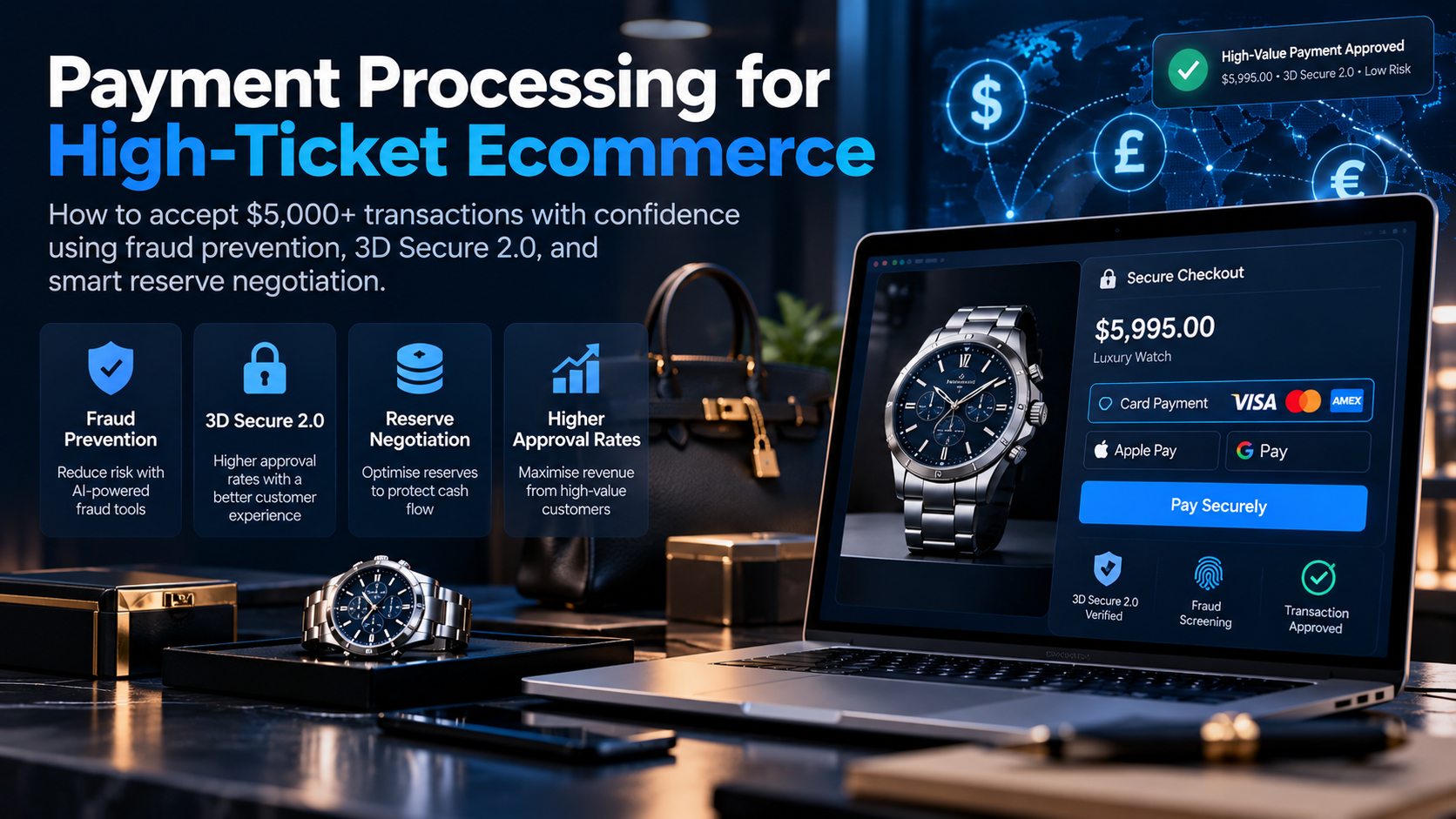
High-ticket ecommerce (furniture, electronics, B2B, luxury) faces unique payment challenges: fraud risk, chargeback exposure, and processor limits. Here is how to handle it.
Read More →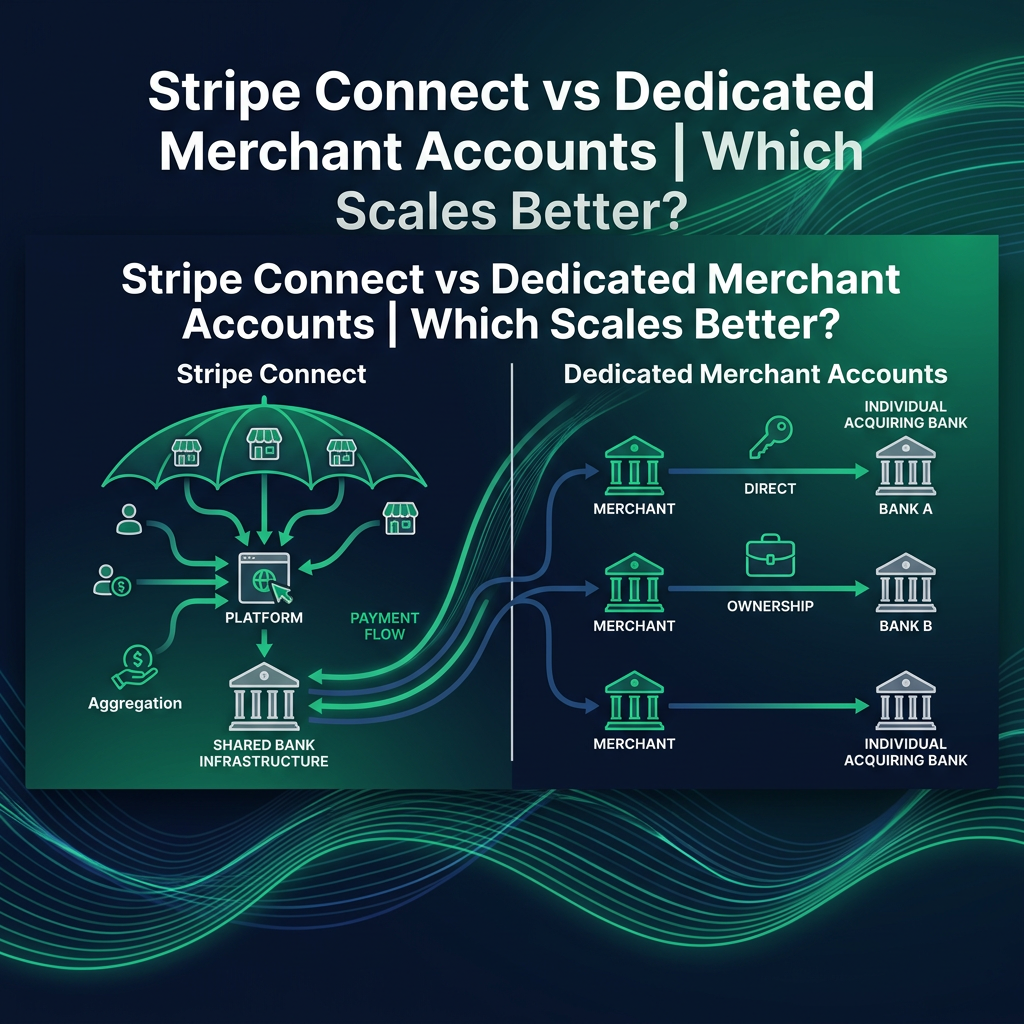
Compare Stripe Connect vs dedicated merchant accounts to understand which payment model offers better scalability, control, and stability for growing platforms and ecommerce businesses.
Read More →