 Complete guide to high volume ecommerce payment processing for merchants doing $50k+ monthly. Learn interchange++ pricing, authorization rate optimization, and best practices.
Need Payment Processing?
✓ Stripe shutdown?
✓ High-risk industry?
✓ Declined payments?
Get approved today.
Apply NowAs ecommerce businesses grow, payment processing becomes far more complex than simply accepting credit cards online. Stores processing $50k, $100k, or even millions in monthly transactions must manage approval rates, fraud prevention, processing costs, global payments, and payment infrastructure reliability.
High-volume ecommerce merchants cannot rely on basic payment setups designed for small online stores. As transaction volume increases, inefficiencies in payment routing, processor pricing, and fraud management can lead to significant lost revenue.
A well-optimized payment processing system helps ecommerce brands improve authorization rates, reduce processing costs, prevent fraud, and scale internationally.
This guide explains how high-volume ecommerce payment processing works, the infrastructure large merchants need, and the strategies that help enterprise ecommerce businesses optimize payments.
What High Volume Ecommerce Payment Processing Is
High-volume ecommerce payment processing refers to the infrastructure used by online businesses that process large numbers of transactions or high monthly revenue through their payment stack.
Unlike small merchants that rely on simple payment gateways, high-volume merchants typically require a more advanced payment architecture.
This infrastructure often includes:
- dedicated merchant accounts
- payment gateways
- acquiring banks
- fraud prevention systems
- payment routing technology
- tokenization services
- subscription billing systems
The goal is to ensure that transactions are secure, reliable, and approved at the highest possible rate.
For ecommerce businesses processing thousands of transactions per day, payment infrastructure becomes a core part of business performance.
Why Payment Infrastructure Matters
Payment infrastructure plays a direct role in ecommerce profitability.
Many merchants focus heavily on marketing, advertising, and conversion optimization. However, revenue is ultimately captured at the payment authorization stage.
If payment systems are poorly optimized, several problems can occur.
Transactions may be declined unnecessarily, causing lost sales. Fraud filters may block legitimate customers. Payment processors may charge excessive fees. Checkout failures may increase cart abandonment.
Even a small drop in authorization rates can result in large revenue losses for high-volume stores.
For example, improving approval rates by just a few percentage points can generate significant additional revenue without increasing traffic or advertising spend.
This is why payment optimization has become a major focus for enterprise ecommerce brands.
How Ecommerce Payment Processing Works
When a customer enters payment information during checkout, the transaction travels through several systems before it is approved.
The process typically works like this.
First, the customer enters their card information or selects a payment method.
The ecommerce platform sends the transaction request to the payment gateway.
The gateway forwards the request to a payment processor or acquiring bank.
The processor sends the request through the card network such as Visa, Mastercard, or American Express.
The issuing bank evaluates the transaction and either approves or declines it.
If approved, the transaction is authorized and the merchant later captures the payment and receives funds during settlement.
Although this entire process takes only seconds, multiple systems are involved, and each stage can influence approval rates, security, and transaction costs.
Key Components of a High Volume Payment Stack
Large ecommerce merchants rely on multiple payment technologies working together.
Payment Gateways
Payment gateways securely transmit payment information between the ecommerce checkout and the processor.
They encrypt card data and often support tokenization.
Gateways also help manage integrations between ecommerce platforms and payment providers.
Merchant Accounts
A merchant account is a special bank account that allows businesses to accept card payments.
High-volume ecommerce stores often use dedicated merchant accounts instead of aggregated payment platforms.
Dedicated accounts provide better control over pricing, fraud management, and risk settings.
Payment Processors and Acquirers
Processors and acquiring banks communicate with card networks and issuing banks to authorize transactions.
The quality of the acquiring bank can influence approval rates, settlement speed, and geographic acceptance.
Many enterprise merchants use multiple acquiring partners to optimize approvals globally.
Fraud Prevention Systems
Fraud detection tools evaluate transaction data to identify suspicious activity.
These systems analyze customer behavior, device information, location data, and transaction history.
Modern fraud systems use machine learning to reduce fraudulent transactions while minimizing false declines.
Balancing fraud protection with customer experience is critical for ecommerce success.
Tokenization and Payment Security
Tokenization replaces sensitive card numbers with secure tokens.
These tokens can safely be stored and reused for repeat purchases without exposing card data.
Network tokenization provided by Visa and Mastercard can also improve authorization rates and reduce fraud risk.
Tokenization also helps merchants reduce PCI compliance complexity.
Scaling Payment Infrastructure for High Volume Ecommerce
As ecommerce businesses grow, their payment infrastructure must scale accordingly.
Small stores may rely on a single processor and gateway.
However, larger ecommerce brands typically require more sophisticated systems.
These may include:
- multi-processor payment routing
- global acquiring partners
- subscription billing infrastructure
- payment orchestration platforms
- advanced fraud detection systems
Scalable infrastructure allows merchants to maintain high approval rates even during peak traffic events such as Black Friday or large promotional campaigns.
Without scalable systems, payment failures can increase during high-traffic periods.
Improving Authorization Rates
Authorization rate optimization is one of the most important payment strategies for large ecommerce merchants.
Authorization rate refers to the percentage of payment transactions approved by issuing banks.
Low authorization rates lead to lost revenue and frustrated customers.
Several strategies can improve approval rates.
Merchants can implement intelligent payment routing that sends transactions to the acquiring bank most likely to approve them.
Using network tokenization can increase approval rates by providing more reliable payment credentials.
Card updater services help ensure stored cards remain valid for recurring billing.
Monitoring decline codes also helps merchants identify patterns and adjust payment strategies.
Even small improvements in authorization rates can generate substantial revenue gains.
Reducing Payment Processing Costs
Payment processing fees can represent a significant operational expense for ecommerce businesses.
These costs typically include:
- interchange fees charged by issuing banks
- card network fees
- payment processor markups
High-volume merchants often negotiate better pricing structures with payment processors.
Interchange-plus pricing models provide more transparency than flat-rate pricing.
Regular payment fee audits help merchants identify hidden charges and optimize payment costs.
As transaction volumes grow, renegotiating processor agreements can produce meaningful cost savings.
Preventing Fraud Without Hurting Conversions
Fraud prevention is essential for ecommerce merchants, but overly aggressive fraud filters can block legitimate customers.
False declines occur when legitimate transactions are mistakenly rejected by fraud detection systems.
These declines reduce conversion rates and damage customer experience.
Modern fraud tools use behavioral analysis, device fingerprinting, and machine learning to detect fraud more accurately.
Merchants should also monitor fraud rules and regularly adjust risk thresholds.
Effective fraud management balances security with smooth customer checkout experiences.
Supporting Global Ecommerce Payments
Many ecommerce brands expand internationally as they grow.
Cross-border ecommerce introduces additional payment challenges.
International customers often prefer local payment methods and currencies.
Currency conversion fees and cross-border transaction costs can increase payment expenses.
Global ecommerce merchants often use local acquiring banks and regional payment methods to improve conversion rates.
Offering local payment options such as digital wallets or regional payment methods can significantly increase checkout success.
Common High Volume Payment Processing Mistakes
Many ecommerce businesses encounter payment problems because their infrastructure is not optimized for scale.
One common mistake is relying on a single payment processor.
If that processor experiences downtime or declines transactions aggressively, revenue may be lost.
Another mistake is ignoring payment data.
Without analyzing authorization rates and decline codes, merchants cannot identify payment inefficiencies.
Some merchants also fail to update payment systems as they grow.
Infrastructure that works for a small store may not scale effectively for high-volume transactions.
Finally, merchants sometimes overlook payment security best practices, increasing fraud risk.
Best Practices for High Volume Ecommerce Payments
Successful ecommerce brands treat payment processing as a core business function.
They monitor payment performance metrics regularly and continuously optimize their payment infrastructure.
Implementing multi-acquirer routing improves transaction approval rates.
Using network tokenization and card updater services helps maintain valid payment credentials.
Regular payment fee audits ensure merchants are not overpaying processing costs.
Merchants should also monitor fraud detection performance and adjust rules to minimize false declines.
Most importantly, payment infrastructure should be reviewed and improved regularly as the business scales.
FAQs
What qualifies as high-volume ecommerce payment processing?
High-volume payment processing typically refers to ecommerce businesses processing large transaction volumes or significant monthly revenue through their payment infrastructure.
Why do large ecommerce merchants use dedicated merchant accounts?
Dedicated merchant accounts provide greater control over payment routing, pricing negotiations, and fraud management compared to aggregated payment platforms.
How can merchants improve payment authorization rates?
Merchants can improve authorization rates by using intelligent payment routing, implementing network tokenization, monitoring decline codes, and optimizing fraud detection systems.
What payment infrastructure do large ecommerce brands use?
Enterprise ecommerce merchants often use multiple processors, payment orchestration systems, fraud detection tools, tokenization services, and global acquiring partners.
Conclusion
High-volume ecommerce payment processing requires far more than simply accepting credit card payments.
As businesses scale, payment infrastructure becomes critical for maintaining high authorization rates, controlling processing costs, and preventing fraud.
Merchants that invest in advanced payment technologies, optimize their payment routing strategies, and regularly review payment performance metrics gain a significant competitive advantage.
By building a scalable and efficient payment infrastructure, ecommerce businesses can support long-term growth while delivering a seamless checkout experience for customers.
Request a Free Payment Fee Audit
If your ecommerce store processes $50k+ monthly, our team can review your payment setup and help identify opportunities to reduce processing fees, improve authorization rates, and optimize your payment infrastructure.
Tags

Jane Harold
Head of Payment Strategy
GetPayment Inc
Jane Harold is a payment strategy expert with 12+ years of experience in high-volume ecommerce payments, merchant account management, and checkout optimization. She has helped hundreds of US ecommerce brands improve authorization rates, reduce processing costs, and scale payment infrastructure.
Areas of Expertise
Payment Strategy Expert
12+ years in industry
Certified Payment Specialist
PCI DSS Level 1 compliance
Merchant Account Advisor
500+ merchants advised
Industry Speaker
Ecommerce & payment conferences
Get Expert Advice
Have questions about payment processing? Reach out to Jane directly.
Years Experience
Merchants Helped
Bank Partners
Satisfaction Rate
Recover Revenue From Payment Declines
GetPayment helps ecommerce merchants increase approval rates with smart routing and high-risk-friendly processors.
High-risk friendly
Multiple processors
Global coverage
Get Your Free Payment Fee Audit
See exactly how much you're overpaying in processing fees. Our experts analyze your statement and show you potential savings.
Request Free AuditLearn more in our High Volume Ecommerce Payments Guide
Explore the complete guide for this topic with deeper insights and strategies.
View Guide →Related Articles
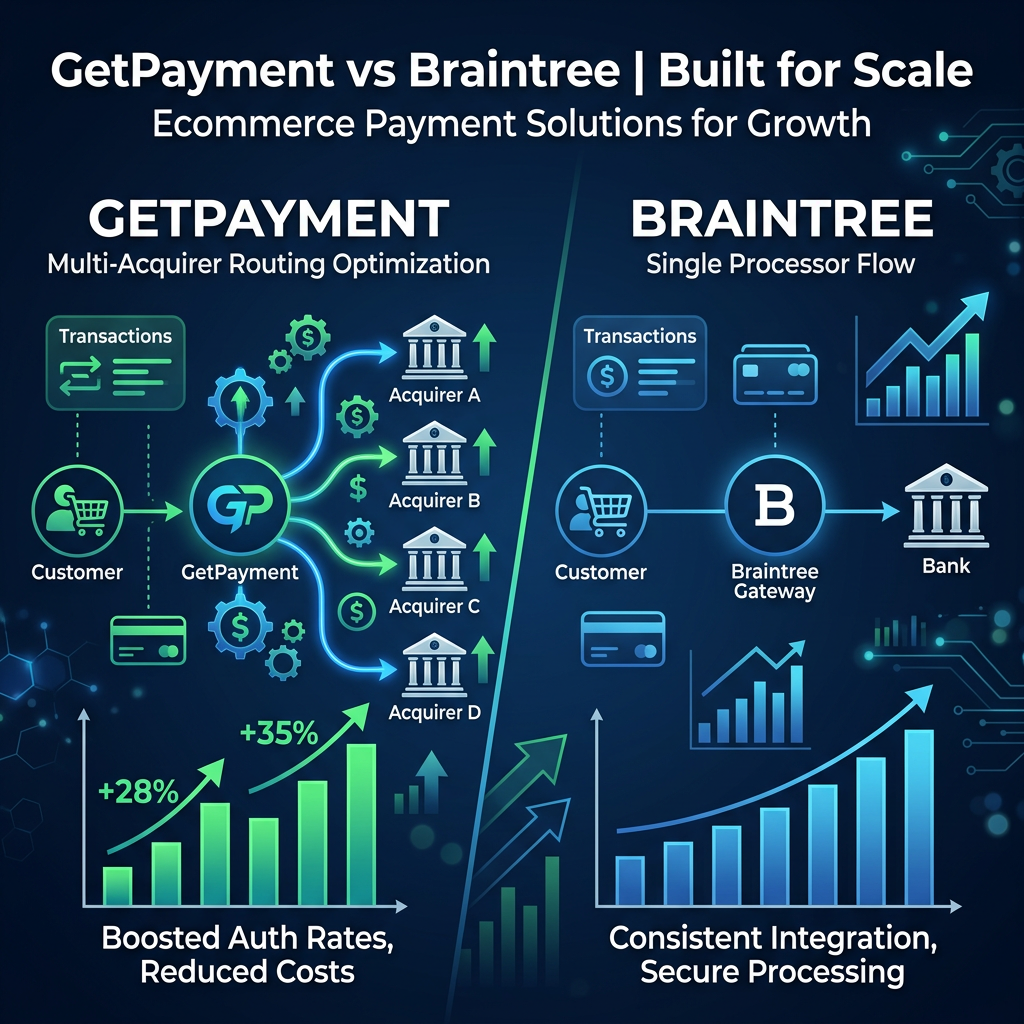
GetPayment vs Braintree for Scale: Which Payment Strategy Wins for Growing Ecommerce Businesses?
Compare GetPayment vs Braintree for scaling ecommerce businesses. Learn which solution delivers better approvals, flexibility, and cost optimization.
Read More →
Stripe Alternatives for High Risk Ecommerce (Top 5): Best Payment Solutions for Scaling Businesses
Looking for Stripe alternatives for high-risk ecommerce? Discover the top 5 solutions to improve approvals, reduce risk, and scale your payment system.
Read More →