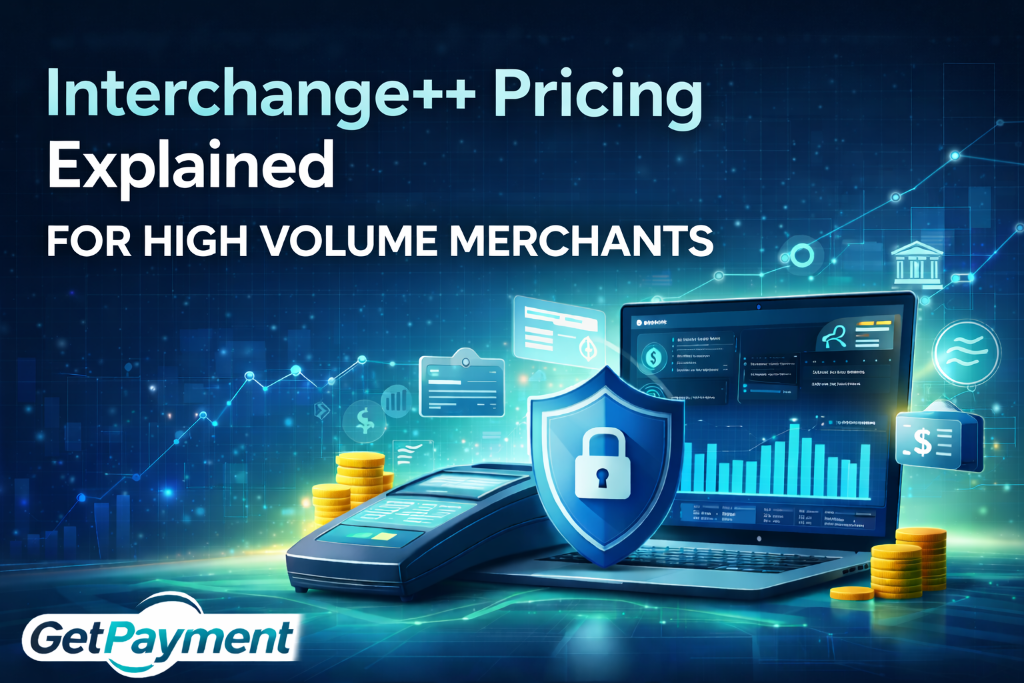
 Interchange++ payment pricing infographic explaining interchange fees, card network costs, and processor markups for high-volume ecommerce merchants optimizing payment processing fees.
Need Payment Processing?
✓ Stripe shutdown?
✓ High-risk industry?
✓ Declined payments?
Get approved today.
Apply NowKey Takeaways
For ecommerce businesses processing large transaction volumes, payment processing costs can quickly become one of the biggest operational expenses. Many merchants start with simple flat-rate pricing models, but as revenue grows, these pricing structures often become inefficient and expensive.
High-volume ecommerce merchants frequently transition to interchange++ pricing, one of the most transparent and flexible payment pricing models available.
- ✓the processor markup
- ✓card network assessment fees
For ecommerce businesses processing large transaction volumes, payment processing costs can quickly become one of the biggest operational expenses. Many merchants start with simple flat-rate pricing models, but as revenue grows, these pricing structures often become inefficient and expensive.
High-volume ecommerce merchants frequently transition to interchange++ pricing, one of the most transparent and flexible payment pricing models available.
Unlike bundled or flat-rate pricing, interchange++ separates the true cost of each transaction from the processor's markup. This transparency allows merchants to see exactly what they are paying and negotiate better processing agreements.
Understanding how interchange++ works is essential for merchants processing $50k, $100k, or millions of dollars per month in payments.
This guide explains what interchange++ pricing is, how payment fees are structured, and why many high-volume ecommerce merchants prefer this pricing model.
What Interchange++ Pricing Is
Interchange++ pricing is a payment processing model where merchants pay the actual interchange fees set by card networks, plus small additional fees charged by the payment processor.
The "++" refers to two additional cost components added to the interchange fee:
- the processor markup
- card network assessment fees
With this structure, each transaction's total cost is made up of three parts.
First is the interchange fee, which goes to the issuing bank that provided the customer's card.
Second is the card network fee, which supports the infrastructure of networks such as Visa and Mastercard.
Third is the processor markup, which is the fee charged by the payment processor for handling the transaction.
This pricing structure provides much more transparency compared to bundled pricing models.
How Payment Processing Fees Work
Every card payment includes several fees that are distributed across different participants in the payment ecosystem.
The largest portion of the fee is typically the interchange fee. Interchange fees vary depending on factors such as card type, transaction size, and whether the transaction is card-present or online.
For example, ecommerce transactions often carry slightly higher interchange fees because they involve more risk than in-person payments.
Card networks also charge small assessment fees for processing transactions on their networks.
Finally, payment processors add their own markup to cover operational costs and generate profit.
In flat-rate pricing models, these costs are bundled into a single rate. In interchange++ pricing, the costs are separated and clearly visible.
This transparency helps merchants better understand where their money is going.
Interchange vs Processor Markups
One of the biggest advantages of interchange++ pricing is that it separates non-negotiable fees from negotiable fees.
Interchange fees are set by card networks and issuing banks, so merchants cannot negotiate them.
However, processor markups are negotiable.
Because interchange++ clearly shows the processor margin, merchants can compare providers and negotiate lower markups as their payment volume grows.
This is why interchange-based pricing is commonly used by high-volume ecommerce merchants.
Greater transparency makes it easier to control long-term payment costs.
Interchange++ vs Flat Rate Pricing
Flat-rate pricing models charge merchants the same percentage for every transaction regardless of the card type or underlying interchange cost.
This model is simple and easy to understand, which makes it popular for small merchants.
However, the simplicity comes at a cost.
Flat-rate pricing typically includes higher processor margins because the processor assumes more pricing risk.
As ecommerce businesses scale, these higher margins can significantly increase processing expenses.
Interchange++ pricing, on the other hand, adjusts transaction costs based on the actual card type and interchange category.
For high-volume merchants, this usually results in lower long-term processing costs.
Example Transaction Using Interchange++ Pricing
To understand how interchange++ pricing works in practice, consider a typical ecommerce transaction.
A customer places an order and pays using a credit card.
The issuing bank charges an interchange fee based on the card type and transaction category.
The card network adds a small assessment fee.
Finally, the payment processor adds a negotiated markup.
Because each fee is separated, merchants can clearly see the exact breakdown of the transaction cost.
This transparency allows merchants to analyze payment data and identify opportunities for optimization.
Why High Volume Merchants Prefer Interchange++ Pricing
High-volume ecommerce merchants benefit from interchange++ pricing for several reasons.
The biggest advantage is transparency.
Merchants can clearly see how much they are paying in interchange fees versus processor markups.
Another advantage is negotiation power.
As transaction volumes grow, merchants can negotiate lower processor margins.
Interchange++ pricing also provides better insight into payment performance.
Because transaction costs are visible, merchants can identify inefficiencies such as expensive interchange categories or poor authorization rates.
For enterprise ecommerce merchants, these insights are extremely valuable.
Common Pricing Misconceptions
Many ecommerce merchants misunderstand interchange pricing structures.
One common misconception is that interchange++ pricing is always more expensive because the fee breakdown appears more complex.
In reality, the opposite is often true.
Flat-rate pricing hides processor margins within bundled rates, which can make transactions more expensive over time.
Another misconception is that interchange fees can be negotiated.
Interchange fees are set by card networks and cannot be changed by payment processors.
Only the processor's markup portion of the transaction can be negotiated.
Understanding these distinctions helps merchants evaluate payment pricing more accurately.
Best Practices for Interchange Pricing
High-volume ecommerce merchants can maximize the benefits of interchange++ pricing by following several best practices.
First, merchants should regularly review payment statements to monitor processor markups and transaction costs.
Second, merchants should track authorization rates and interchange categories to identify payment inefficiencies.
Third, businesses should periodically renegotiate payment processor agreements as transaction volumes increase.
Higher transaction volumes often allow merchants to secure lower processor margins.
Finally, merchants should work with payment providers that offer transparent reporting tools so they can analyze payment data effectively.
These strategies help ecommerce businesses maintain efficient payment operations as they scale.
FAQs
What does interchange++ pricing mean?
Interchange++ pricing means merchants pay the actual interchange fee set by card networks plus two additional costs: card network assessment fees and the payment processor's markup.
Why do large ecommerce merchants prefer interchange pricing?
Large merchants prefer interchange-based pricing because it provides transparency and allows processor markups to be negotiated.
Can interchange fees be negotiated?
No. Interchange fees are set by card networks and issuing banks. Only processor markups can be negotiated.
Is interchange++ cheaper than flat-rate pricing?
For high-volume merchants, interchange++ pricing is often more cost-effective because processor margins are lower and transaction costs reflect actual interchange rates.
Conclusion
Interchange++ pricing has become the preferred payment pricing model for many high-volume ecommerce merchants.
By separating interchange fees, network costs, and processor markups, this model provides transparency that bundled pricing structures cannot offer.
For growing ecommerce businesses, understanding payment pricing structures is essential for controlling operational costs.
Merchants that adopt interchange-based pricing and negotiate processor margins effectively can significantly reduce payment processing expenses over time.
Optimizing payment pricing is one of the most effective ways for ecommerce businesses to improve profitability as they scale.
Request a Free Payment Fee Audit
If your ecommerce business processes $50k+ per month, our team can review your payment setup and identify opportunities to reduce processing fees, improve authorization rates, and optimize your payment pricing structure.
Tags

Jane Harold
Head of Payment Strategy
GetPayment Inc
Jane Harold is a payment strategy expert with 12+ years of experience in high-volume ecommerce payments, merchant account management, and checkout optimization. She has helped hundreds of US ecommerce brands improve authorization rates, reduce processing costs, and scale payment infrastructure.
Areas of Expertise
Payment Strategy Expert
12+ years in industry
Certified Payment Specialist
PCI DSS Level 1 compliance
Merchant Account Advisor
500+ merchants advised
Industry Speaker
Ecommerce & payment conferences
Get Expert Advice
Have questions about payment processing? Reach out to Jane directly.
Years Experience
Merchants Helped
Bank Partners
Satisfaction Rate
Recover Revenue From Payment Declines
GetPayment helps ecommerce merchants increase approval rates with smart routing and high-risk-friendly processors.
High-risk friendly
Multiple processors
Global coverage
Get Your Free Payment Fee Audit
See exactly how much you're overpaying in processing fees. Our experts analyze your statement and show you potential savings.
Request Free AuditLearn more in our High Volume Ecommerce Payments Guide
Explore the complete guide for this topic with deeper insights and strategies.
View Guide →Related Articles
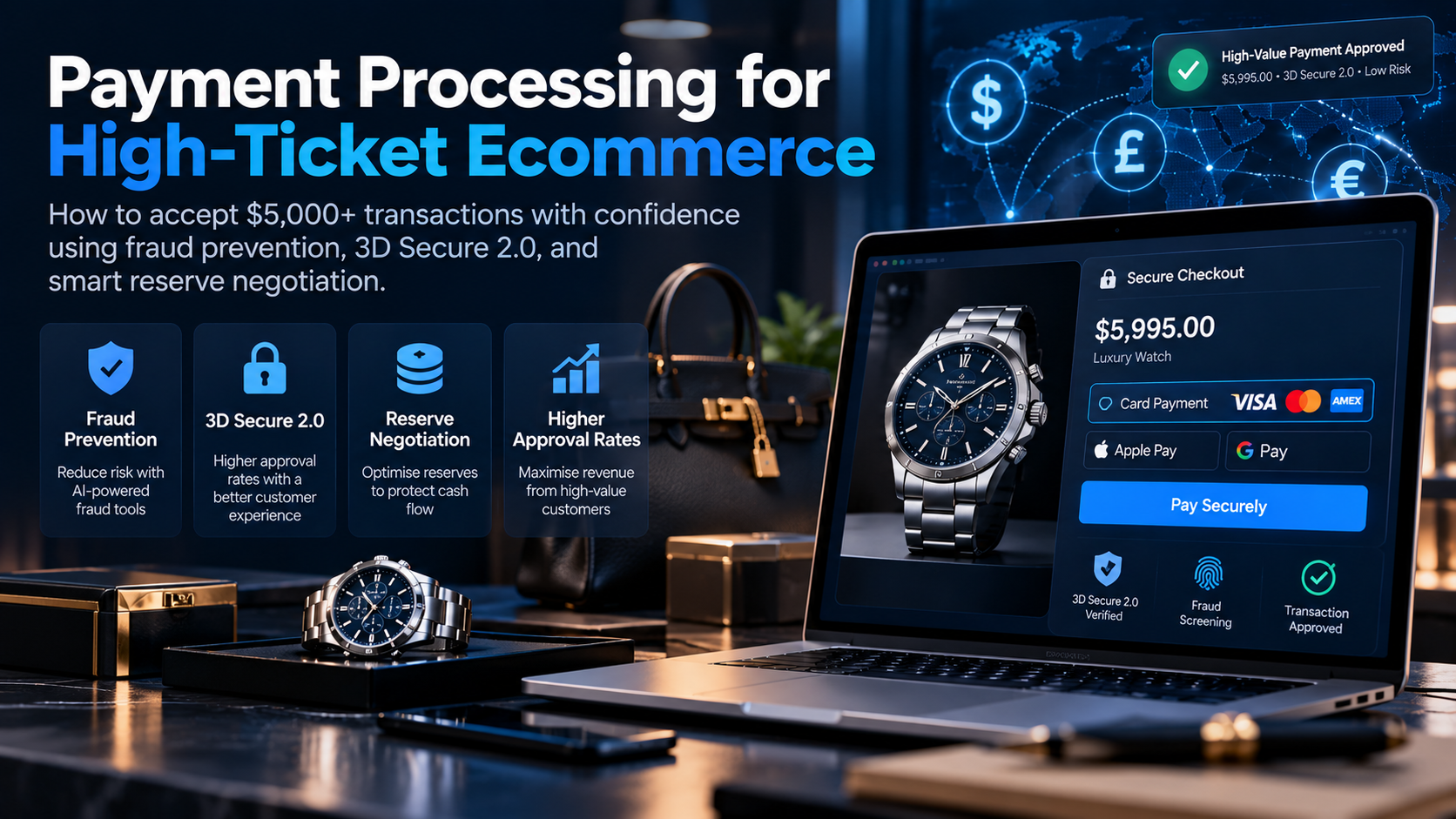
Payment Processing for High-Ticket Ecommerce: Accepting $5,000+ Transactions Without Risk
High-ticket ecommerce (furniture, electronics, B2B, luxury) faces unique payment challenges: fraud risk, chargeback exposure, and processor limits. Here is how to handle it.
Read More →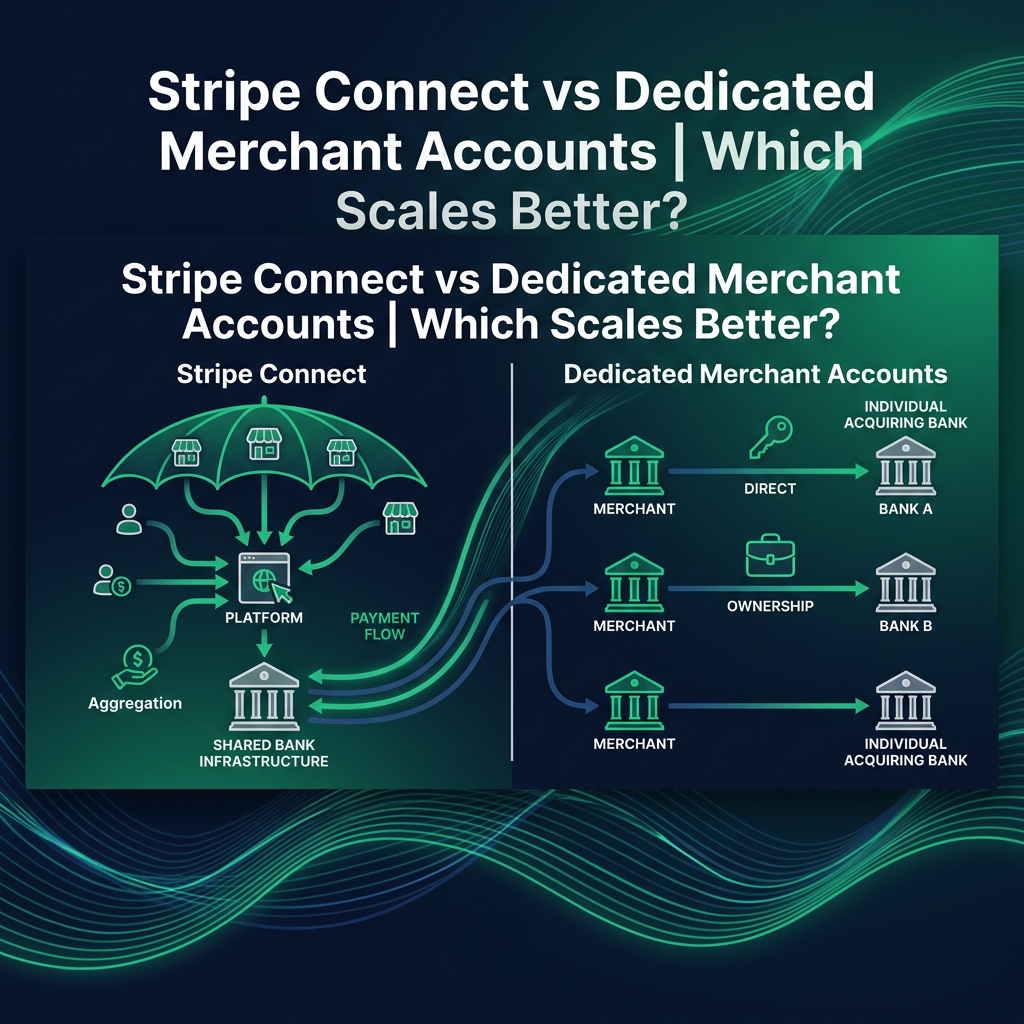
Stripe Connect vs Dedicated Merchant Accounts: What Scalable Ecommerce and Platforms Should Choose
Compare Stripe Connect vs dedicated merchant accounts to understand which payment model offers better scalability, control, and stability for growing platforms and ecommerce businesses.
Read More →