payment processing
Stripe Connect vs merchant accountsdedicated merchant accountStripe Connect alternativeplatform paymentsecommerce payment modelmulti-acquirerpayment scalability
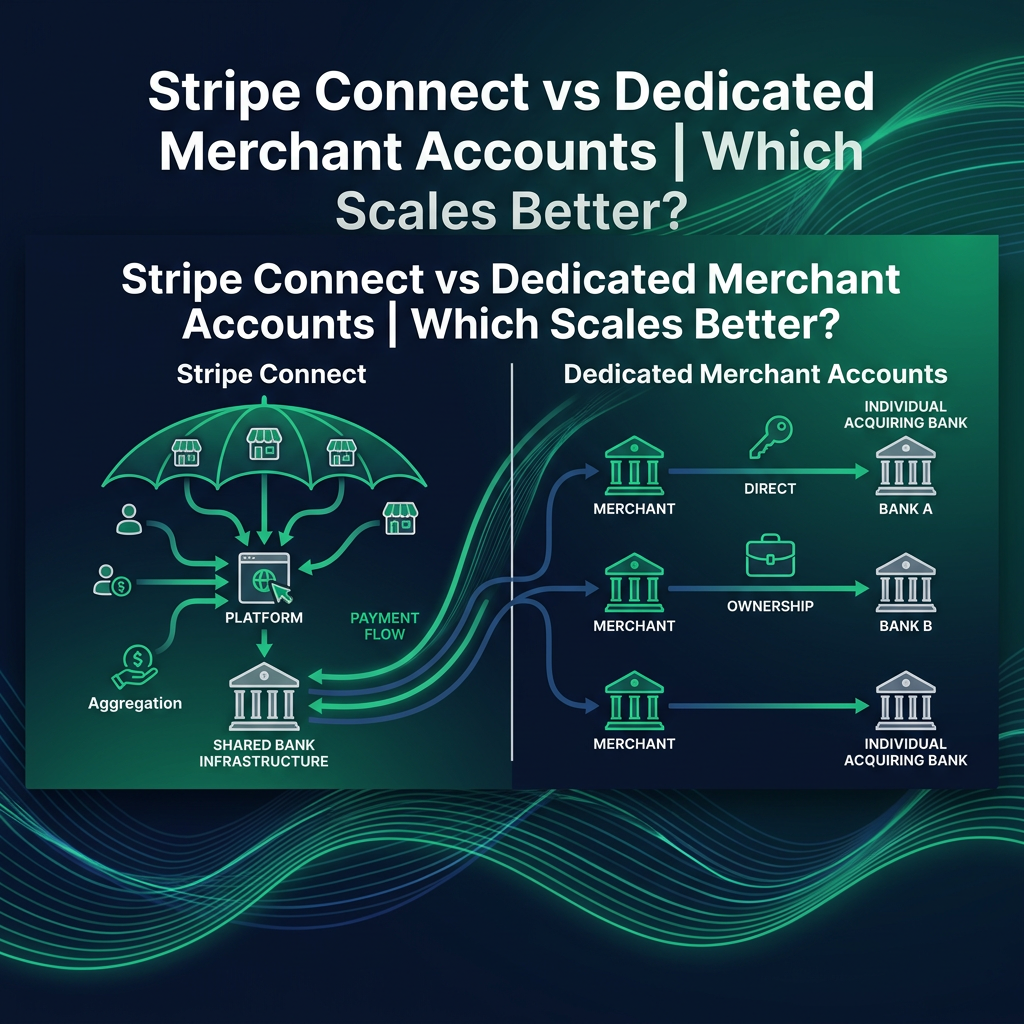 Compare Stripe Connect vs dedicated merchant accounts to understand which payment model offers better scalability, control, and stability.
✓ Stripe shutdown?
✓ High-risk industry?
✓ Declined payments?
Get approved today.
Apply NowIf you are building a platform, marketplace, SaaS product, or scaling ecommerce operation, one of the most important decisions you will make is:
- It is easy to set up - It handles onboarding - It abstracts complexity
If you are building a platform, marketplace, SaaS product, or scaling ecommerce operation, one of the most important decisions you will make is:
How do you structure your payments?
Many businesses default to Stripe Connect because:
But as volume grows, cracks begin to appear.
At scale, the decision between Stripe Connect vs dedicated merchant accounts becomes a defining factor in:
This is not just a technical choice.
It is a business-critical infrastructure decision.
Stripe Connect is a payment solution designed for platforms and marketplaces.
It allows you to:
In this model, Stripe acts as the master payment provider.
Your users operate under Stripe's infrastructure.
This creates a streamlined experience, especially for early-stage platforms.
A dedicated merchant account is a direct relationship between a business and an acquiring bank.
Each merchant:
Instead of being grouped under a platform like Stripe, each entity operates as its own merchant.
This model is more traditional—but far more flexible at scale.
The key difference between Stripe Connect and dedicated merchant accounts is ownership.
Stripe Connect is an aggregated model.
All merchants operate under Stripe's umbrella.
Dedicated merchant accounts are a direct model.
Each merchant owns their payment relationship.
This difference impacts everything from risk to scalability.
Stripe Connect is designed for speed.
You can:
This is ideal for early-stage businesses.
Dedicated merchant accounts require more effort.
You need:
But this initial complexity enables long-term scalability.
One of the biggest differences is risk exposure.
With Stripe Connect:
If Stripe flags your platform or users, it can impact your entire operation.
With dedicated merchant accounts:
This creates a more stable system at scale.
Stripe Connect operates within Stripe's ecosystem.
This limits flexibility.
You are tied to:
Dedicated merchant accounts allow for:
This level of control becomes essential as you grow.
Approval rates are a major driver of revenue.
Stripe Connect uses a standardized processing model.
This limits optimization.
Dedicated merchant accounts allow you to:
This often leads to higher approval rates.
Stripe Connect typically uses a flat or blended pricing model.
While simple, this can become expensive at scale.
You may face:
Dedicated merchant accounts allow for:
At high volume, this can significantly improve margins.
Stripe Connect allows platforms to take a cut of transactions.
This is useful for monetization.
However, it comes with trade-offs:
With dedicated merchant accounts, platforms can:
This provides more flexibility in monetization.
Stripe Connect simplifies compliance.
Stripe handles:
Dedicated merchant accounts require:
While more complex, this provides greater control.
Stripe Connect manages payouts centrally.
This can lead to:
Dedicated merchant accounts provide:
For high-volume businesses, this is critical.
Stripe Connect operates within a single ecosystem.
This creates a single point of dependency.
Dedicated merchant accounts enable:
This improves both stability and scalability.
Stripe Connect has strict policies around risk.
Certain industries may face:
Dedicated merchant accounts are better suited for:
They offer more flexibility and tolerance.
Stripe Connect is ideal for:
It provides a strong starting point.
Dedicated merchant accounts are better when:
At this stage, ownership becomes more important than convenience.
Many businesses fail to plan their payment strategy.
Common mistakes include:
These mistakes limit growth.
Choosing the right payment structure can lead to:
At scale, the impact can be massive.
At GetPayment, we help businesses move from aggregated models to optimized payment systems.
We help you:
Our goal is to help you take control of your payments.
Stripe Connect offers simplicity.
Dedicated merchant accounts offer control.
As your business grows, control becomes more valuable.
The most successful platforms understand when to transition.
Because at scale:
Your payment model is not just infrastructure.
It is a growth strategy.
Ready to take control of your payments? If you are scaling your platform or ecommerce business and want to move beyond Stripe Connect, improve performance, and build a scalable payment system, GetPayment can help. Apply today to take control of your payment infrastructure.
What is Stripe Connect?
Stripe Connect is a platform payment solution that allows businesses to onboard users and process payments on their behalf within Stripe's ecosystem.
What is a dedicated merchant account?
A dedicated merchant account is a direct relationship between a business and an acquiring bank, allowing independent payment processing.
Which is better for scaling businesses?
Dedicated merchant accounts are generally better for scaling because they offer more control, flexibility, and optimization opportunities.
Can Stripe Connect handle high volume?
Yes, but it may lack the flexibility and optimization needed for maximum performance at scale.
Are dedicated merchant accounts more complex?
Yes, but the added complexity provides greater control and long-term benefits.
Can I switch from Stripe Connect to merchant accounts?
Yes. Many businesses transition as they scale to improve performance and reduce risk.
Do merchant accounts improve approval rates?
Yes. With better routing and multiple acquirers, approval rates can improve significantly.
Tags

Head of Payment Strategy
GetPayment Inc
Jane Harold is a payment strategy expert with 12+ years of experience in high-volume ecommerce payments, merchant account management, and checkout optimization. She has helped hundreds of US ecommerce brands improve authorization rates, reduce processing costs, and scale payment infrastructure.
Payment Strategy Expert
12+ years in industry
Certified Payment Specialist
PCI DSS Level 1 compliance
Merchant Account Advisor
500+ merchants advised
Industry Speaker
Ecommerce & payment conferences
Have questions about payment processing? Reach out to Jane directly.
Years Experience
Merchants Helped
Bank Partners
Satisfaction Rate
GetPayment helps ecommerce merchants increase approval rates with smart routing and high-risk-friendly processors.
High-risk friendly
Multiple processors
Global coverage
See exactly how much you're overpaying in processing fees. Our experts analyze your statement and show you potential savings.
Request Free AuditExplore the complete guide for this topic with deeper insights and strategies.
View Guide →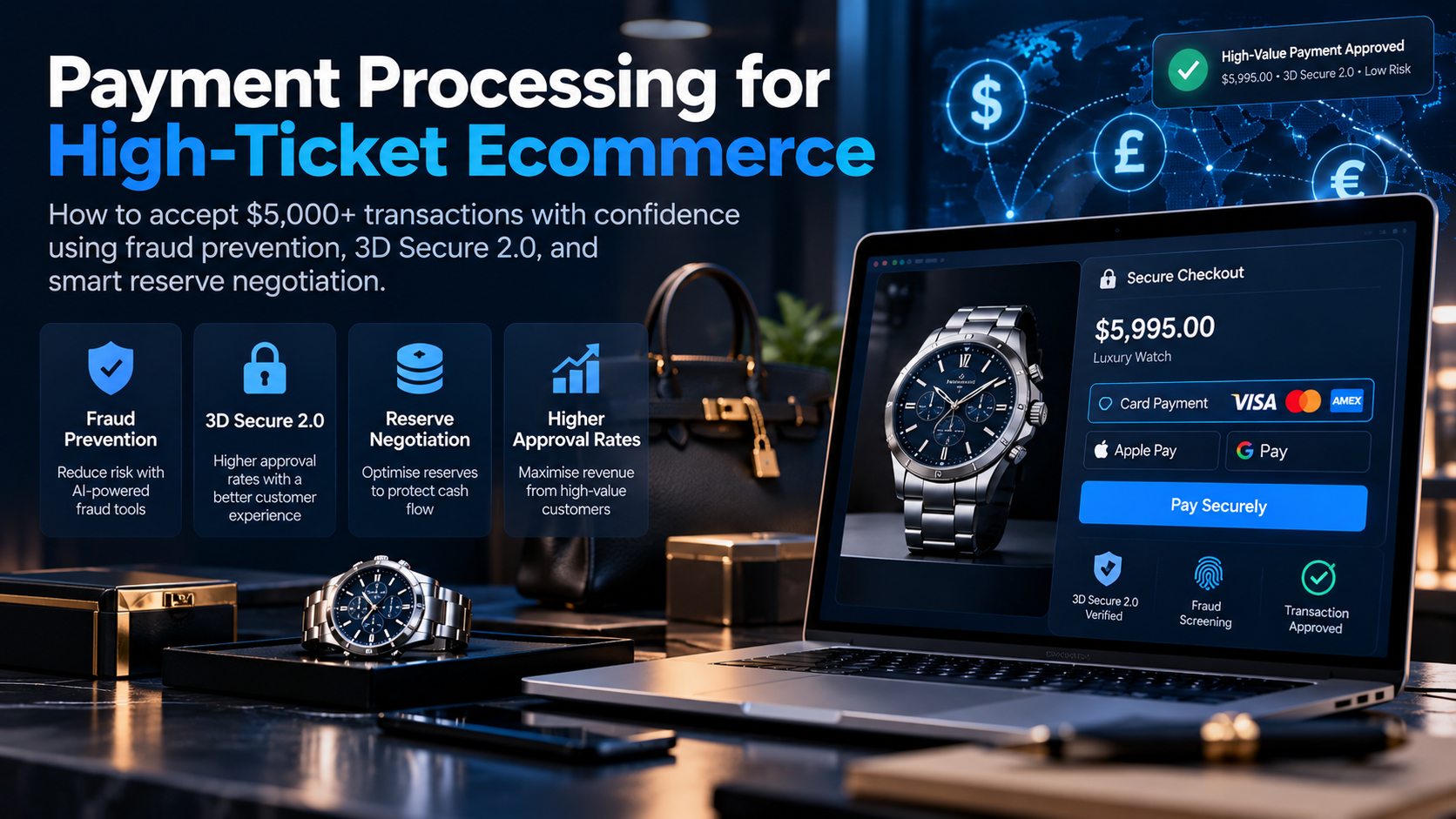
High-ticket ecommerce (furniture, electronics, B2B, luxury) faces unique payment challenges: fraud risk, chargeback exposure, and processor limits. Here is how to handle it.
Read More →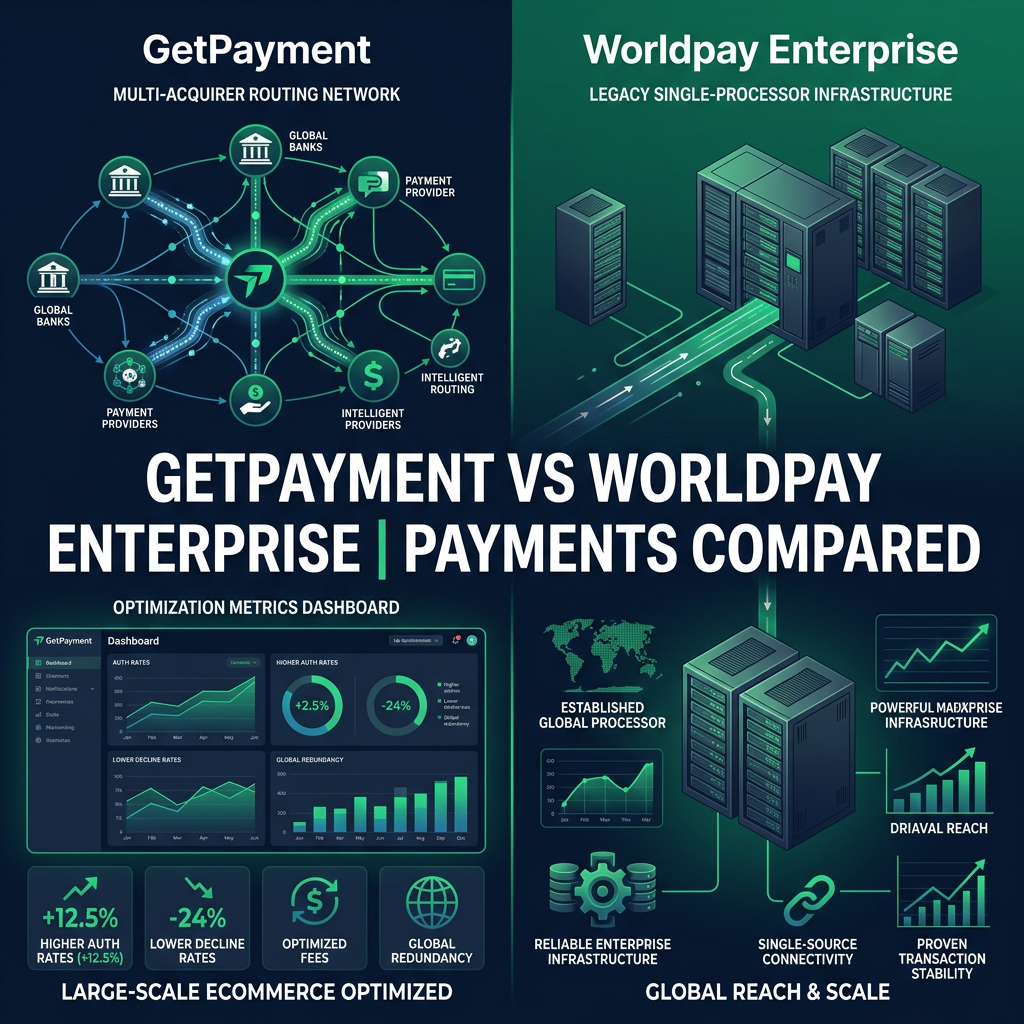
Compare GetPayment vs Worldpay Enterprise for large-scale ecommerce. Learn which solution delivers better approvals, lower costs, and scalability for high-volume merchants.
Read More →