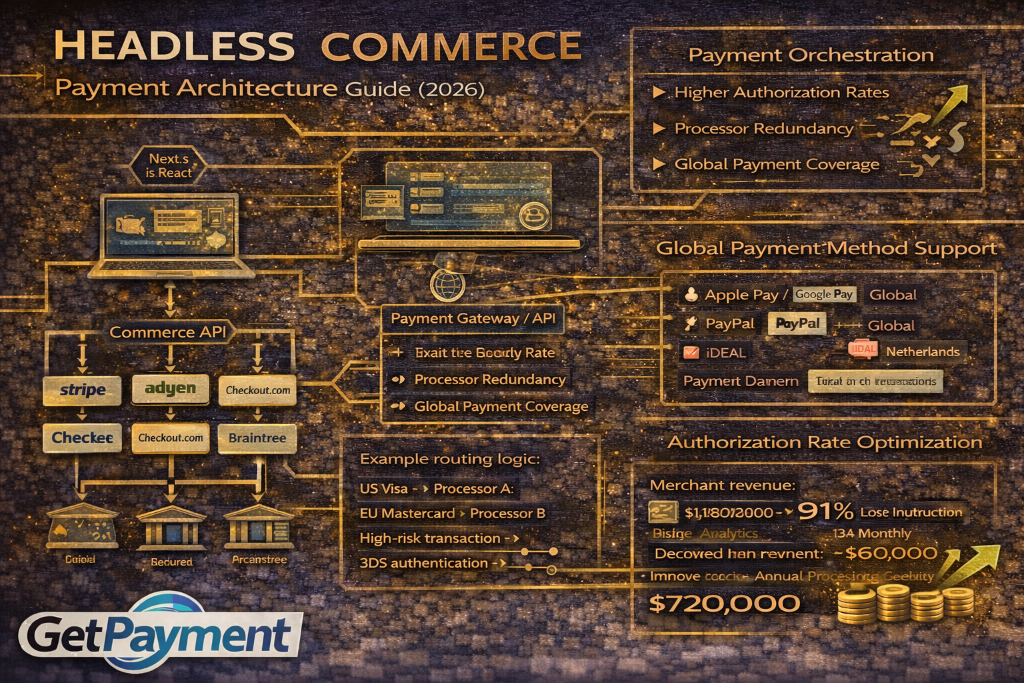
 Learn how to design a headless commerce payment architecture to increase flexibility, improve performance, and scale ecommerce payments efficiently.
Need Payment Processing?
✓ Stripe shutdown?
✓ High-risk industry?
✓ Declined payments?
Get approved today.
Apply NowKey Takeaways
Headless commerce is transforming how ecommerce businesses are built.
By separating the frontend from the backend, it gives you complete control over the customer experience.
- ✓More flexibility
- ✓More responsibility
- ✓Integrate payment gateways via APIs
- ✓Connect multiple processors and acquirers
- ✓Build custom checkout experiences
Introduction: Why Payments Matter More in Headless Commerce
Headless commerce is transforming how ecommerce businesses are built.
By separating the frontend from the backend, it gives you complete control over the customer experience.
You can move faster, customize deeply, and scale globally.
But this flexibility introduces complexity—especially in payments.
In traditional ecommerce platforms, payments are often tightly integrated.
In headless commerce, you are responsible for designing your own payment architecture.
This means:
- More control
- More flexibility
- More responsibility
If done correctly, headless commerce payment architecture becomes a competitive advantage.
If done poorly, it creates bottlenecks, declines, and lost revenue.
What Is Headless Commerce Payment Architecture?
Headless commerce payment architecture refers to how payment systems are structured in a decoupled ecommerce environment.
Instead of relying on a single platform's built-in payment system, you:
- Integrate payment gateways via APIs
- Connect multiple processors and acquirers
- Build custom checkout experiences
- Control routing and logic
This creates a modular, flexible system where each component can be optimized independently.
Why Headless Commerce Changes Payment Strategy
In a traditional setup, your platform dictates your payment options.
In headless commerce, you design the system yourself.
This allows you to:
- Choose best-in-class providers
- Optimize for performance
- Customize checkout flows
- Implement advanced routing
However, it also means you must think strategically about how everything connects.
The Core Components of a Headless Payment Architecture
A strong payment architecture includes several key layers.
First is the frontend checkout experience.
This is what the customer interacts with.
Second is the payment orchestration layer.
This manages routing, logic, and decision-making.
Third is the gateway layer.
This handles communication between your system and processors.
Fourth is the acquiring layer.
This is where transactions are processed by banks.
Each layer must be optimized and integrated properly.
The Role of Payment Orchestration
Payment orchestration is one of the most important elements in headless commerce.
It acts as the control center for your payments.
With orchestration, you can:
- Route transactions dynamically
- Manage multiple providers
- Optimize approval rates
- Control failover logic
This is critical for high-volume businesses.
Multi-Acquirer Setups in Headless Commerce
Headless architecture makes it easier to implement multi-acquirer strategies.
Instead of relying on one processor, you can:
- Integrate multiple acquiring banks
- Route transactions based on performance
- Optimize for different regions
This improves:
- Approval rates
- Redundancy
- Scalability
Smart Payment Routing for Performance Optimization
Smart routing is a key advantage of headless systems.
You can build logic that:
- Routes transactions based on geography
- Selects the best-performing acquirer
- Adjusts in real time
This ensures each transaction has the highest chance of success.
Custom Checkout Experiences and Payment Impact
Headless commerce allows full control over checkout.
This means you can:
- Optimize UX for conversions
- Reduce friction
- Customize payment flows
A better checkout experience leads to:
- Higher conversion rates
- Fewer abandoned carts
- Improved payment success
API-Driven Payment Integrations
APIs are the backbone of headless payment systems.
They allow you to:
- Connect multiple providers
- Build custom logic
- Scale integrations easily
However, API performance and reliability are critical.
Poor integrations can lead to delays and failed transactions.
Network Tokenisation in Headless Architectures
Tokenisation is easier to implement in a headless setup.
By using network tokens, you can:
- Improve security
- Increase approval rates
- Reduce fraud risk
This is especially important for subscription and high-volume businesses.
Handling Global Payments in Headless Commerce
Headless architecture is ideal for global ecommerce.
You can:
- Use local acquiring in different regions
- Offer region-specific payment methods
- Optimize currency handling
This improves both performance and customer experience.
Fraud Prevention in Headless Payment Systems
With more flexibility comes more responsibility.
You must implement your own fraud prevention strategy.
This includes:
- Risk scoring systems
- Behavioral analysis
- Dynamic authentication
- Custom fraud rules
Fraud prevention should be integrated across your architecture.
3D Secure and Authentication in Headless Commerce
Headless systems allow you to control how and when authentication is applied.
You can:
- Implement dynamic 3DS
- Trigger authentication based on risk
- Optimize for conversion
This balance is critical for performance.
Redundancy and Failover Strategies
One of the biggest advantages of headless architecture is resilience.
You can build failover systems that:
- Automatically switch providers
- Maintain uptime during outages
- Protect revenue
This ensures your payment system remains stable under pressure.
Performance Optimization and Latency Reduction
Speed is critical in ecommerce.
Every delay increases drop-off.
Headless systems allow you to:
- Optimize API calls
- Reduce latency
- Improve checkout speed
Faster systems lead to higher conversions.
Data and Analytics in Payment Architecture
Headless commerce gives you access to detailed data.
You can track:
- Approval rates
- Decline reasons
- Performance by provider
- Customer behavior
This data is essential for continuous optimization.
Common Mistakes in Headless Payment Architecture
Many businesses struggle with implementation.
Common mistakes include:
- Overcomplicating the system
- Poor API integrations
- Lack of routing logic
- Ignoring fraud and security
- Not planning for scale
Avoiding these mistakes is key to success.
The Financial Impact of a Strong Payment Architecture
A well-designed system can lead to:
- Higher approval rates
- Increased conversions
- Lower processing costs
- Improved scalability
At scale, these benefits are significant.
How GetPayment Helps Build Headless Payment Systems
At GetPayment, we help businesses design and optimize headless payment architectures.
We help you:
- Implement payment orchestration
- Build multi-acquirer setups
- Optimize routing and performance
- Improve approval rates
- Create scalable systems
Our goal is to turn your payment system into a growth engine.
Final Thoughts: Architecture Determines Performance
In headless commerce, your payment architecture is not just technical.
It is strategic.
The businesses that succeed are the ones that:
- Build flexible systems
- Optimize continuously
- Balance performance and security
Your architecture determines how much of your revenue you keep.
Ready to Build a Scalable Payment Architecture?
If you want to build a scalable, high-performance payment system for your headless commerce business, GetPayment can help.
Apply today to design a payment architecture built for growth.
FAQ: Headless Commerce Payment Architecture
What is headless commerce payment architecture?
It is the structure of payment systems in a decoupled ecommerce environment where frontend and backend are separated and connected via APIs.
Why is headless commerce better for payments?
It offers flexibility, allowing businesses to integrate multiple providers, optimize routing, and customize checkout experiences.
What is payment orchestration?
Payment orchestration is a layer that manages routing, provider selection, and transaction logic across multiple payment systems.
Can headless commerce improve approval rates?
Yes. By enabling smart routing, multi-acquirer setups, and optimization, it can significantly improve approval rates.
Is headless commerce more complex?
Yes. It provides more control but requires careful planning and implementation.
How does headless architecture help global ecommerce?
It allows for local acquiring, regional payment methods, and optimized cross-border transactions.
What is the biggest advantage of headless payment systems?
Flexibility. You can design and optimize every part of your payment process.
Tags

Jane Harold
Head of Payment Strategy
GetPayment Inc
Jane Harold is a payment strategy expert with 12+ years of experience in high-volume ecommerce payments, merchant account management, and checkout optimization. She has helped hundreds of US ecommerce brands improve authorization rates, reduce processing costs, and scale payment infrastructure.
Areas of Expertise
Payment Strategy Expert
12+ years in industry
Certified Payment Specialist
PCI DSS Level 1 compliance
Merchant Account Advisor
500+ merchants advised
Industry Speaker
Ecommerce & payment conferences
Get Expert Advice
Have questions about payment processing? Reach out to Jane directly.
Years Experience
Merchants Helped
Bank Partners
Satisfaction Rate
Recover Revenue From Payment Declines
GetPayment helps ecommerce merchants increase approval rates with smart routing and high-risk-friendly processors.
High-risk friendly
Multiple processors
Global coverage
Get Your Free Payment Fee Audit
See exactly how much you're overpaying in processing fees. Our experts analyze your statement and show you potential savings.
Request Free AuditLearn more in our Payment Infrastructure & Platforms Guide
Explore the complete guide for this topic with deeper insights and strategies.
View Guide →Related Articles
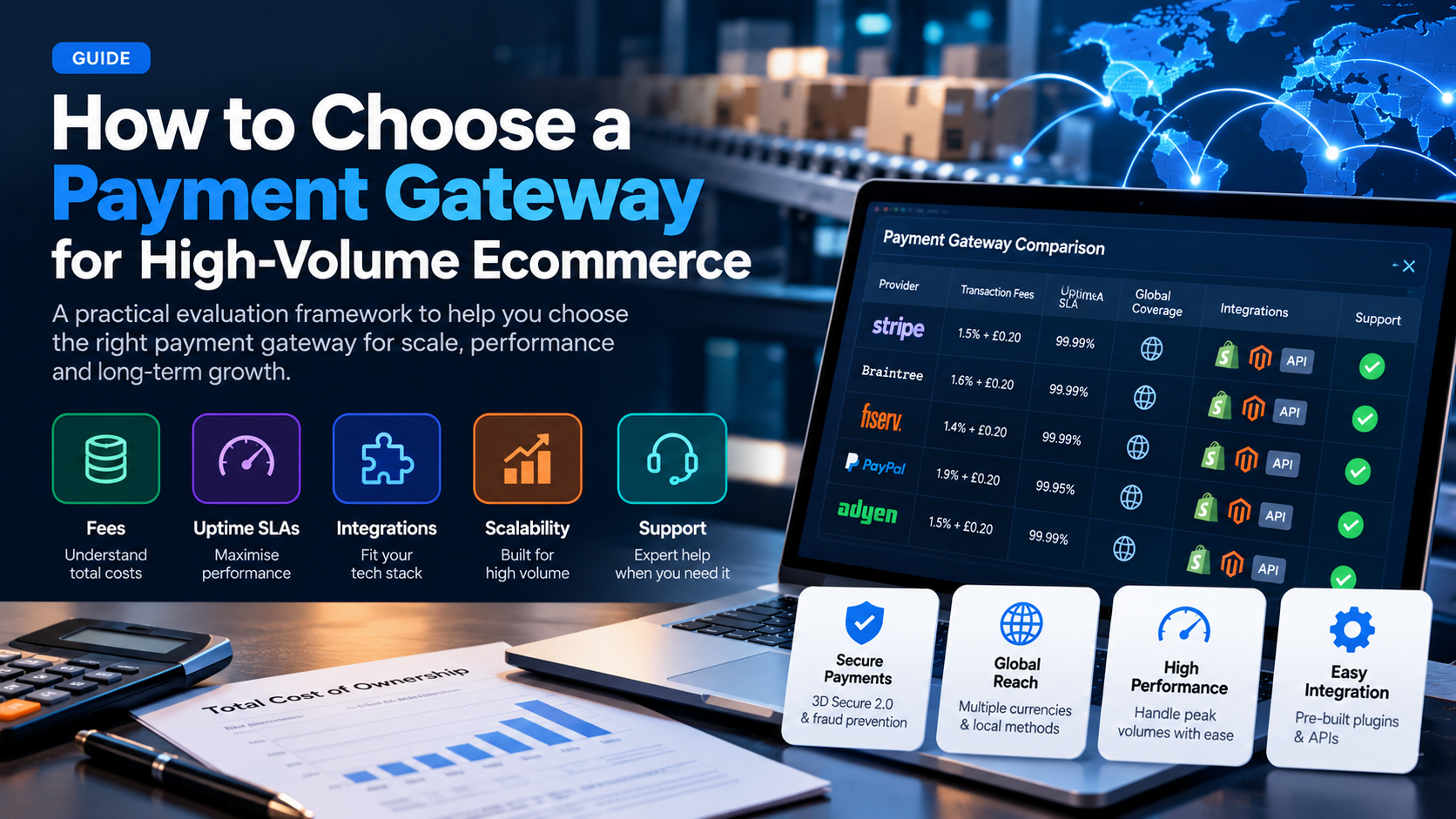
How to Choose a Payment Gateway for High-Volume Ecommerce (2026 Guide)
A practical framework for evaluating payment gateways when you process $50k+ per month: fees, uptime, integrations, scalability, and support.
Read More →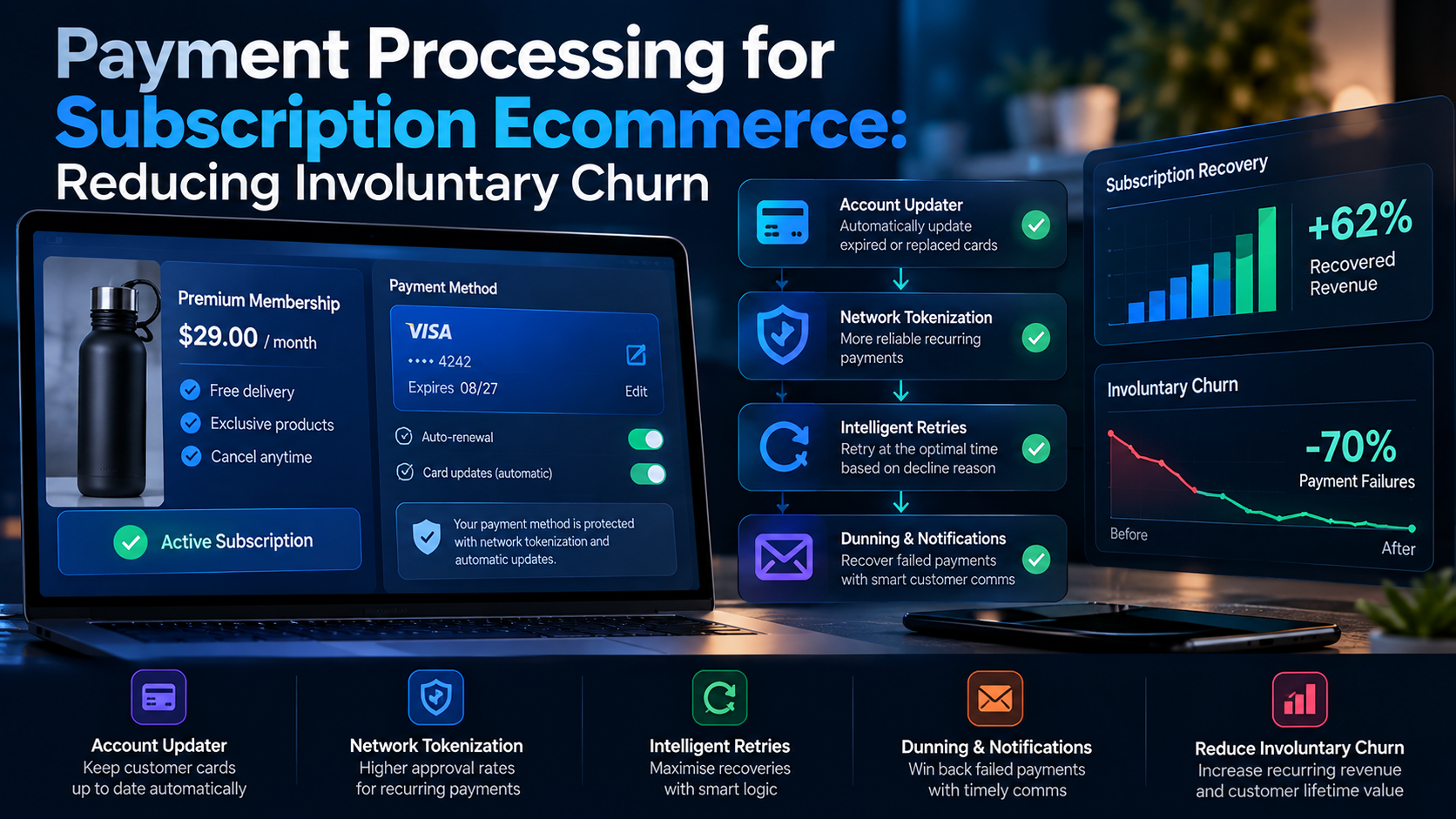
Payment Processing for Subscription Ecommerce: Reducing Involuntary Churn (2026 Guide)
Involuntary churn from failed payments costs subscription businesses 20-40% of revenue. Here is how to fix declined cards, update expired cards, and retain subscribers.
Read More →