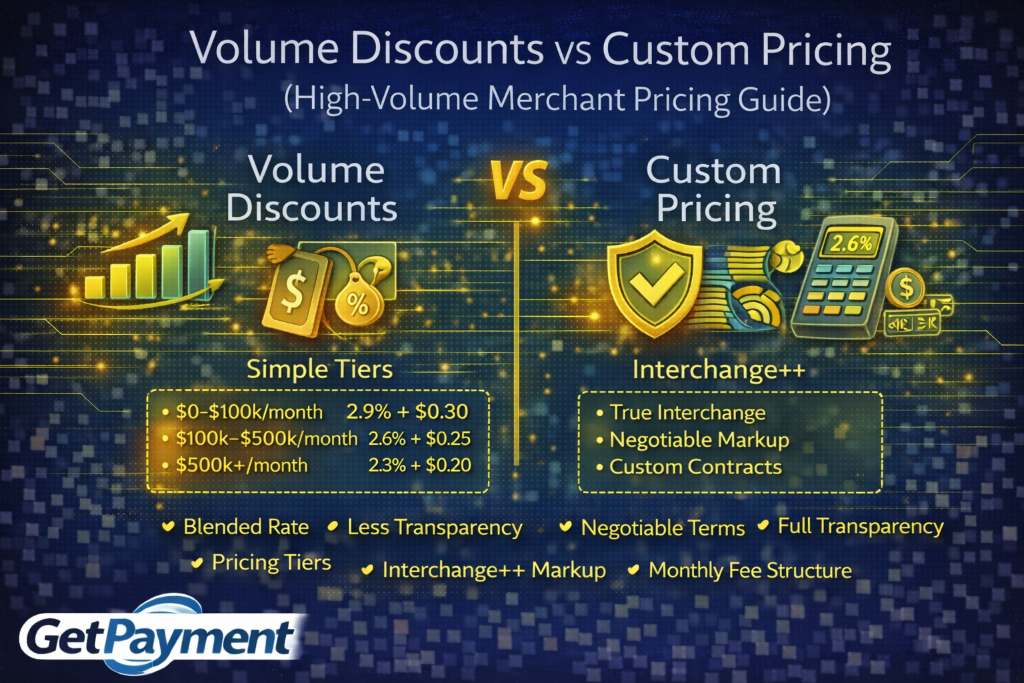
 Learn the difference between volume discounts and custom pricing in payment processing and discover which option high-volume merchants should choose to reduce costs.
Need Payment Processing?
✓ Stripe shutdown?
✓ High-risk industry?
✓ Declined payments?
Get approved today.
Apply NowIntroduction: Why Pricing Structure Matters More Than Rate
As your ecommerce business scales, payment processing becomes one of your largest expenses.
At this stage, most merchants start asking the right question:
"How do I get better rates?"
But this is where many make a mistake.
They focus on the percentage rate instead of the pricing structure behind it.
Two of the most common pricing approaches offered to high-volume merchants are:
- Volume-based discounts
- Custom pricing agreements
Understanding the difference between these two is critical.
Because choosing the wrong one can cost you significantly more over time.
What Are Volume Discounts in Payment Processing?
Volume discounts are pricing reductions based on how much you process.
As your transaction volume increases, your processor offers lower rates.
This is usually structured in tiers.
For example, as you process more per month, your fees decrease incrementally.
This model is simple and attractive because:
- It rewards growth
- It is easy to understand
- It requires minimal negotiation
However, simplicity often comes at a cost.
How Volume Discounts Work in Practice
In a volume discount model, your pricing improves automatically as your business grows.
But there are limitations.
These discounts are:
- Predefined by the processor
- Not fully tailored to your business
- Often capped at certain levels
This means that even as you scale significantly, you may still be overpaying compared to what is actually possible.
What Is Custom Pricing in Payment Processing?
Custom pricing is a negotiated agreement between your business and your payment provider.
Instead of fixed tiers, your pricing is tailored based on:
- Your transaction volume
- Your industry and risk profile
- Your approval rates
- Your business model
- Your processing history
This allows for much more flexibility and optimization.
Why Custom Pricing Exists for High-Volume Merchants
Payment providers value large merchants.
High-volume businesses generate consistent revenue for processors.
Because of this, providers are often willing to:
- Lower markups
- Adjust fee structures
- Offer better terms
- Provide more flexibility
But these benefits are not automatic.
They are unlocked through negotiation.
The Key Difference: Standardization vs Optimization
The core difference between volume discounts and custom pricing is control.
Volume discounts are standardized.
Custom pricing is optimized.
With volume discounts, you fit into the processor's pricing model.
With custom pricing, the pricing model adapts to your business.
This distinction becomes extremely important at scale.
Why Volume Discounts Often Leave Money on the Table
Volume discounts can feel like a good deal.
But they often hide inefficiencies.
Because they are standardized:
- They may not reflect your actual risk profile
- They may include unnecessary markups
- They do not account for optimization opportunities
- They limit how much you can reduce costs
For high-volume merchants, this can result in significant overpayment.
The Advantage of Custom Pricing at Scale
Custom pricing allows you to optimize your entire cost structure.
Instead of accepting predefined tiers, you can:
- Negotiate lower processor markups
- Reduce operational fees
- Adjust pricing based on performance
- Align costs with your actual risk
This creates a more efficient payment system.
How Volume Impacts Your Negotiating Power
Volume is your strongest leverage.
The more you process, the more valuable you are to payment providers.
This gives you the ability to:
- Request better rates
- Compare multiple offers
- Create competition between providers
If you are processing significant volume and still using standard pricing, you are likely overpaying.
The Role of Competition in Pricing
One of the biggest advantages of custom pricing is leverage.
When you work with multiple providers, you can:
- Compare pricing structures
- Negotiate better terms
- Push providers to compete for your business
This is not possible with a single-provider, volume-discount model.
Why Single-Provider Setups Limit Your Options
If you rely on one processor, your negotiating power is limited.
You have no alternative.
This often leads to:
- Higher fees
- Less flexibility
- Slower optimization
High-volume merchants benefit from building optionality into their payment setup.
Custom Pricing and Payment Infrastructure
Custom pricing works best when combined with a strong payment infrastructure.
This includes:
- Multiple acquirers
- Smart routing
- Optimized transaction data
- Network tokenisation
These elements improve performance and reduce costs simultaneously.
Hidden Costs in Volume Discount Models
Volume discounts often hide additional costs.
These can include:
- Higher interchange markups
- Cross-border surcharges
- Authorization fees
- Operational fees
Because the pricing is bundled, it is harder to identify where you are overpaying.
Why Transparency Matters
Custom pricing often provides greater transparency.
This allows you to:
- Understand your true costs
- Identify inefficiencies
- Optimize your setup
- Negotiate more effectively
Transparency is key to long-term cost control.
When Volume Discounts Make Sense
Volume discounts are not always bad.
They can be useful for:
- Early-stage scaling businesses
- Merchants with moderate volume
- Businesses that want simplicity
However, they are rarely the best option at high volume.
When Custom Pricing Becomes Essential
Custom pricing becomes critical when:
- You process high monthly volume
- Payment costs significantly impact your margins
- You operate in a competitive market
- You want to optimize performance and cost
At this stage, standard pricing models are no longer sufficient.
Common Mistakes High-Volume Merchants Make
Many merchants fail to optimize their pricing.
Common mistakes include:
- Accepting default volume discounts
- Not negotiating with providers
- Relying on a single processor
- Ignoring hidden fees
- Not auditing their payment costs
These mistakes can result in substantial overpayment.
The Financial Impact of Choosing the Right Model
Choosing the right pricing structure can lead to:
- Lower processing costs
- Higher profit margins
- Improved cash flow
- More efficient scaling
Even small improvements can have a large impact at scale.
How GetPayment Helps You Optimize Pricing
At GetPayment, we help high-volume merchants optimize their payment costs.
We help you:
- Move from volume discounts to custom pricing
- Negotiate better terms
- Build multi-acquirer setups
- Improve approval rates
- Reduce hidden fees
Our goal is to help you keep more of your revenue.
Final Thoughts: Optimization Always Beats Simplicity
Volume discounts are easy.
Custom pricing is powerful.
As your business scales, simplicity becomes less important than efficiency.
The most successful merchants understand that:
- Payment pricing is negotiable
- Structure matters more than headline rates
- Optimization leads to higher profitability
If you want to scale efficiently, you need a pricing model that works for your business — not against it.
Ready to Move Beyond Volume Discounts?
If you are processing high volume and want to reduce costs, improve margins, and optimize your payment setup, GetPayment can help.
Apply today to move beyond volume discounts and unlock custom pricing built for scale.
FAQ: Volume Discounts vs Custom Pricing
What are volume discounts in payment processing?
Volume discounts are reduced rates offered by payment processors based on how much you process monthly, typically structured in predefined tiers.
What is custom pricing?
Custom pricing is a negotiated payment processing agreement tailored to your business based on volume, risk, and performance.
Which is better for high-volume merchants?
Custom pricing is usually better because it allows for optimization, flexibility, and lower overall costs compared to standard volume discounts.
Can I negotiate payment processing rates?
Yes. High-volume merchants have significant leverage and can negotiate better rates, terms, and fee structures.
Why do processors offer custom pricing?
Processors compete for high-volume merchants because they generate consistent revenue, making them valuable clients.
Do volume discounts include hidden fees?
Yes. Volume discounts often bundle fees, making it harder to identify hidden costs such as markups and surcharges.
When should I switch to custom pricing?
You should consider custom pricing when your processing volume is high enough that payment fees significantly impact your margins.
Tags

Jane Harold
Head of Payment Strategy
GetPayment Inc
Jane Harold is a payment strategy expert with 12+ years of experience in high-volume ecommerce payments, merchant account management, and checkout optimization. She has helped hundreds of US ecommerce brands improve authorization rates, reduce processing costs, and scale payment infrastructure.
Areas of Expertise
Payment Strategy Expert
12+ years in industry
Certified Payment Specialist
PCI DSS Level 1 compliance
Merchant Account Advisor
500+ merchants advised
Industry Speaker
Ecommerce & payment conferences
Get Expert Advice
Have questions about payment processing? Reach out to Jane directly.
Years Experience
Merchants Helped
Bank Partners
Satisfaction Rate
Recover Revenue From Payment Declines
GetPayment helps ecommerce merchants increase approval rates with smart routing and high-risk-friendly processors.
High-risk friendly
Multiple processors
Global coverage
Get Your Free Payment Fee Audit
See exactly how much you're overpaying in processing fees. Our experts analyze your statement and show you potential savings.
Request Free AuditLearn more in our Reduce Payment Processing Fees Guide
Explore the complete guide for this topic with deeper insights and strategies.
View Guide →Related Articles
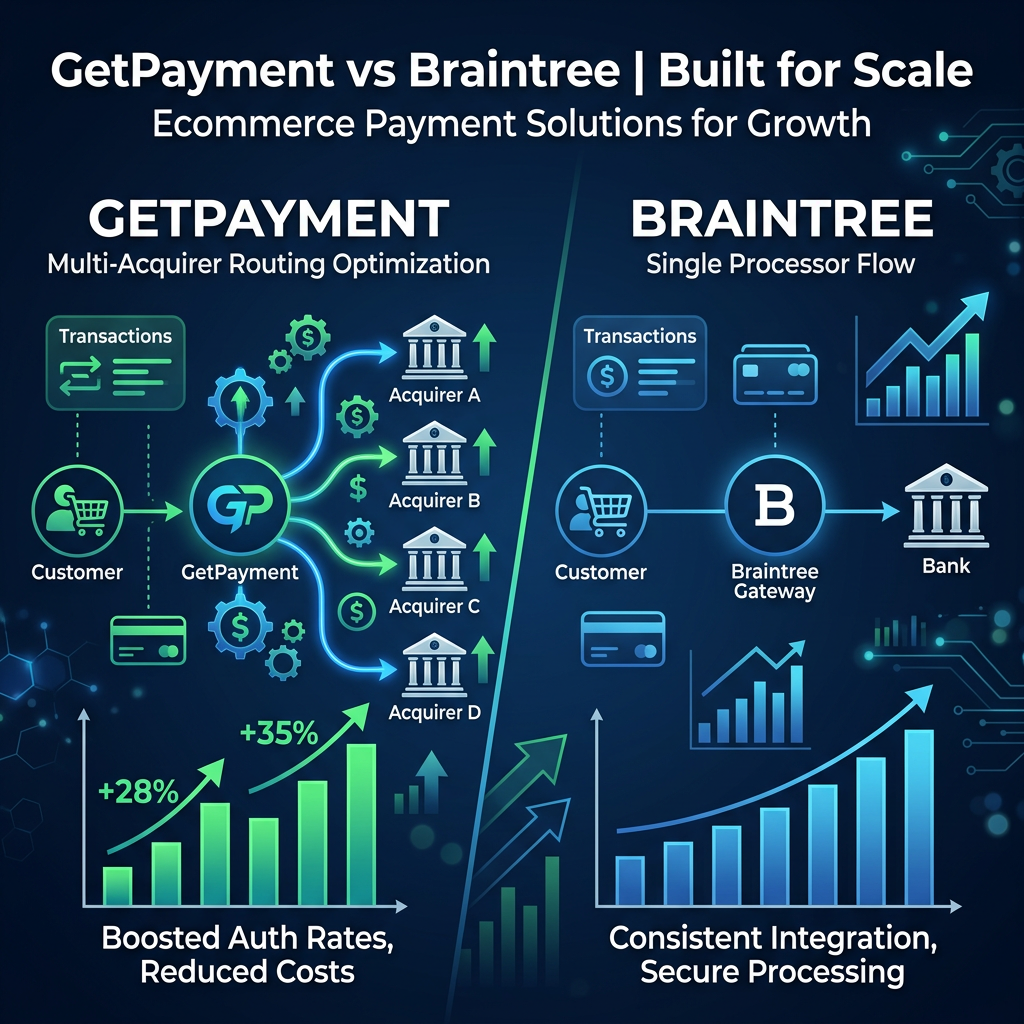
GetPayment vs Braintree for Scale: Which Payment Strategy Wins for Growing Ecommerce Businesses?
Compare GetPayment vs Braintree for scaling ecommerce businesses. Learn which solution delivers better approvals, flexibility, and cost optimization.
Read More →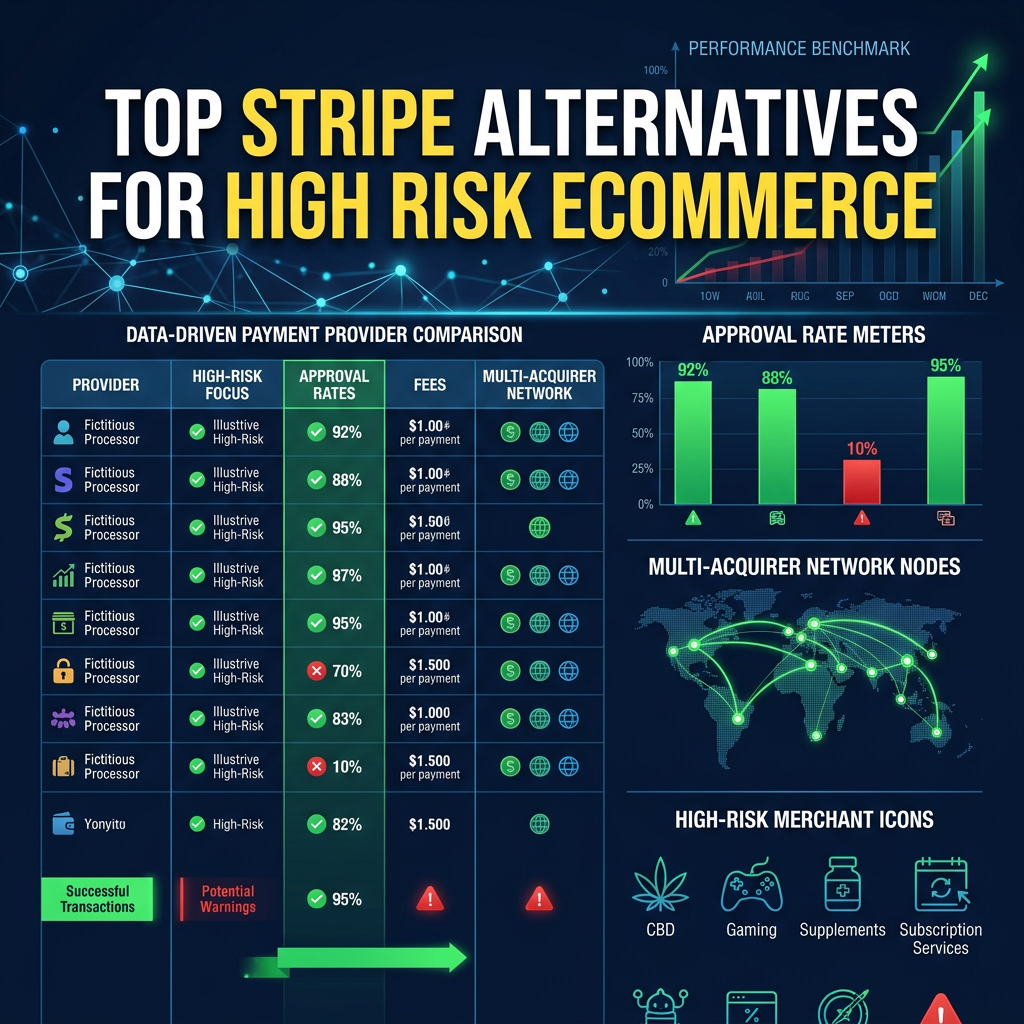
Stripe Alternatives for High Risk Ecommerce (Top 5): Best Payment Solutions for Scaling Businesses
Looking for Stripe alternatives for high-risk ecommerce? Discover the top 5 solutions to improve approvals, reduce risk, and scale your payment system.
Read More →