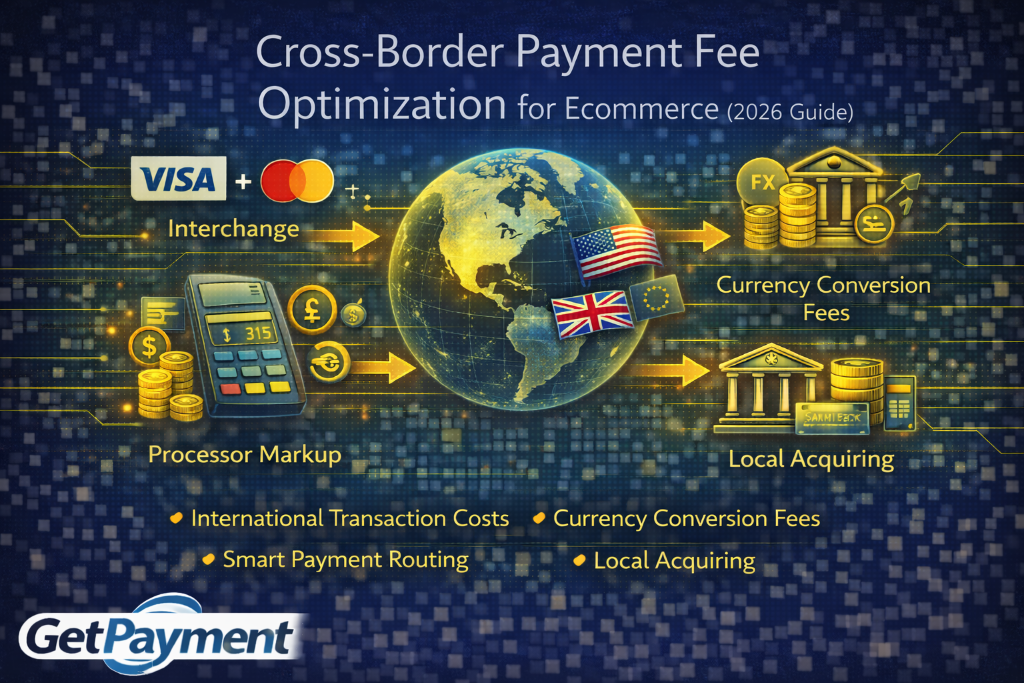
 Learn how US merchants can optimize cross-border payment fees, reduce international costs, and increase profitability when selling globally.
Need Payment Processing?
✓ Stripe shutdown?
✓ High-risk industry?
✓ Declined payments?
Get approved today.
Apply NowIntroduction: The Hidden Cost of Selling Internationally
Expanding internationally is one of the fastest ways for US ecommerce businesses to scale.
New markets mean new customers, higher volume, and more growth opportunities.
But there is a problem most merchants underestimate.
Cross-border payment costs.
Many businesses assume international sales are just like domestic transactions.
They are not.
Behind every cross-border transaction are additional fees, higher risk classifications, and more complex processing layers.
Without optimization, these costs can quietly erode your margins.
This is why cross-border fee optimisation for US merchants is critical. It allows you to scale globally without sacrificing profitability.
What Are Cross-Border Payment Fees?
Cross-border fees are additional costs applied when a transaction involves parties in different countries.
For US merchants, this typically happens when:
- A customer uses a non-US card
- The issuing bank is located outside the US
- The transaction is processed internationally
These fees can include:
- Cross-border interchange adjustments
- Card network international fees
- Currency conversion costs
- Processor markups
These are often bundled into your pricing, making them difficult to identify.
Why Cross-Border Fees Are Higher
International transactions carry more complexity and risk.
Issuing banks and card networks account for:
- Increased fraud risk
- Currency fluctuations
- Regulatory differences
- Settlement complexity
Because of this, cross-border transactions are often:
- More expensive to process
- More likely to be declined
- Subject to additional fees
For US merchants selling globally, this creates both cost and performance challenges.
The True Impact on Your Margins
Cross-border fees are not just a minor cost.
At scale, they can significantly impact profitability.
If a large percentage of your sales come from international customers, you may be:
- Paying higher effective processing rates
- Losing margin on every transaction
- Reducing overall profitability
Many merchants do not realize how much these fees are costing them.
Why Most US Merchants Overpay on International Transactions
There are several reasons why businesses overpay.
Most merchants:
- Use a US-only acquiring setup
- Process all transactions through a single provider
- Do not optimize for customer geography
- Rely on default payment configurations
This leads to inefficient routing and higher fees.
Without optimization, international transactions are processed in a way that increases costs unnecessarily.
Use Local Acquiring to Reduce Costs
One of the most effective ways to reduce cross-border fees is to use local acquiring.
This means processing transactions through acquiring banks located in the same region as your customer.
For example:
- European customers processed through a European acquirer
- UK customers processed through a UK-based acquiring bank
This approach can:
- Reduce cross-border fees
- Improve approval rates
- Lower currency conversion costs
Local acquiring aligns your payment setup with your customer base.
Improve Approval Rates with Regional Optimization
Cross-border transactions often have lower approval rates.
Issuing banks may view international transactions as higher risk.
By optimizing your setup for different regions, you can:
- Improve trust with issuing banks
- Reduce unnecessary declines
- Increase completed transactions
Higher approval rates mean more revenue from the same traffic.
The Role of Currency in Cross-Border Fees
Currency conversion is another major cost factor.
When transactions are processed in a different currency, additional fees are applied.
This can include:
- Currency conversion spreads
- Network fees
- Processor markups
Offering local currency pricing can reduce these costs and improve the customer experience.
Smart Payment Routing for International Transactions
Smart routing is essential for cross-border optimization.
Instead of sending all transactions through a single path, routing allows you to:
- Match transactions with the best-performing acquirer
- Optimize based on geography
- Reduce processing costs
This ensures each transaction is handled in the most efficient way.
Multi-Acquirer Strategies for Global Scaling
A multi-acquirer setup is critical for international ecommerce.
By working with multiple acquiring partners, you can:
- Optimize for different regions
- Improve approval rates
- Reduce dependency on a single provider
- Lower cross-border costs
This creates a more flexible and scalable payment system.
Reduce Declines and Recover Lost Revenue
Cross-border transactions are more likely to be declined.
This leads to lost revenue.
To reduce declines, you should:
- Optimize routing
- Use local acquiring
- Improve transaction data quality
- Implement retry logic
Recovering declined transactions can significantly increase revenue.
Network Tokenisation for International Performance
Network tokenisation improves both security and performance.
For cross-border transactions, it can:
- Increase trust with issuing banks
- Reduce fraud risk
- Improve approval rates
This is especially valuable for businesses operating in multiple regions.
Fraud Optimization for Cross-Border Transactions
International transactions are often flagged as higher risk.
This can lead to false declines.
To optimize fraud systems, you should:
- Adjust rules based on geography
- Monitor international transaction performance
- Avoid overly strict controls
- Balance risk with conversion
The goal is to protect your business without blocking legitimate customers.
The Importance of Payment Method Localization
Different regions prefer different payment methods.
Offering local payment options can:
- Increase conversion rates
- Improve approval rates
- Reduce reliance on card payments
For example, some regions rely heavily on alternative payment methods rather than cards.
Cross-Border Fees and Interchange Optimization
Interchange fees are often higher for international transactions.
However, you can still optimize by:
- Improving transaction data
- Reducing downgrade scenarios
- Aligning transactions with local processing
These improvements reduce effective costs.
Common Mistakes US Merchants Make
Many US merchants fail to optimize their international payment setup.
Common mistakes include:
- Processing all transactions through US acquirers
- Ignoring currency optimization
- Not implementing routing strategies
- Overlooking local payment methods
- Treating international sales like domestic transactions
Fixing these can lead to immediate improvements.
The Financial Impact of Cross-Border Optimization
Optimizing cross-border payments can result in:
- Lower processing costs
- Higher approval rates
- Increased conversion rates
- Improved margins
At scale, these improvements can have a significant impact.
How GetPayment Helps US Merchants Optimize International Payments
At GetPayment, we help US merchants build payment systems designed for global scale.
We help you:
- Implement local acquiring strategies
- Optimize cross-border routing
- Reduce international fees
- Improve approval rates
- Build multi-acquirer setups
Our goal is to help you scale internationally while protecting your margins.
Final Thoughts: Global Growth Requires Local Optimization
Selling internationally is one of the biggest growth opportunities for US merchants.
But without the right payment strategy, it can also be one of the most expensive.
Cross-border fee optimization allows you to:
- Reduce costs
- Improve performance
- Scale efficiently
The businesses that win globally are the ones that optimize locally.
Ready to Optimize Your International Payments?
If you want to reduce cross-border fees, improve international approval rates, and scale globally with confidence, GetPayment can help.
Apply today to optimize your international payment infrastructure and maximize your profitability.
FAQ: Cross-Border Fee Optimisation
What are cross-border payment fees?
Cross-border payment fees are additional charges applied when a transaction involves different countries, including international interchange, network fees, and currency conversion costs.
Why are international transactions more expensive?
They involve higher risk, currency conversion, and additional processing layers, which increase costs for issuing banks and networks.
How can US merchants reduce cross-border fees?
By using local acquiring, optimizing routing, offering local currencies, and working with multiple acquirers.
Does local acquiring improve approval rates?
Yes. Processing transactions closer to the customer's issuing bank increases trust and improves approval rates.
What is the biggest mistake with international payments?
Treating cross-border transactions the same as domestic ones without optimizing infrastructure.
Can smart routing reduce international costs?
Yes. Smart routing ensures transactions are processed through the most efficient and cost-effective path.
Is cross-border optimization worth it for smaller businesses?
It becomes increasingly valuable as international volume grows, but even smaller businesses can benefit from basic optimization.
Tags

Jane Harold
Head of Payment Strategy
GetPayment Inc
Jane Harold is a payment strategy expert with 12+ years of experience in high-volume ecommerce payments, merchant account management, and checkout optimization. She has helped hundreds of US ecommerce brands improve authorization rates, reduce processing costs, and scale payment infrastructure.
Areas of Expertise
Payment Strategy Expert
12+ years in industry
Certified Payment Specialist
PCI DSS Level 1 compliance
Merchant Account Advisor
500+ merchants advised
Industry Speaker
Ecommerce & payment conferences
Get Expert Advice
Have questions about payment processing? Reach out to Jane directly.
Years Experience
Merchants Helped
Bank Partners
Satisfaction Rate
Recover Revenue From Payment Declines
GetPayment helps ecommerce merchants increase approval rates with smart routing and high-risk-friendly processors.
High-risk friendly
Multiple processors
Global coverage
Get Your Free Payment Fee Audit
See exactly how much you're overpaying in processing fees. Our experts analyze your statement and show you potential savings.
Request Free AuditLearn more in our Reduce Payment Processing Fees Guide
Explore the complete guide for this topic with deeper insights and strategies.
View Guide →Related Articles
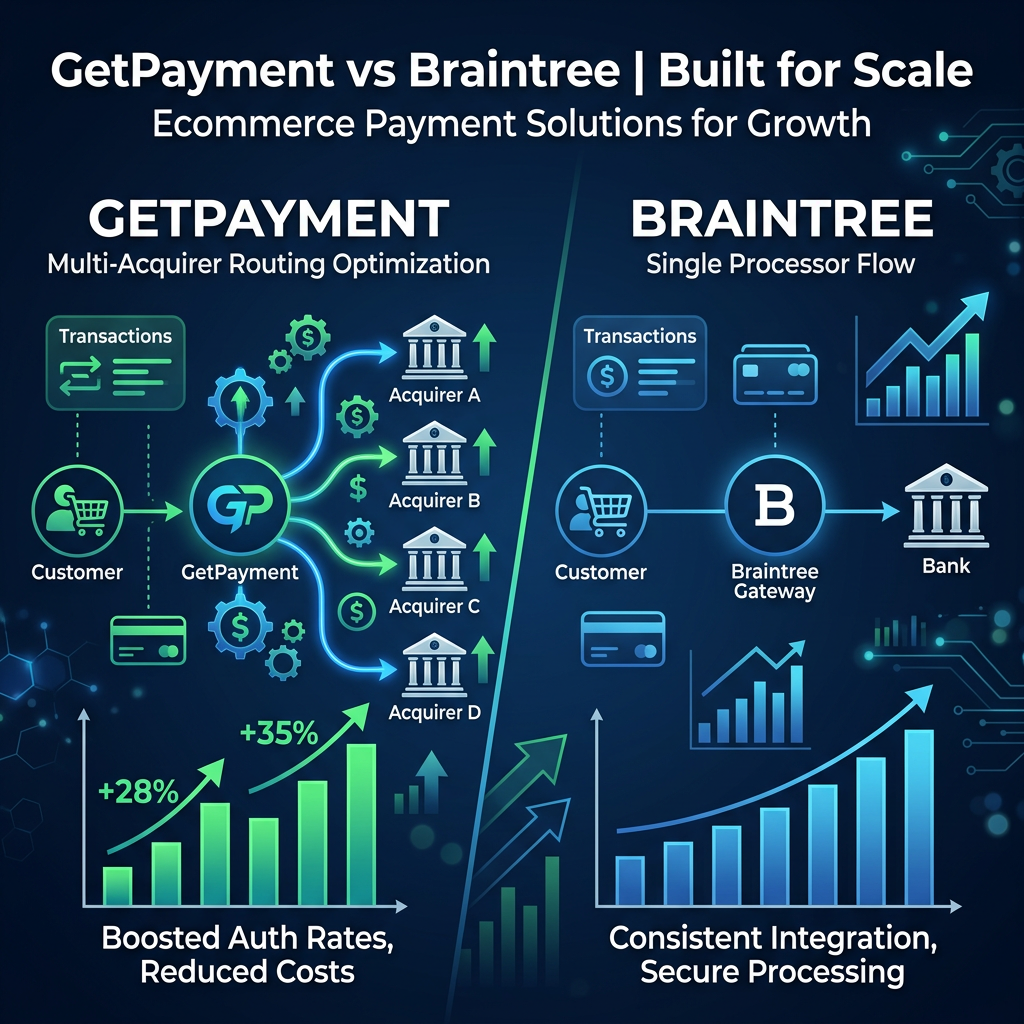
GetPayment vs Braintree for Scale: Which Payment Strategy Wins for Growing Ecommerce Businesses?
Compare GetPayment vs Braintree for scaling ecommerce businesses. Learn which solution delivers better approvals, flexibility, and cost optimization.
Read More →
Stripe Alternatives for High Risk Ecommerce (Top 5): Best Payment Solutions for Scaling Businesses
Looking for Stripe alternatives for high-risk ecommerce? Discover the top 5 solutions to improve approvals, reduce risk, and scale your payment system.
Read More →