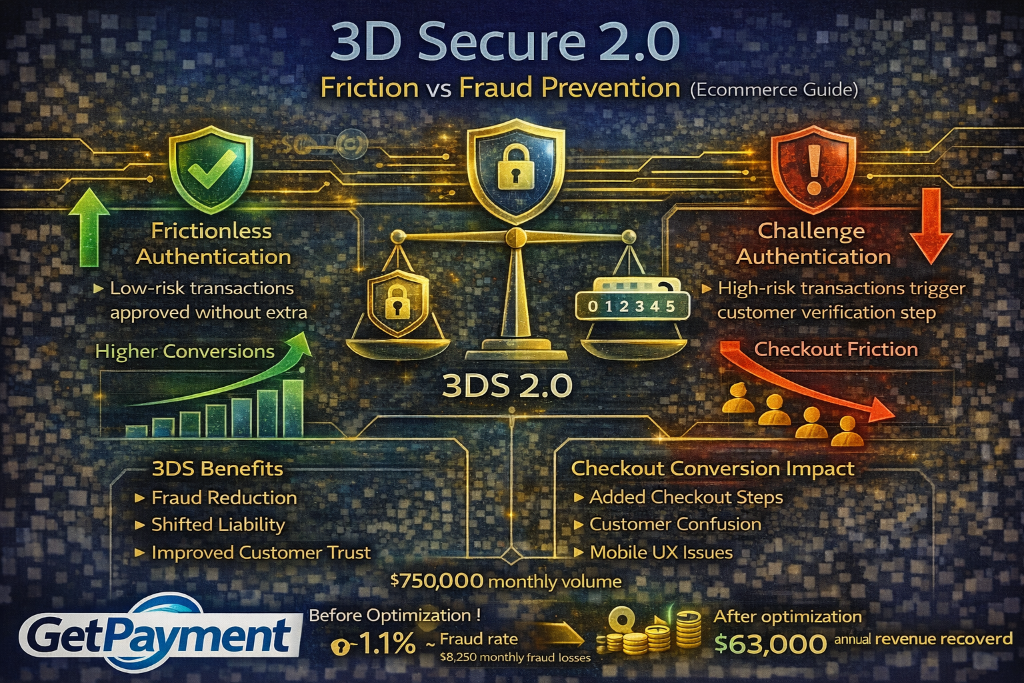
 Learn how to use 3D Secure 2.0 to reduce fraud while maintaining high checkout conversion rates in ecommerce.
Need Payment Processing?
✓ Stripe shutdown?
✓ High-risk industry?
✓ Declined payments?
Get approved today.
Apply NowIntroduction: The Trade-Off Between Security and Conversion
Every ecommerce business faces the same challenge.
You need to reduce fraud.
But you also need to maximize conversions.
Traditionally, these two goals have been in conflict.
Stronger fraud prevention often meant more friction at checkout. More friction meant fewer completed purchases.
This is where 3D Secure 2.0 (3DS2) changes the game.
It allows businesses to enhance security while minimizing disruption to the customer experience.
But here is the key.
If implemented incorrectly, it can still hurt conversions.
That is why understanding how to balance fraud prevention and checkout conversion with 3D Secure 2.0 is critical for high-volume ecommerce.
What Is 3D Secure 2.0?
3D Secure 2.0 is an authentication protocol developed by card networks to verify cardholder identity during online transactions.
It is an evolution of the original 3D Secure system, which was often clunky and disruptive.
The newer version is designed to be:
- More seamless
- More data-driven
- More adaptable to different risk levels
Instead of forcing every transaction through verification, 3DS2 uses contextual data to decide when authentication is needed.
How 3D Secure 2.0 Works
When a customer makes a payment, 3DS2 evaluates the transaction using multiple data points.
These can include:
- Device information
- Location
- Transaction history
- Behavioral patterns
Based on this data, the system decides whether to:
- Approve the transaction without friction
- Request additional authentication
This creates two possible flows.
A frictionless flow, where the customer completes the purchase without interruption.
Or a challenge flow, where the customer is asked to verify their identity.
The Problem with 3D Secure 1.0
To understand the value of 3DS2, it helps to look at its predecessor.
3D Secure 1.0 introduced heavy friction into the checkout process.
Customers were often:
- Redirected to external pages
- Asked to remember passwords
- Confused by the experience
This led to:
- High abandonment rates
- Poor user experience
- Lost revenue
Many merchants avoided using it altogether, even at the cost of higher fraud.
How 3D Secure 2.0 Improves Conversion
3DS2 was designed to solve these issues.
It improves conversion by:
- Reducing unnecessary authentication
- Keeping customers within the checkout flow
- Using biometric authentication where possible
- Leveraging real-time data for smarter decisions
This means that many transactions can be approved without the customer even noticing additional security layers.
The Role of Frictionless Authentication
One of the biggest advantages of 3DS2 is frictionless authentication.
In this scenario:
- The transaction is evaluated
- Sufficient data is provided
- No additional action is required from the customer
This allows you to maintain a smooth checkout experience while still benefiting from enhanced security.
For high-volume ecommerce, this is critical.
When 3DS2 Introduces Friction
Not all transactions will be frictionless.
Higher-risk transactions may trigger a challenge.
This can include:
- One-time passcodes
- Biometric verification
- App-based authentication
While this adds friction, it is targeted.
The goal is to apply friction only where necessary.
The Balance Between Fraud Prevention and Conversion
The key challenge with 3DS2 is finding the right balance.
If you apply it too aggressively:
- You increase friction
- You reduce conversion rates
- You lose revenue
If you apply it too loosely:
- Fraud risk increases
- Chargebacks rise
- Processor relationships may be affected
The goal is to use 3DS2 strategically.
Dynamic 3DS: The Smarter Approach
Dynamic 3DS is a strategy where authentication is applied selectively.
Instead of forcing all transactions through 3DS2, you:
- Identify high-risk transactions
- Apply authentication only when needed
- Allow low-risk transactions to pass frictionlessly
This approach maximizes both security and conversion.
Using Data to Optimize 3DS Performance
Data is essential for optimizing 3DS2.
You should monitor:
- Approval rates
- Conversion rates
- Challenge rates
- Fraud levels
- Chargeback ratios
This allows you to adjust your strategy and find the optimal balance.
The Impact of 3DS2 on Approval Rates
3DS2 can actually improve approval rates.
When a transaction is authenticated:
- Issuing banks have more confidence
- Fraud risk is reduced
- Approval likelihood increases
However, this only works if the customer completes the authentication successfully.
3DS2 and Liability Shift
One of the major benefits of 3DS2 is liability shift.
When authentication is successful:
- The liability for fraud may shift to the issuing bank
This reduces your exposure to chargebacks.
For high-risk merchants, this is a significant advantage.
Mobile Optimization and 3DS2
3DS2 is designed with mobile in mind.
Unlike older systems, it supports:
- In-app authentication
- Biometric verification
- Seamless mobile experiences
This is critical, as a large percentage of ecommerce traffic comes from mobile devices.
Geographic Considerations and Regulations
In some regions, such as Europe, Strong Customer Authentication (SCA) regulations require 3DS.
For US merchants selling internationally, this means:
- You may need to use 3DS2 for compliance
- Different regions may require different strategies
Understanding regional requirements is essential for optimization.
Combining 3DS2 with Other Fraud Tools
3DS2 should not be your only fraud prevention method.
It works best as part of a broader system.
This includes:
- Fraud scoring tools
- Behavioral analysis
- Smart routing
- Multi-acquirer setups
Combining these tools creates a more effective strategy.
Common Mistakes with 3D Secure 2.0
Many businesses fail to implement 3DS2 correctly.
Common mistakes include:
- Applying it to all transactions
- Not optimizing challenge rates
- Ignoring conversion impact
- Failing to monitor performance
- Treating it as a static system
These mistakes can reduce its effectiveness.
The Financial Impact of Proper 3DS Optimization
When optimized correctly, 3DS2 can:
- Reduce fraud losses
- Lower chargeback costs
- Improve approval rates
- Maintain high conversion rates
At scale, these benefits can have a significant financial impact.
How GetPayment Helps You Optimize 3DS2
At GetPayment, we help ecommerce businesses implement 3DS2 strategies that balance security and performance.
We help you:
- Implement dynamic 3DS
- Optimize challenge rates
- Improve approval rates
- Reduce fraud and chargebacks
- Build scalable payment systems
Our goal is to help you protect your business without sacrificing growth.
Final Thoughts: Security Should Enable Growth, Not Limit It
3D Secure 2.0 is a powerful tool.
But like any tool, its effectiveness depends on how you use it.
The best ecommerce businesses understand that:
- Fraud prevention and conversion are not mutually exclusive
- Balance is the key
- Optimization is ongoing
When implemented correctly, 3DS2 becomes a growth enabler—not a barrier.
Ready to Optimize Your 3DS2 Strategy?
If you want to reduce fraud, improve approval rates, and optimize your checkout experience, GetPayment can help.
Apply today to implement a 3D Secure strategy designed for high-performance ecommerce.
FAQ: 3D Secure 2.0
What is 3D Secure 2.0?
3D Secure 2.0 is an authentication protocol that verifies cardholder identity during online transactions using advanced data and risk-based analysis.
Does 3D Secure 2.0 reduce fraud?
Yes. It adds an additional layer of security and can significantly reduce fraudulent transactions.
Does 3D Secure hurt conversion rates?
If implemented incorrectly, yes. But when optimized with dynamic authentication, it can maintain or even improve conversions.
What is frictionless authentication?
Frictionless authentication allows transactions to be approved without requiring customer interaction, based on risk analysis.
What is liability shift in 3DS2?
Liability shift means that after successful authentication, the issuing bank may take responsibility for fraud-related chargebacks.
Should all transactions use 3D Secure?
No. The best approach is dynamic application, where only higher-risk transactions are authenticated.
Is 3D Secure required in the US?
It is not mandatory in the US, but it may be required for transactions in regions with strict regulations like Europe.
Tags

Jane Harold
Head of Payment Strategy
GetPayment Inc
Jane Harold is a payment strategy expert with 12+ years of experience in high-volume ecommerce payments, merchant account management, and checkout optimization. She has helped hundreds of US ecommerce brands improve authorization rates, reduce processing costs, and scale payment infrastructure.
Areas of Expertise
Payment Strategy Expert
12+ years in industry
Certified Payment Specialist
PCI DSS Level 1 compliance
Merchant Account Advisor
500+ merchants advised
Industry Speaker
Ecommerce & payment conferences
Get Expert Advice
Have questions about payment processing? Reach out to Jane directly.
Years Experience
Merchants Helped
Bank Partners
Satisfaction Rate
Recover Revenue From Payment Declines
GetPayment helps ecommerce merchants increase approval rates with smart routing and high-risk-friendly processors.
High-risk friendly
Multiple processors
Global coverage
Get Your Free Payment Fee Audit
See exactly how much you're overpaying in processing fees. Our experts analyze your statement and show you potential savings.
Request Free AuditLearn more in our High Volume Ecommerce Payments Guide
Explore the complete guide for this topic with deeper insights and strategies.
View Guide →Related Articles
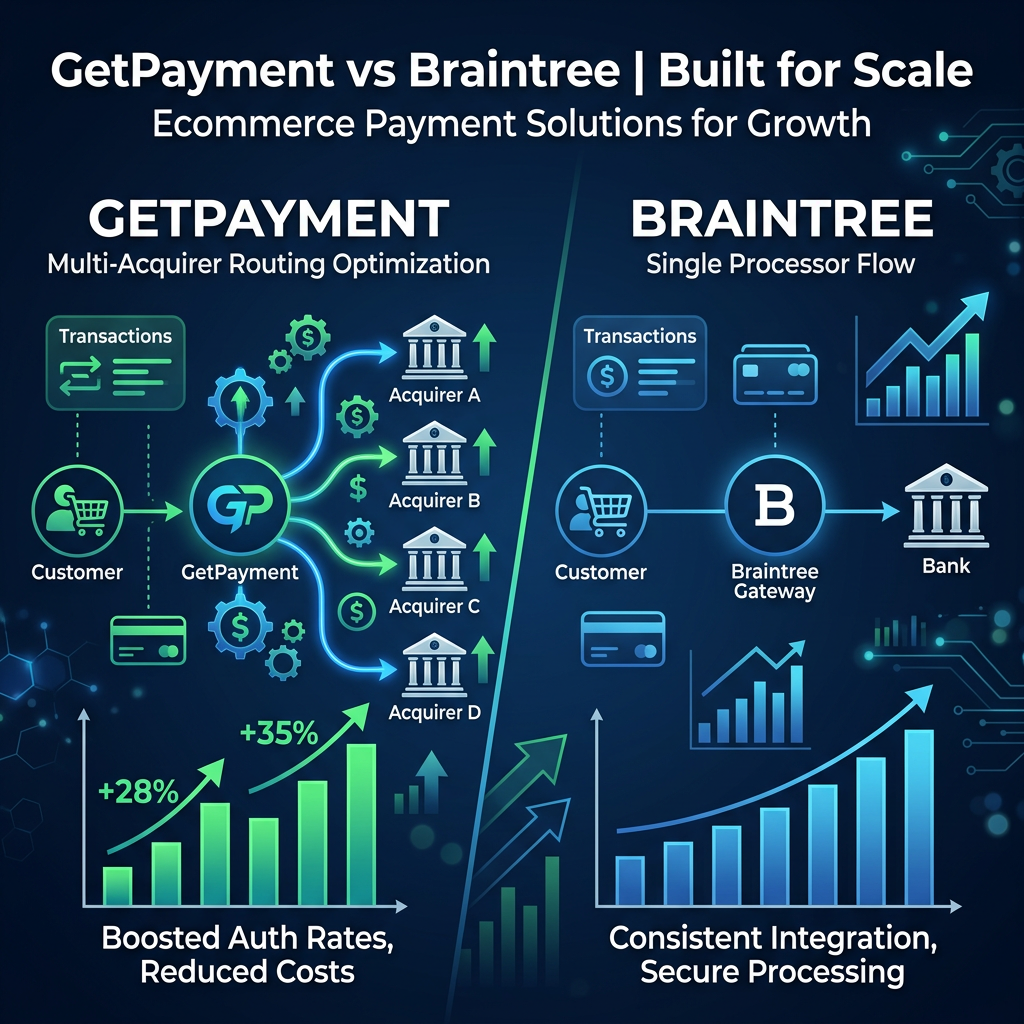
GetPayment vs Braintree for Scale: Which Payment Strategy Wins for Growing Ecommerce Businesses?
Compare GetPayment vs Braintree for scaling ecommerce businesses. Learn which solution delivers better approvals, flexibility, and cost optimization.
Read More →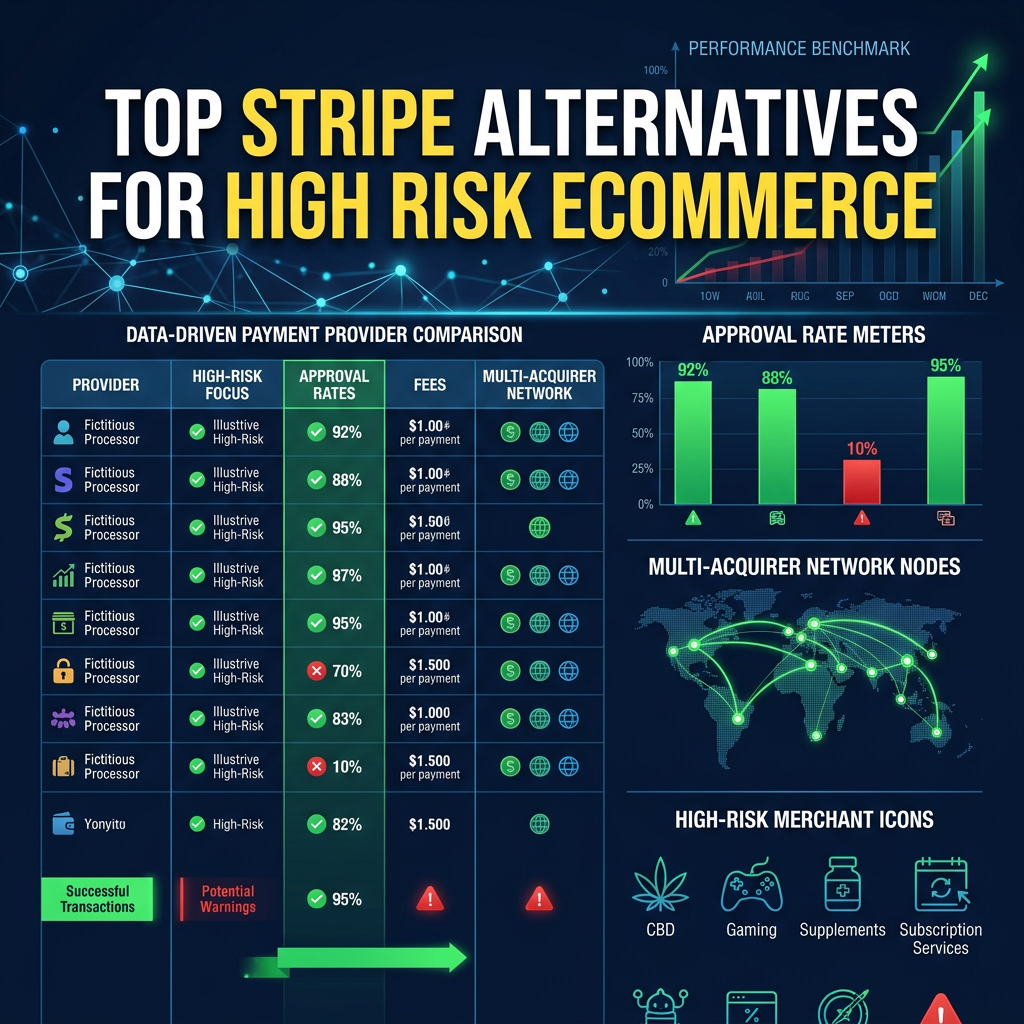
Stripe Alternatives for High Risk Ecommerce (Top 5): Best Payment Solutions for Scaling Businesses
Looking for Stripe alternatives for high-risk ecommerce? Discover the top 5 solutions to improve approvals, reduce risk, and scale your payment system.
Read More →