For many ecommerce merchants, payment processing fees are one of the largest operational costs after advertising and inventory. Yet most businesses never fully understand their payment processing statement, making it difficult to identify unnecessary costs or negotiate better pricing.
Learning how to read a payment processing statement is essential for merchants that want to reduce credit card processing fees and improve profitability.
This guide explains how payment processing statements work, what fees to look for, and how ecommerce merchants can optimize their payment processing costs.
What Is a Payment Processing Statement?
A payment processing statement is a monthly report from your payment processor or merchant account provider that shows:
- all transactions processed
- processing fees charged
- refunds and chargebacks
- adjustments and additional service fees
For ecommerce businesses processing large transaction volumes, these statements can contain dozens of different line items, which often makes them difficult to interpret.
Understanding each fee category helps merchants determine whether they are paying fair market rates for payment processing services.
Key Sections of a Payment Processing Statement
Most merchant processing statements include several standard sections that summarize transaction activity and fees.
Transaction Summary
The transaction summary provides an overview of the merchant's payment activity for the billing period.
This section typically includes:
- total transaction volume
- number of transactions processed
- refunds issued
- chargebacks received
Merchants should compare these numbers with their ecommerce platform reports to ensure there are no discrepancies between sales data and payment processor records.
Interchange Fees
Interchange fees are charged by card networks such as Visa and Mastercard and represent the largest portion of payment processing costs.
These fees vary depending on factors such as:
- card type (credit or debit)
- card rewards level
- transaction method
- authentication method
For ecommerce merchants, interchange fees are typically higher than in-person transactions because card-not-present payments carry greater fraud risk.
Payment Processor Markup
In addition to interchange fees, payment processors charge their own markup for processing transactions.
This markup may be structured in several ways:
- percentage of transaction value
- fixed fee per transaction
- monthly platform fees
The structure of the markup depends on the merchant's pricing model, which may include interchange-plus pricing, tiered pricing, or flat-rate pricing.
Understanding how this markup is calculated is essential for optimizing payment processing costs.
Additional Payment Processing Fees
Merchant statements often include additional operational fees beyond transaction processing.
Common examples include:
- monthly account fees
- payment gateway fees
- batch processing fees
- PCI compliance fees
- chargeback handling fees
Some of these charges are necessary, while others may be negotiable depending on the merchant's processing volume.
Common Hidden Fees in Payment Processing Statements
Many ecommerce merchants discover unexpected charges when reviewing their payment processing statements.
Hidden or poorly explained fees can significantly increase processing costs over time.
Examples of fees merchants often overlook include:
- statement fees
- minimum monthly processing fees
- gateway access charges
- customer support fees
- cross-border transaction fees
High-volume ecommerce businesses should regularly review their statements to ensure they are not paying unnecessary fees.
Why Ecommerce Merchants Should Audit Their Processing Statements
Payment processors frequently update their pricing models, introduce new service fees, or adjust interchange categories.
Without regular audits, merchants may unknowingly pay higher processing costs than necessary.
Conducting a payment processing statement review helps merchants:
- identify incorrect fees
- detect pricing errors
- discover hidden charges
- negotiate better payment processing terms
For growing ecommerce businesses, these audits can lead to substantial annual cost savings.
How to Optimize Your Payment Processing Costs
After understanding the components of a payment processing statement, merchants can begin implementing strategies to reduce fees and improve payment performance.
Review Your Pricing Model
Different pricing structures can significantly impact processing costs.
Common models include:
- interchange-plus pricing
- tiered pricing
- flat-rate processing
High-volume ecommerce merchants often achieve better transparency and lower costs with interchange-plus pricing, where processor markup is clearly separated from interchange fees.
Improve Authorization Rates
Failed transactions can increase payment processing costs because retry attempts generate additional fees.
Merchants can improve authorization rates by:
- using network tokenization
- optimizing payment gateways
- implementing smart payment routing
- updating expired cards with account updater services
Higher authorization rates lead to more successful transactions and lower operational costs.
Reduce Chargebacks and Fraud
Chargebacks not only result in lost revenue but also generate dispute handling fees.
Implementing strong fraud prevention measures can reduce these costs.
Recommended strategies include:
- fraud detection systems
- customer authentication tools
- clear refund policies
- improved order verification processes
Reducing disputes improves both profit margins and merchant account stability.
Negotiate Payment Processing Rates
Many merchants assume payment processing rates are fixed, but most processors offer custom pricing for higher-volume businesses.
Merchants processing significant monthly volume can often negotiate:
- lower markup rates
- reduced monthly platform fees
- lower chargeback handling fees
Negotiating with processors or working with payment consultants can significantly improve long-term payment economics.
Signs You May Be Overpaying for Payment Processing
Some indicators suggest that a merchant may be paying too much in payment processing fees.
These include:
- unclear or confusing statement line items
- unusually high effective processing rates
- frequent unexplained fees
- lack of transparency in pricing structure
If merchants cannot clearly identify where their processing fees originate, it may be time to conduct a full payment processor audit.
The Importance of Payment Data Transparency
Modern ecommerce businesses increasingly rely on payment data to optimize revenue and customer experience.
Transparent payment reporting allows merchants to:
- track authorization performance
- monitor processing costs
- identify payment failures
- optimize checkout performance
Payment processors that provide detailed reporting and clear statements enable merchants to make better operational decisions.
Final Thoughts
Understanding how to read a payment processing statement is one of the most effective ways ecommerce merchants can reduce costs and improve payment performance.
By reviewing transaction fees, identifying hidden charges, and negotiating better terms with payment providers, merchants can significantly lower their payment processing expenses.
As ecommerce transaction volumes continue to grow, businesses that actively manage their payment infrastructure will gain a significant competitive advantage in profitability and operational efficiency.
FAQ: Payment Processing Statements for Ecommerce Merchants
What is a payment processing statement?
A payment processing statement is a monthly report from a payment processor that outlines transaction volume, processing fees, refunds, and chargebacks associated with a merchant account.
Why are payment processing statements difficult to understand?
Payment processing statements can include dozens of line items with technical fee names related to interchange, processor markup, and operational costs, making them difficult for merchants to interpret without industry knowledge.
How can ecommerce merchants reduce payment processing fees?
Merchants can reduce fees by negotiating processor markup, improving authorization rates, reducing chargebacks, and switching to transparent pricing models such as interchange-plus pricing.
What are interchange fees?
Interchange fees are transaction fees set by card networks such as Visa and Mastercard that merchants pay whenever a customer uses a credit or debit card.
How often should merchants review their payment processing statements?
Merchants should review their payment processing statements every month to ensure accuracy, detect unexpected fees, and identify opportunities to optimize processing costs.
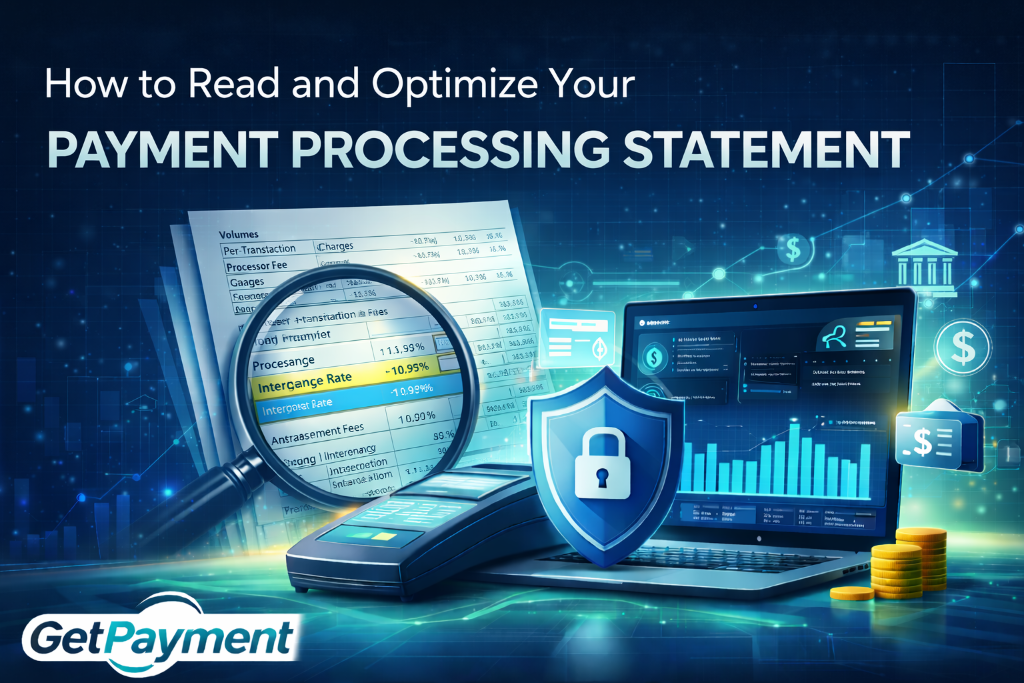 Learn how to read a payment processing statement and reduce fees. This guide explains interchange, markup, hidden fees, and how ecommerce merchants can optimize payment processing costs.