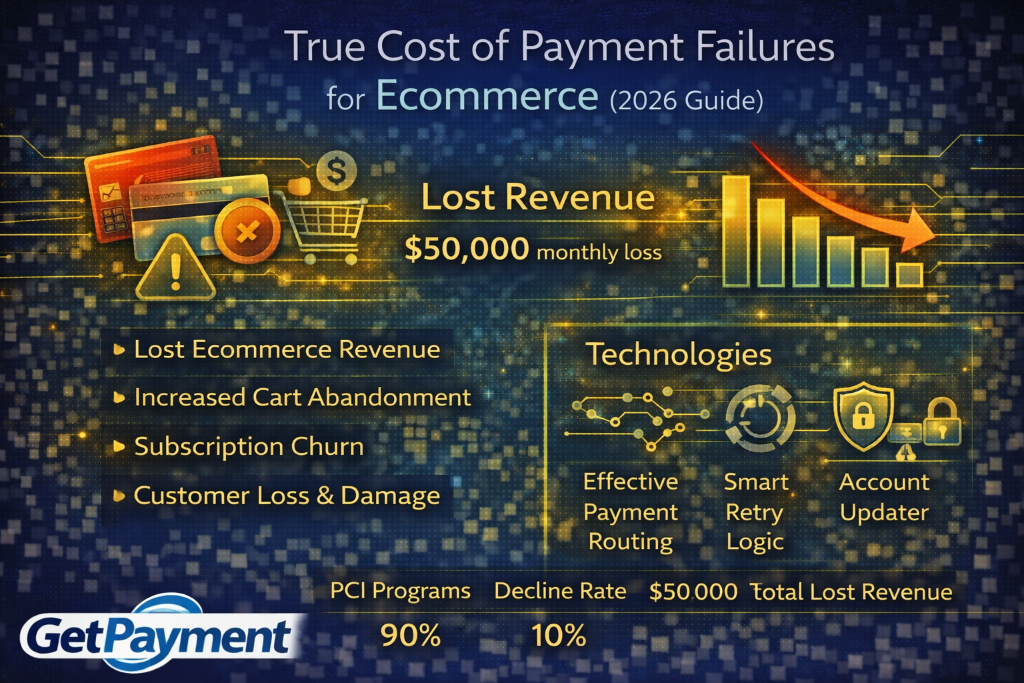
 Learn the true cost of payment failures for ecommerce merchants. Discover how to reduce declined transactions, improve authorization rates, and recover lost revenue with proven strategies.
Need Payment Processing?
✓ Stripe shutdown?
✓ High-risk industry?
✓ Declined payments?
Get approved today.
Apply NowKey Takeaways
Payment failures are one of the most overlooked revenue leaks in ecommerce.
Many merchants focus heavily on marketing, traffic acquisition, and conversion rate optimization, but far fewer pay attention to what happens when a customer actually tries to pay. When payments fail—whether because of authorization declines, gateway errors, fraud filters, or technical issues—revenue disappears instantly.
- ✓credit card authorization declines
- ✓payment gateway timeouts
- ✓fraud prevention blocks
- ✓insufficient funds
- ✓incorrect payment details
The True Cost of Payment Failures for Ecommerce (2026 Guide)
Intro
Payment failures are one of the most overlooked revenue leaks in ecommerce.
Many merchants focus heavily on marketing, traffic acquisition, and conversion rate optimization, but far fewer pay attention to what happens when a customer actually tries to pay. When payments fail—whether because of authorization declines, gateway errors, fraud filters, or technical issues—revenue disappears instantly.
For ecommerce businesses processing $50k+ per month, even a small percentage of failed payments can translate into tens or hundreds of thousands of dollars in lost revenue each year.
In this guide, we'll break down the real cost of payment failures, why they happen, and how high-volume ecommerce merchants can reduce them.
What Payment Failures Are
A payment failure occurs when a customer attempts to complete a purchase but the payment is not successfully authorized or processed.
This can happen at several points during the payment lifecycle.
Common examples include:
- credit card authorization declines
- payment gateway timeouts
- fraud prevention blocks
- expired cards
- insufficient funds
- incorrect payment details
From the merchant's perspective, a payment failure means the checkout process stops before revenue is captured.
For customers, it often leads to frustration and abandoned carts.
Why Payment Failures Matter for Ecommerce Merchants
Payment failures directly impact revenue, customer experience, and long-term growth.
When customers encounter payment errors during checkout, several negative outcomes can occur:
First, the purchase is lost. The most obvious impact is that the sale does not go through.
Second, the customer may abandon the store entirely. If checkout feels unreliable, shoppers may choose a competitor.
Third, repeated failures can damage brand trust. Customers expect online payments to work instantly.
For high-volume ecommerce stores, payment failures can quietly become one of the largest sources of lost revenue.
Even a small failure rate can compound significantly over thousands of transactions.
How Payment Failures Occur in the Payment Flow
To understand why payments fail, it helps to understand how ecommerce payment processing works.
When a customer enters card details at checkout, several systems are involved before the transaction is approved.
The process typically follows these steps:
- The customer submits payment details during checkout.
- The ecommerce platform sends the payment request to a payment gateway.
- The gateway sends the request to a payment processor or acquiring bank.
- The processor sends the transaction to the card network.
- The card network forwards the request to the issuing bank.
- The issuing bank approves or declines the transaction.
If any part of this chain encounters a problem, the payment can fail.
Failures may occur because of bank declines, network latency, fraud rules, or system errors.
Key Causes of Payment Failures
Several factors commonly lead to failed payments in ecommerce.
Authorization Declines
Authorization declines occur when the issuing bank refuses the transaction.
This can happen for many reasons including suspected fraud, insufficient funds, incorrect card details, or unusual purchasing patterns.
Declines are one of the most common causes of payment failure.
Fraud Prevention Systems
Fraud detection tools are essential for protecting merchants from fraudulent transactions.
However, aggressive fraud filters can sometimes block legitimate customers. These are known as false positives.
When legitimate transactions are blocked, merchants lose revenue and customers.
Expired or Updated Cards
Customers frequently receive replacement cards when their card expires or is replaced due to fraud.
If a merchant stores outdated card details for subscriptions or saved payment methods, future transactions may fail.
Technical Payment Errors
Technical issues within the payment infrastructure can also cause failures.
Examples include:
- payment gateway outages
- API errors
- network timeouts
- database issues
These problems are particularly risky during high-traffic events like Black Friday.
Payment Method Limitations
Not all customers want to pay using credit cards.
If a merchant does not support alternative payment methods such as digital wallets or PayPal, some transactions may fail because customers abandon checkout.
Revenue Impact of Payment Failures
Payment failures often appear small on the surface, but the financial impact can be significant.
Imagine an ecommerce store generating substantial monthly revenue.
If even a small percentage of transactions fail during checkout, the lost revenue can quickly add up.
Beyond the immediate loss of the transaction, there are secondary effects as well.
Customers who experience payment failures may not return.
Failed subscription payments can cause involuntary churn.
Marketing costs increase because merchants must replace lost customers.
Over time, these hidden costs can represent a substantial revenue loss.
Customer Experience Consequences
Payment failures don't just affect revenue—they also affect customer trust.
When customers encounter problems during checkout, they may question whether the store is secure or reliable.
A single failed payment attempt can cause hesitation, and repeated failures may cause customers to abandon the purchase entirely.
Ecommerce shoppers expect payment systems to work instantly and smoothly.
If checkout feels unreliable, the perception of the brand suffers.
For high-volume ecommerce merchants, maintaining a frictionless payment experience is essential for maintaining customer loyalty.
Example Revenue Loss Scenario
Consider a growing ecommerce brand that processes a high volume of transactions each month.
If a portion of those transactions fail during checkout, the merchant is effectively losing a percentage of their revenue before the order is completed.
If payment failures occur frequently, the lost revenue compounds quickly.
This is why large ecommerce brands invest heavily in payment optimization strategies that improve authorization rates and reduce checkout errors.
Even a small improvement in payment success rates can recover a meaningful amount of revenue.
Common Merchant Mistakes That Cause Payment Failures
Many ecommerce payment failures are avoidable.
Merchants often encounter problems because of poor payment infrastructure decisions or misconfigured systems.
One common mistake is relying on a single payment processor.
If that processor experiences latency or outages, all transactions may fail.
Another mistake is failing to optimize fraud rules.
Overly strict fraud detection can block legitimate customers.
Some merchants also fail to update payment methods for subscription customers, which leads to recurring billing failures.
Finally, merchants sometimes overlook performance monitoring.
Without tracking authorization rates and payment decline reasons, it is difficult to identify problems.
Best Practices for Reducing Payment Failures
High-volume ecommerce merchants can significantly reduce payment failures by improving their payment infrastructure.
One important strategy is monitoring authorization rates and decline reasons regularly.
This helps merchants identify patterns in failed transactions.
Another best practice is implementing payment routing strategies.
By sending transactions through different processors or acquiring banks, merchants can improve approval rates.
Merchants should also implement card updater services, which automatically update stored card details when customers receive new cards.
Offering multiple payment methods can also improve checkout success.
Digital wallets and alternative payment options give customers additional ways to complete purchases.
Finally, merchants should regularly test their checkout systems and payment infrastructure to ensure everything functions smoothly.
FAQs
What is a payment failure in ecommerce?
A payment failure occurs when a transaction cannot be successfully authorized or processed during checkout.
This prevents the customer from completing their purchase.
Why do payment failures happen?
Payment failures can occur for many reasons including bank declines, fraud detection rules, expired cards, technical errors, or payment gateway issues.
How do payment failures affect ecommerce revenue?
Payment failures result in lost transactions and can also lead to customer abandonment, which reduces overall revenue and conversion rates.
Can merchants reduce payment failures?
Yes. Merchants can reduce payment failures by improving payment routing, optimizing fraud rules, updating stored card details, and monitoring authorization rates.
Conclusion
Payment failures are one of the most significant hidden costs in ecommerce.
Every failed payment represents not only lost revenue but also potential damage to customer experience and brand trust.
For high-volume ecommerce merchants, even small improvements in payment success rates can produce meaningful financial gains.
By understanding why payments fail and implementing better payment infrastructure, merchants can recover lost revenue, improve checkout performance, and create a more reliable shopping experience for customers.
Request a Free Payment Fee Audit
If your ecommerce store processes $50k+ per month, our team can review your payment setup and identify opportunities to reduce payment failures, improve authorization rates, and lower processing costs.
Tags

Jane Harold
Head of Payment Strategy
GetPayment Inc
Jane Harold is a payment strategy expert with 12+ years of experience in high-volume ecommerce payments, merchant account management, and checkout optimization. She has helped hundreds of US ecommerce brands improve authorization rates, reduce processing costs, and scale payment infrastructure.
Areas of Expertise
Payment Strategy Expert
12+ years in industry
Certified Payment Specialist
PCI DSS Level 1 compliance
Merchant Account Advisor
500+ merchants advised
Industry Speaker
Ecommerce & payment conferences
Get Expert Advice
Have questions about payment processing? Reach out to Jane directly.
Years Experience
Merchants Helped
Bank Partners
Satisfaction Rate
Recover Revenue From Payment Declines
GetPayment helps ecommerce merchants increase approval rates with smart routing and high-risk-friendly processors.
High-risk friendly
Multiple processors
Global coverage
Get Your Free Payment Fee Audit
See exactly how much you're overpaying in processing fees. Our experts analyze your statement and show you potential savings.
Request Free AuditRelated Articles
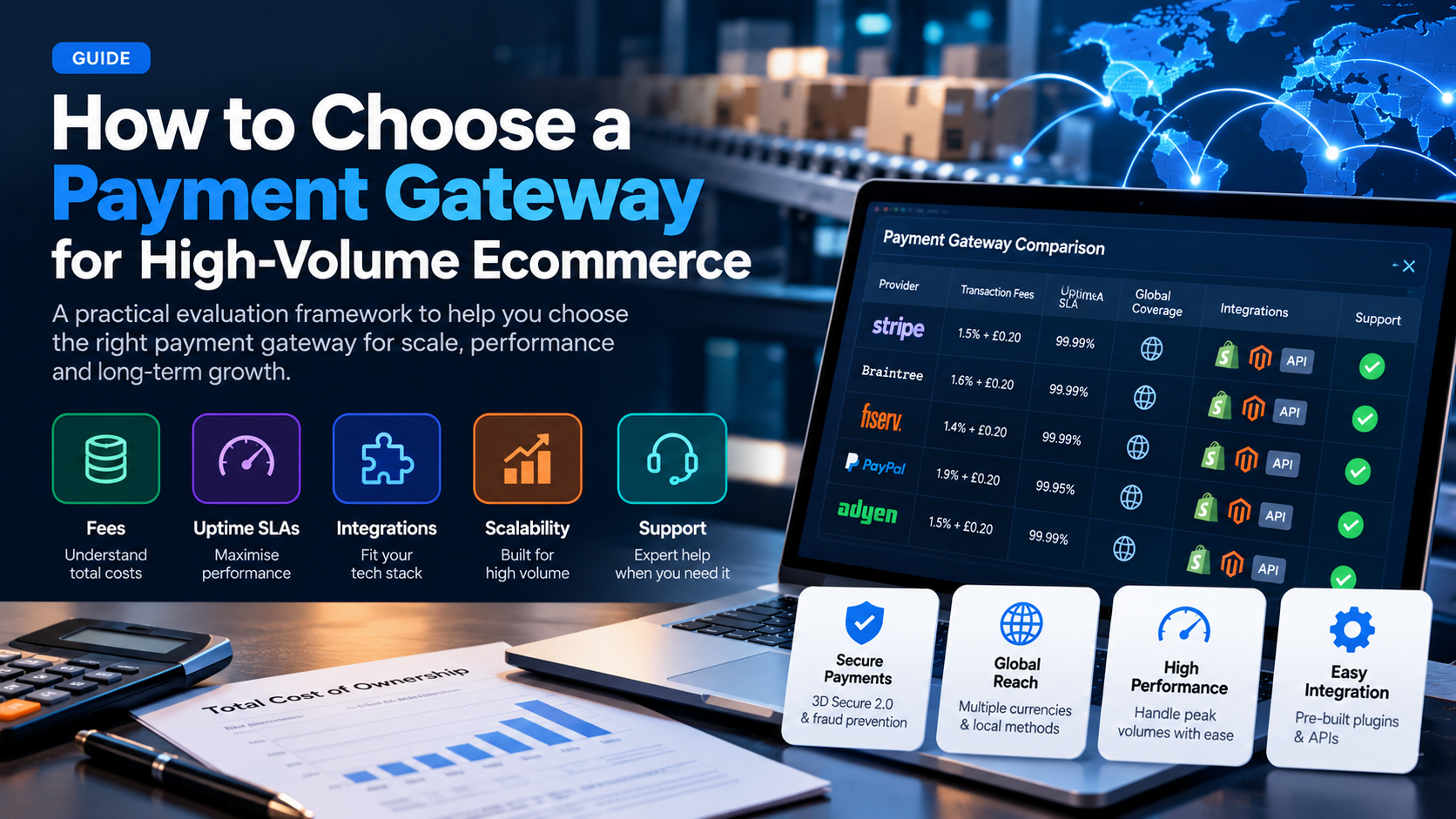
How to Choose a Payment Gateway for High-Volume Ecommerce (2026 Guide)
A practical framework for evaluating payment gateways when you process $50k+ per month: fees, uptime, integrations, scalability, and support.
Read More →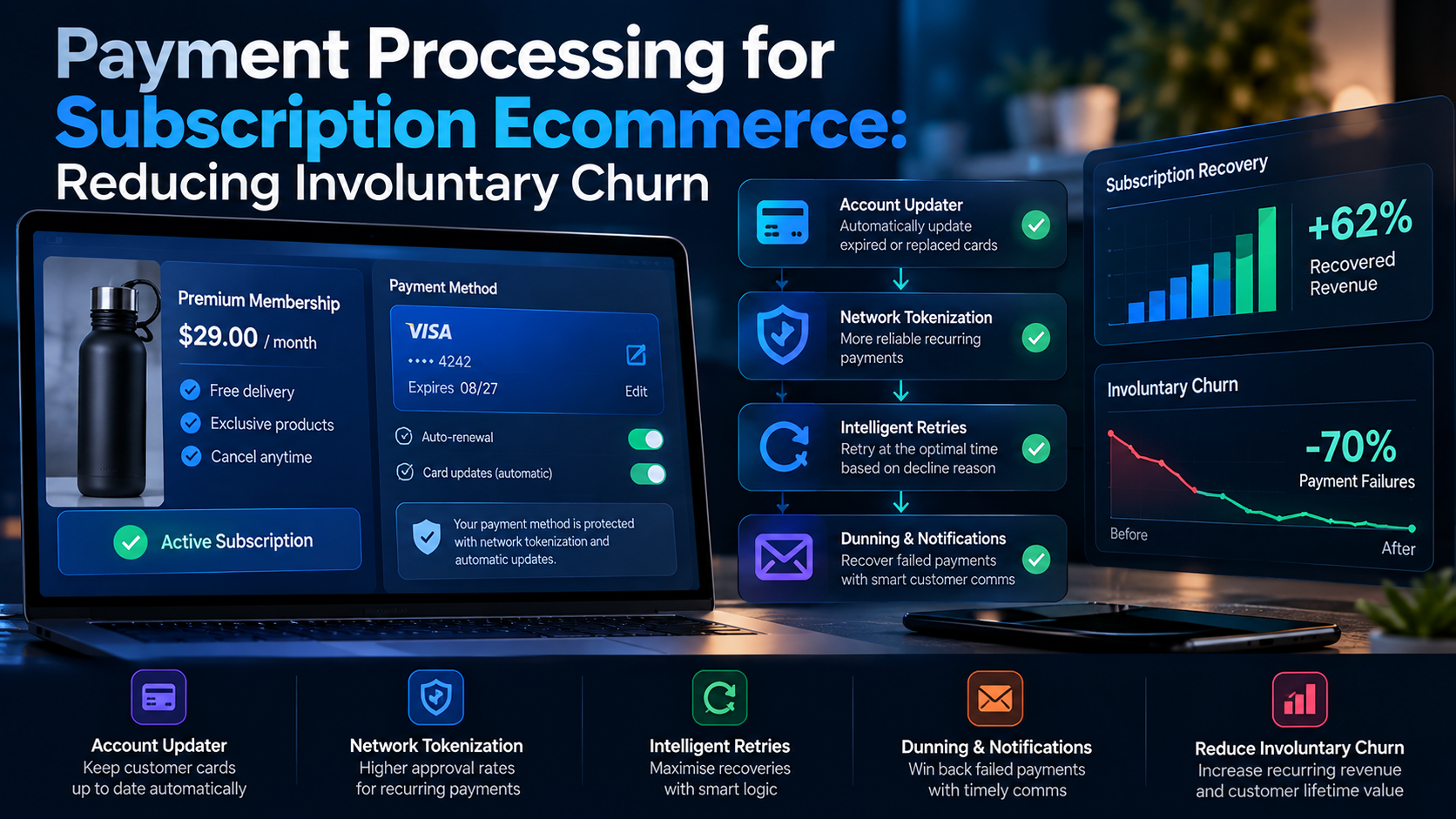
Payment Processing for Subscription Ecommerce: Reducing Involuntary Churn (2026 Guide)
Involuntary churn from failed payments costs subscription businesses 20-40% of revenue. Here is how to fix declined cards, update expired cards, and retain subscribers.
Read More →