 Compare Stripe, Adyen, Checkout.com, and GetPayment to find the best payment solution for high-volume ecommerce and enterprise businesses.
Need Payment Processing?
✓ Stripe shutdown?
✓ High-risk industry?
✓ Declined payments?
Get approved today.
Apply NowKey Takeaways
At scale, your payment system becomes one of your most important revenue drivers.
The difference between providers is no longer just about features.
- ✓Global performance
- ✓Developer-friendly APIs
- ✓Built-in fraud tools
- ✓Subscription management
- ✓Fixed routing logic
Introduction: Choosing the Right Payment Stack at Scale
At low volume, almost any payment provider works.
At scale, your payment system becomes one of your most important revenue drivers.
The difference between providers is no longer just about features.
It is about:
- Approval rates
- Cost efficiency
- Risk exposure
- Scalability
- Global performance
Many businesses start with Stripe.
As they grow, they evaluate enterprise providers like Adyen and Checkout.com.
But increasingly, high-performance merchants are moving toward a different approach entirely.
This is where GetPayment vs Stripe vs Adyen vs Checkout.com becomes a critical comparison.
Because at scale, the question is not: "Which provider is best?"
It is: "Which system captures the most revenue?"
The 4 Payment Models Explained
Before comparing providers, it is important to understand that these solutions represent different models.
Stripe is an all-in-one payment processor designed for simplicity.
Adyen is a unified enterprise platform with global capabilities.
Checkout.com is a performance-focused processor with strong APIs.
GetPayment is not a processor — it is an optimization system that sits across multiple providers.
This distinction is critical.
Because you are not just choosing a provider.
You are choosing a strategy.
Stripe: The Best Starting Point, But Limited at Scale
Stripe is one of the easiest payment solutions to implement.
It offers:
- Fast onboarding
- Developer-friendly APIs
- Built-in fraud tools
- Subscription management
For startups and early-stage ecommerce, it is ideal.
Where Stripe Falls Short
As you scale, limitations become clear.
Stripe operates as a single-provider system.
This creates constraints:
- Fixed routing logic
- Limited approval optimization
- Strict risk controls
- Potential account instability
High-risk or high-volume merchants often experience:
- Account reviews
- Payment holds
- Increased declines
Stripe is excellent for simplicity, but not for optimization.
Adyen: Enterprise Power with a Unified System
Adyen is designed for large, global businesses.
It provides:
- Gateway and acquiring in one platform
- Global payment coverage
- Enterprise reporting
- Strong infrastructure
It is used by many major brands.
Strengths of Adyen
Adyen excels in:
- Global reach
- Enterprise scalability
- Unified reporting
- Reliability
It is a powerful system for businesses that want everything in one place.
Limitations of Adyen
Despite its strengths, Adyen still operates as a single ecosystem.
This means:
- Limited routing flexibility
- Dependence on one provider
- Less granular optimization
While strong, it does not fully unlock multi-acquirer advantages.
Checkout.com: Performance-Focused Processing
Checkout.com is positioned as a modern alternative to legacy enterprise providers.
It offers:
- Strong API performance
- Global acquiring
- Flexible integrations
It is popular among scaling ecommerce brands.
Strengths of Checkout.com
Checkout.com is known for:
- High-performance processing
- Developer flexibility
- Competitive approval rates
It is a strong option for businesses moving beyond Stripe.
Limitations of Checkout.com
However, it still follows a single-provider model.
This creates similar constraints:
- Limited routing control
- Dependence on one acquiring network
- Less flexibility compared to multi-provider systems
GetPayment: The Optimization Layer for Maximum Performance
GetPayment is fundamentally different.
It is not a processor.
It is a system that optimizes your entire payment stack.
Instead of relying on one provider, it enables you to:
- Use multiple acquirers
- Route transactions dynamically
- Optimize approvals and costs
- Build a resilient infrastructure
This is a different approach.
And at scale, it is often the most effective.
The Core Difference: Single Provider vs Multi-Acquirer Optimization
Stripe, Adyen, and Checkout.com all share one limitation.
They are single-provider systems.
Even when powerful, they are constrained by their own infrastructure.
GetPayment removes this limitation.
It allows you to:
- Route transactions across multiple providers
- Optimize based on performance
- Reduce dependency on any single system
This creates a fundamentally more powerful setup.
Approval Rates: Where the Real Money Is Made
Approval rates are one of the most important metrics in ecommerce.
A small increase can lead to significant revenue gains.
Stripe, Adyen, and Checkout.com offer solid baseline approvals.
But they are limited by:
- Fixed routing
- Single acquiring networks
GetPayment improves approval rates by:
- Using multiple acquirers
- Routing transactions dynamically
- Optimizing by geography and risk
This often leads to higher overall performance.
Cost Structure and Margin Optimization
Stripe uses flat pricing.
Adyen and Checkout.com offer interchange-plus models.
While these can be competitive, they are still limited by:
- Single-provider pricing
- Less negotiation leverage
GetPayment improves cost efficiency by:
- Introducing competition between providers
- Optimizing interchange
- Reducing unnecessary fees
At scale, this can significantly improve margins.
Risk and Account Stability
Risk is a major concern for scaling businesses.
Stripe is known for strict controls.
Adyen and Checkout.com are more flexible but still represent single points of dependency.
GetPayment reduces risk by:
- Distributing volume across multiple providers
- Avoiding reliance on one system
- Maintaining processing continuity
This creates a more stable environment.
Global Performance and Cross-Border Optimization
All three providers support global payments.
However, optimization is limited to their networks.
GetPayment enhances global performance by:
- Using multiple local acquirers
- Routing transactions by region
- Reducing cross-border inefficiencies
This leads to better approvals and lower costs internationally.
Flexibility and Control
Stripe offers limited flexibility.
Adyen and Checkout.com offer more, but still within their ecosystems.
GetPayment provides full control.
You can:
- Customize routing logic
- Integrate multiple providers
- Adapt to performance changes
This flexibility is critical at scale.
Redundancy and Failover
Single-provider systems carry risk.
If the provider experiences issues, your revenue is affected.
GetPayment builds redundancy by design.
You can:
- Failover between providers
- Maintain uptime
- Protect revenue streams
This is a major advantage for enterprise businesses.
When Each Solution Makes Sense
| Provider | Best For | |---|---| | Stripe | Startups, low-moderate volume, simple setups | | Adyen | Enterprise businesses, global operations, unified systems | | Checkout.com | Scaling businesses, API-driven environments | | GetPayment | High-volume ecommerce, high-risk industries, maximum optimization |
Why High-Performance Merchants Move to GetPayment
As businesses scale, priorities shift.
They move from simplicity to performance.
GetPayment enables:
- Higher approval rates
- Lower costs
- Greater stability
- More control
It is not just an alternative.
It is an upgrade.
Common Mistakes When Choosing a Payment Provider
Many businesses make the same mistakes.
They:
- Choose based on ease of setup
- Ignore approval rates
- Stay on single-provider systems too long
- Fail to optimize costs
These mistakes limit growth.
The Financial Impact of the Right Choice
The difference between payment systems can result in:
- Millions in additional revenue
- Significant cost savings
- Improved scalability
At scale, payments are not just infrastructure.
They are a growth lever.
How GetPayment Helps You Build a High-Performance Payment System
At GetPayment, we help businesses move beyond basic processors.
We help you:
- Implement multi-acquirer strategies
- Optimize routing and approvals
- Reduce costs and risk
- Build scalable payment infrastructure
Our goal is to maximize your revenue potential.
Final Thoughts: Stop Comparing Providers, Start Optimizing Systems
Stripe, Adyen, and Checkout.com are all strong providers.
But they are still providers.
GetPayment is a system.
At scale, systems outperform providers.
The businesses that win are the ones that:
- Optimize continuously
- Reduce dependency
- Build flexible infrastructure
That is the future of ecommerce payments.
Ready to upgrade your payments? If you are scaling your ecommerce business and want to improve approval rates, reduce costs, and build a payment system designed for performance, GetPayment can help. Apply today to upgrade your payment infrastructure.
FAQ: Stripe vs Adyen vs Checkout.com vs GetPayment
Which is the best payment provider for high-volume ecommerce?
GetPayment is the best option because it focuses on optimization across multiple providers rather than relying on a single system.
Is Stripe good for scaling businesses?
Stripe works well initially but often lacks the flexibility and optimization needed at scale.
Is Adyen better than Stripe?
Adyen offers more enterprise features and global capabilities but is still limited as a single-provider system.
How does Checkout.com compare?
Checkout.com offers strong performance and flexibility but still lacks multi-acquirer optimization.
What makes GetPayment different?
GetPayment is an optimization layer that uses multiple acquirers and routing strategies to improve performance.
Can GetPayment improve approval rates?
Yes. By optimizing routing and using multiple providers, approval rates can increase significantly.
When should I move to GetPayment?
When your volume increases, approval rates matter more, or you need greater flexibility and control.
Tags

Jane Harold
Head of Payment Strategy
GetPayment Inc
Jane Harold is a payment strategy expert with 12+ years of experience in high-volume ecommerce payments, merchant account management, and checkout optimization. She has helped hundreds of US ecommerce brands improve authorization rates, reduce processing costs, and scale payment infrastructure.
Areas of Expertise
Payment Strategy Expert
12+ years in industry
Certified Payment Specialist
PCI DSS Level 1 compliance
Merchant Account Advisor
500+ merchants advised
Industry Speaker
Ecommerce & payment conferences
Get Expert Advice
Have questions about payment processing? Reach out to Jane directly.
Years Experience
Merchants Helped
Bank Partners
Satisfaction Rate
Recover Revenue From Payment Declines
GetPayment helps ecommerce merchants increase approval rates with smart routing and high-risk-friendly processors.
High-risk friendly
Multiple processors
Global coverage
Get Your Free Payment Fee Audit
See exactly how much you're overpaying in processing fees. Our experts analyze your statement and show you potential savings.
Request Free AuditRelated Articles
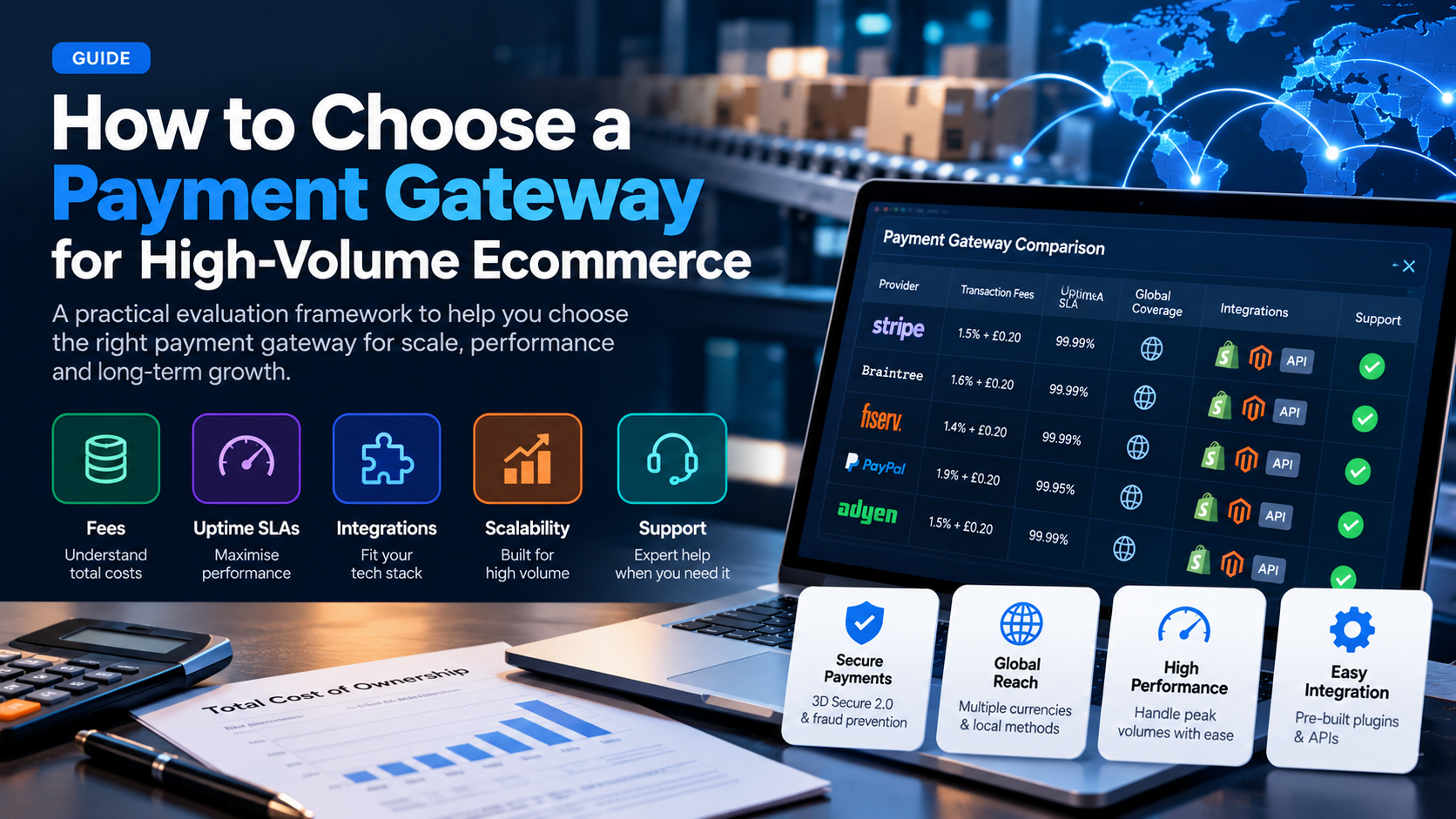
How to Choose a Payment Gateway for High-Volume Ecommerce (2026 Guide)
A practical framework for evaluating payment gateways when you process $50k+ per month: fees, uptime, integrations, scalability, and support.
Read More →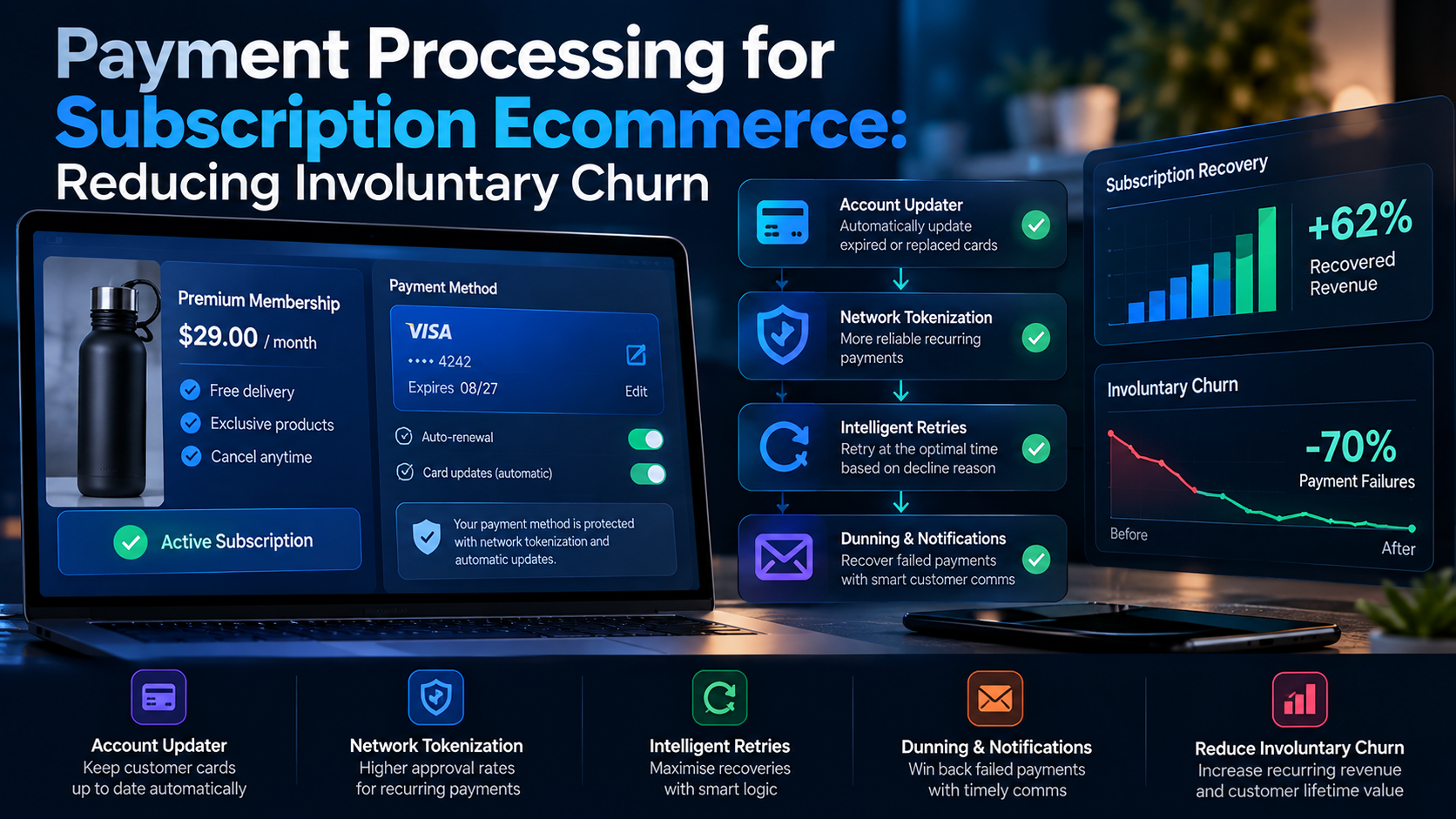
Payment Processing for Subscription Ecommerce: Reducing Involuntary Churn (2026 Guide)
Involuntary churn from failed payments costs subscription businesses 20-40% of revenue. Here is how to fix declined cards, update expired cards, and retain subscribers.
Read More →