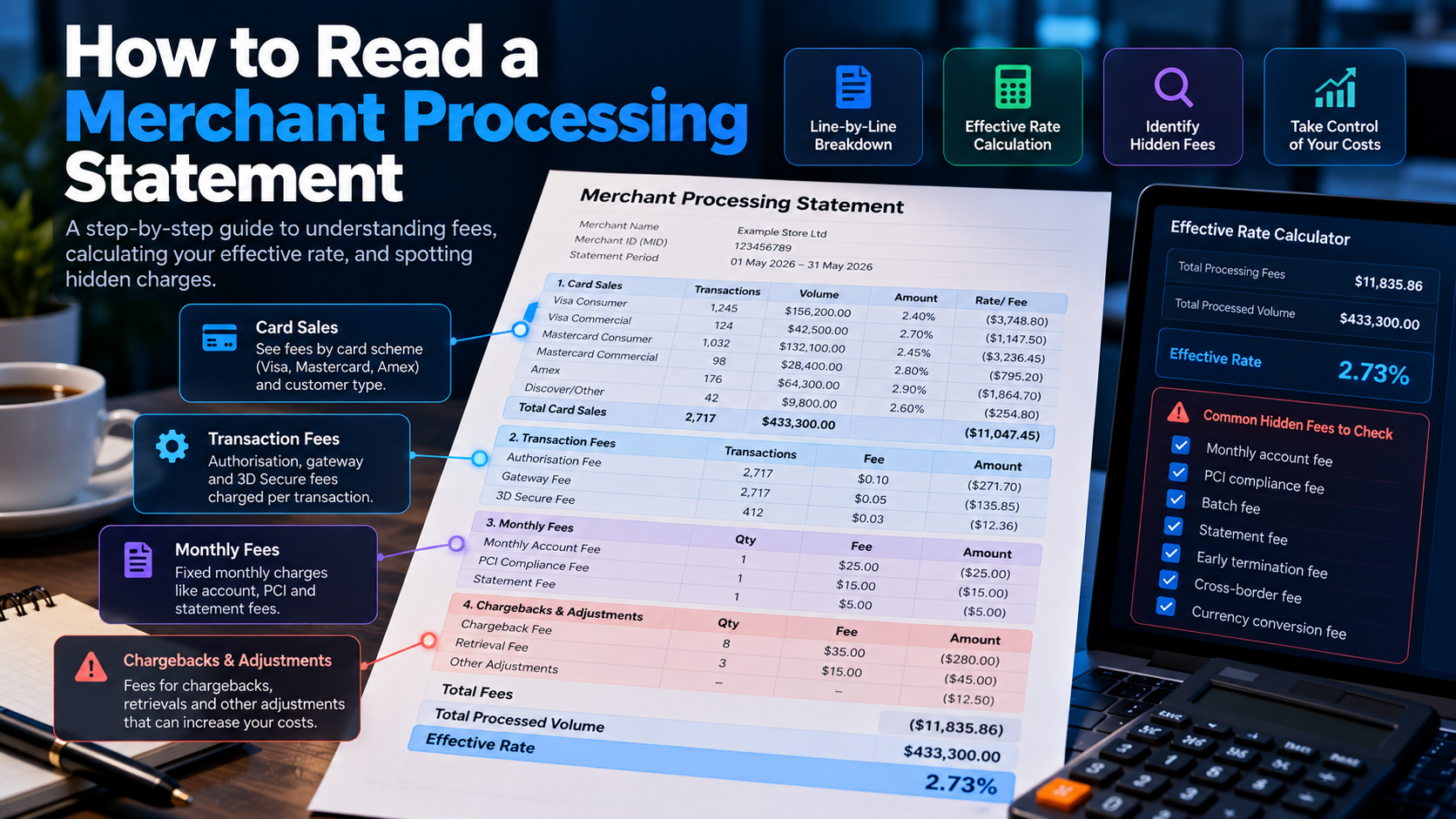
 How to read a merchant processing statement: calculate your effective rate, identify hidden fees, understand downgrades, and negotiate lower processing costs.
Need Payment Processing?
✓ Stripe shutdown?
✓ High-risk industry?
✓ Declined payments?
Get approved today.
Apply NowKey Takeaways
- Your effective rate is the only number that matters: Total fees divided by total volume. If you do not know yours, you are overpaying. - Interchange-plus pricing is transparent; flat-rate is not: Flat-rate bundles fees into one rate that looks simple but costs more at scale. Interchange-plus shows every component. - Hidden fees add 0.5-1.5% to your effective rate: Authorization fees, batch fees, PCI fees, and surcharges rarely appear in the advertised rate. - Downgrades cost merchants 0.5-2% extra: Transactions that do not qualify for the best interchange rate (rewards cards, keyed entries, international cards) cost more. - Statement auditing recovers 1-3% of volume: Most merchants find $2,000 to $10,000+ in annual savings after a thorough statement audit.
Payment processors do not design statements to be easy to read. A typical statement runs 5 to 15 pages with dozens of line items, abbreviations, and fee categories. Many merchants pay the total without understanding what they are being charged for.
- ✓Your effective rate is the only number that matters: Total fees divided by total volume. If you do not know yours, you are overpaying.
- ✓Interchange-plus pricing is transparent; flat-rate is not: Flat-rate bundles fees into one rate that looks simple but costs more at scale. Interchange-plus shows every component.
- ✓Hidden fees add 0.5-1.5% to your effective rate: Authorization fees, batch fees, PCI fees, and surcharges rarely appear in the advertised rate.
- ✓Downgrades cost merchants 0.5-2% extra: Transactions that do not qualify for the best interchange rate (rewards cards, keyed entries, international cards) cost more.
- ✓Statement auditing recovers 1-3% of volume: Most merchants find $2,000 to $10,000+ in annual savings after a thorough statement audit.
TL;DR — Key Takeaways
- Your effective rate is the only number that matters: Total fees divided by total volume. If you do not know yours, you are overpaying.
- Interchange-plus pricing is transparent; flat-rate is not: Flat-rate bundles fees into one rate that looks simple but costs more at scale. Interchange-plus shows every component.
- Hidden fees add 0.5-1.5% to your effective rate: Authorization fees, batch fees, PCI fees, and surcharges rarely appear in the advertised rate.
- Downgrades cost merchants 0.5-2% extra: Transactions that do not qualify for the best interchange rate (rewards cards, keyed entries, international cards) cost more.
- Statement auditing recovers 1-3% of volume: Most merchants find $2,000 to $10,000+ in annual savings after a thorough statement audit.
Why Merchant Statements Are Confusing
Payment processors do not design statements to be easy to read. A typical statement runs 5 to 15 pages with dozens of line items, abbreviations, and fee categories. Many merchants pay the total without understanding what they are being charged for.
This confusion is profitable for processors. When you cannot tell what you are paying, you cannot negotiate. This guide gives you the tools to read your statement, understand every fee, and identify savings.
The Three Pricing Models
Flat-Rate Pricing
You pay one percentage plus a fixed fee per transaction (e.g., 2.9% + $0.30). This is what Stripe, PayPal, and Square offer.
Pros: Simple, predictable, no surprises. Cons: Expensive at scale. You pay the same rate regardless of card type, so low-cost debit cards subsidize expensive rewards cards.
Who it is for: Merchants processing under $30,000/month. Above that, flat-rate costs you more than interchange-plus.
Interchange-Plus Pricing
You pay the interchange cost (set by card networks) plus a fixed markup (e.g., interchange + 0.30% + $0.10). This is what most traditional processors offer.
Pros: Transparent, cheaper at scale, you see exactly what you pay. Cons: More complex statements, requires understanding of interchange categories.
Who it is for: Merchants processing $30,000+/month. The savings over flat-rate grow with volume.
Tiered Pricing
Transactions are sorted into "qualified," "mid-qualified," and "non-qualified" tiers with different rates. This is the least transparent and most expensive model.
Pros: Looks simple (three rates). Cons: Processors control which tier each transaction falls into, and most transactions end up in the more expensive tiers.
Who it is for: Nobody. Avoid tiered pricing. If you are on it, switch to interchange-plus.
How to Calculate Your Effective Rate
Your effective rate is the single most important number on your statement. It is the true cost of processing as a percentage of volume.
Formula: Effective Rate = (Total Fees / Total Volume) x 100
Example:
- Total fees: $2,450
- Total volume: $100,000
- Effective rate: 2.45%
Why this matters: Your effective rate includes every fee — transaction fees, authorization fees, batch fees, PCI, chargebacks, and surcharges. The advertised rate (e.g., "2.4% + $0.30") never includes all of these. Your effective rate is what you actually pay.
Benchmark: For a mix of online debit and credit transactions, a competitive effective rate is:
- Under 2.5% for standard ecommerce
- Under 2.8% for high-risk ecommerce
- Under 2.0% for card-present (retail)
If your effective rate is above these benchmarks, you are overpaying.
Line-by-Line: What Every Fee Means
Interchange Fees
The largest cost component. Set by Visa, Mastercard, and Discover. These are non-negotiable and the same for every processor. Your statement may show them as a lump sum or broken down by card type.
Common interchange categories:
- CPS/eCommerce: Standard online credit card rate (~1.8-2.0%)
- Debit: Regulated debit (~0.05% + $0.22) or unregulated debit (~1.0-1.5%)
- Rewards/Signature: Premium credit cards (~2.4-2.7%)
- Corporate/Business: Business cards (~2.5-3.0%)
- International: Cross-border cards (~2.9-3.5%)
Why this matters: If you see a lot of rewards or corporate card interchange, your customers use premium cards. You cannot reduce interchange, but interchange-plus pricing ensures you only pay cost plus a fixed markup.
Assessment Fees
Fees paid to the card networks (Visa, Mastercard, Amex) on top of interchange. Typically 0.13-0.15%. Non-negotiable.
Processor Markup
The fee your processor charges on top of interchange and assessments. This is the negotiable part. In interchange-plus pricing, this is clearly shown (e.g., 0.30% + $0.10 per transaction).
What to look for: If your markup is above 0.50% + $0.15, you have room to negotiate, especially at high volume.
Authorization Fees
Charged per authorization attempt, including declines. Typically $0.05 to $0.15 per attempt. Some processors waive these; others charge for every attempt.
Hidden cost: If you have a high decline rate (above 5%), authorization fees add up. A store with 10,000 transactions/month and a 10% decline rate pays authorization fees on 1,000 declined transactions.
Batch/Settlement Fees
Charged each time you batch (settle) transactions, usually daily. Typically $0.05 to $0.25 per batch. Small but adds up over a year.
PCI Compliance Fees
Fees for PCI compliance validation. May be monthly ($10-$30/month) or annual ($99-$199/year). Some processors waive these if you complete validation; others charge regardless.
Watch for: Non-compliance fees ($35-$100/month) if you miss a validation deadline. Set calendar reminders.
Chargeback Fees
Charged per chargeback, win or lose. Typically $15 to $25 per chargeback. Some processors charge higher for high-risk merchants.
Monthly Account/Statement Fees
Flat monthly fees for account maintenance. Typically $10 to $25/month. Some processors waive these at higher volume.
Gateway Fees
If your gateway is separate from your processor, you may pay a monthly gateway fee ($15-$50/month) plus per-transaction fees.
Surcharges and Downgrades
Downgrades happen when a transaction does not qualify for the best interchange rate. Common causes:
- Keyed entry instead of swiped/dipped (card-not-present when card was present)
- Missing AVS or CVV data
- Settled too late after authorization (batch delay)
- International cards
- Corporate or rewards cards
Cost impact: Downgrades add 0.5% to 2.0% to the transaction cost. A statement audit often finds 5-15% of transactions are downgraded.
Cross-Border and Currency Conversion Fees
For international transactions: 0.8-1.5% cross-border fee plus 1-3% currency conversion fee. If you sell internationally, these can be a significant cost.
Other Fees to Watch For
- Annual fees: $99-$399/year for account maintenance
- Regulatory fees: $0.05-$0.25/month for compliance
- IRS reporting fees: Small annual fee for tax reporting
- Non-sufficient funds (NSF) fees: If a chargeback leaves your account negative
- Early termination fees: If you are in a contract
How to Audit Your Statement
Step 1: Find Your Total Fees and Total Volume
Look for the summary section. Find total fees charged and total processing volume for the month.
Step 2: Calculate Your Effective Rate
Divide total fees by total volume. Write this number down.
Step 3: Compare to Your Quoted Rate
If you were quoted 2.4% + $0.30 and your effective rate is 3.1%, the difference (0.7%) is hidden fees and downgrades.
Step 4: Identify Downgrades
Look for transactions billed at higher rates than your standard rate. These are downgrades. Note the volume and cost difference.
Step 5: List All Fee Categories
Write down every fee category and the monthly cost. Flag any you do not understand.
Step 6: Calculate Interchange-to-Markup Ratio
Add up interchange and assessment fees (non-negotiable). Subtract from total fees. The remainder is processor markup and other fees. If your markup is above 0.50% of volume, you have room to negotiate.
Step 7: Compare to Benchmarks
Compare your effective rate and markup to industry benchmarks. If you are above benchmark, it is time to negotiate or switch.
Common Hidden Fees to Look For
- Authorization fees on declines: You pay even when the transaction fails
- Non-qualified surcharges: Transactions bumped to higher tiers
- PCI non-compliance fees: Charged if you miss validation
- Annual fees: Not always disclosed upfront
- Batch fees: Small but recurring
- Cross-border surcharges: On international cards
- Currency conversion fees: If you process multi-currency
- Gateway access fees: Monthly gateway charges
- Statement fees: For paper or digital statements
- Regulatory/compliance fees: Small but numerous
How to Negotiate Lower Fees
Know Your Numbers
Before you call your processor, know your effective rate, monthly volume, average ticket, and markup percentage. Processors negotiate based on data, not requests.
Get Competing Quotes
Request interchange-plus quotes from 2-3 processors using your actual 3-month processing volume. Use these as leverage.
Ask for Specific Reductions
- "Can you reduce the markup to 0.25% + $0.08?"
- "Can you waive the monthly account fee?"
- "Can you waive authorization fees on declines?"
- "Can you reduce the PCI fee?"
Threaten to Switch (Politely)
If your processor will not negotiate and you have better quotes, tell them you are considering switching. Retention teams have more authority to offer discounts.
Time Your Negotiation
The best time to negotiate is when your contract is up for renewal or when you have increased volume. Processors do not want to lose profitable merchants.
The Bottom Line
Reading your merchant statement is the highest-ROI activity for any ecommerce business. A 30-minute audit can find 1-3% of volume in savings — $1,000 to $3,000 per month for a $100k/month business. The key is knowing your effective rate, understanding every fee, and negotiating from data.
Next Steps
- Pull your last 3 months of processing statements
- Calculate your effective rate for each month
- List every fee category and its monthly cost
- Identify downgrades and their cost impact
- Compare your effective rate to benchmarks
- Get 2-3 competing quotes
- Call your processor and negotiate
Tags

Jane Harold
Head of Payment Strategy
GetPayment Inc
Jane Harold is a payment strategy expert with 12+ years of experience in high-volume ecommerce payments, merchant account management, and checkout optimization. She has helped hundreds of US ecommerce brands improve authorization rates, reduce processing costs, and scale payment infrastructure.
Areas of Expertise
Payment Strategy Expert
12+ years in industry
Certified Payment Specialist
PCI DSS Level 1 compliance
Merchant Account Advisor
500+ merchants advised
Industry Speaker
Ecommerce & payment conferences
Get Expert Advice
Have questions about payment processing? Reach out to Jane directly.
Years Experience
Merchants Helped
Bank Partners
Satisfaction Rate
Recover Revenue From Payment Declines
GetPayment helps ecommerce merchants increase approval rates with smart routing and high-risk-friendly processors.
High-risk friendly
Multiple processors
Global coverage
Get Your Free Payment Fee Audit
See exactly how much you're overpaying in processing fees. Our experts analyze your statement and show you potential savings.
Request Free AuditRelated Articles
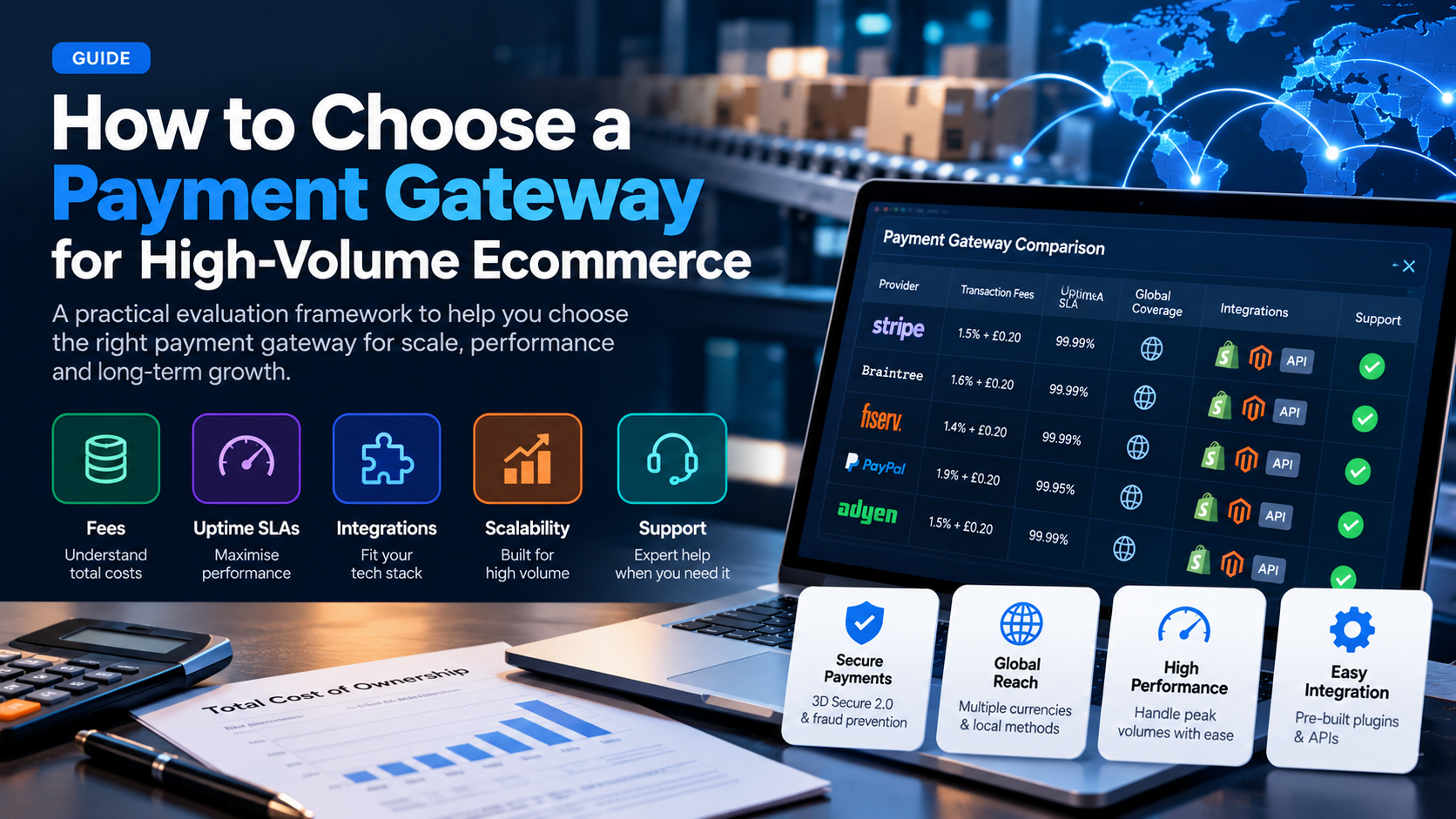
How to Choose a Payment Gateway for High-Volume Ecommerce (2026 Guide)
A practical framework for evaluating payment gateways when you process $50k+ per month: fees, uptime, integrations, scalability, and support.
Read More →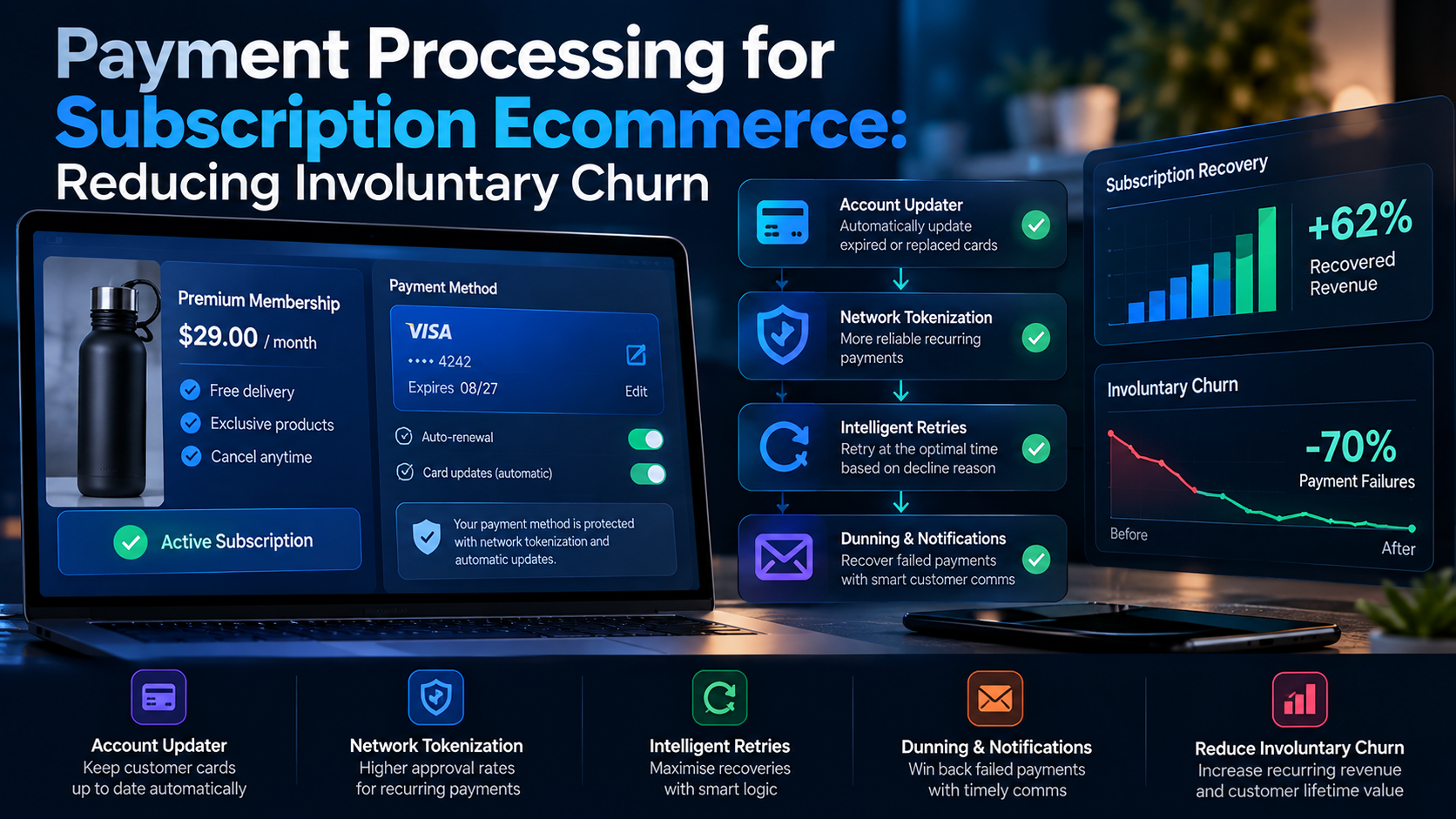
Payment Processing for Subscription Ecommerce: Reducing Involuntary Churn (2026 Guide)
Involuntary churn from failed payments costs subscription businesses 20-40% of revenue. Here is how to fix declined cards, update expired cards, and retain subscribers.
Read More →